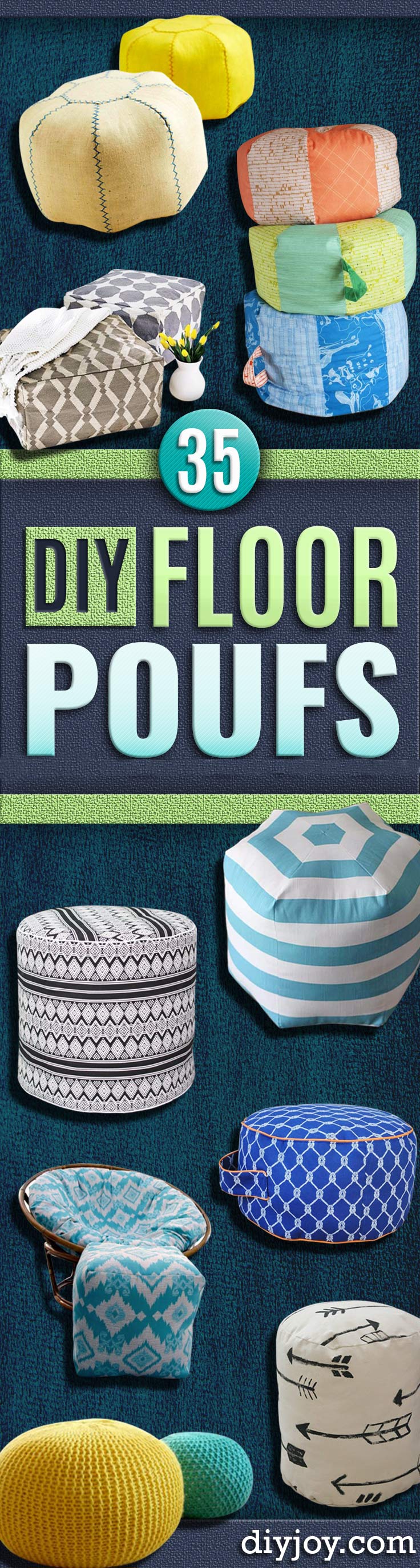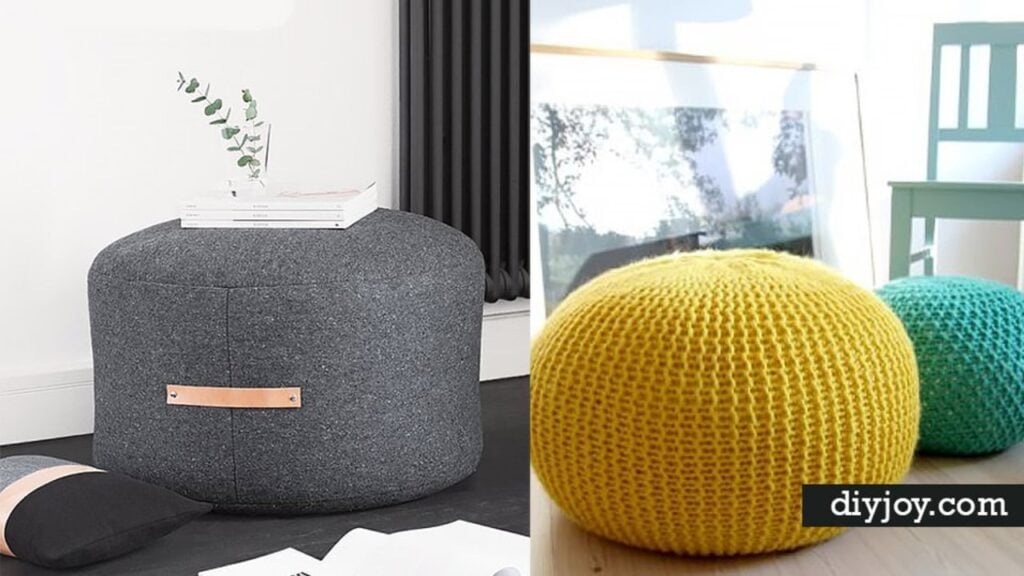
The moment a room runs out of chairs, somebody ends up on the floor. These 20 DIY floor poufs fix that without adding another piece of furniture you have to walk around, and the range here is wider than you would expect. There are poufs crocheted from five skeins of chunky roving, cubes cut from three dollar IKEA floor mats, a round one pieced from twelve wedges of three different shades of old denim, grain sack cylinders, a giant crocheted donut with sprinkles, and a no sew version glued together from scatter rugs and throw pillows. Some want a sewing machine and a bag of bean pellets. Some want a glue gun and an afternoon. Pick by what is already in your closet.
1. Grain Sack Pouf
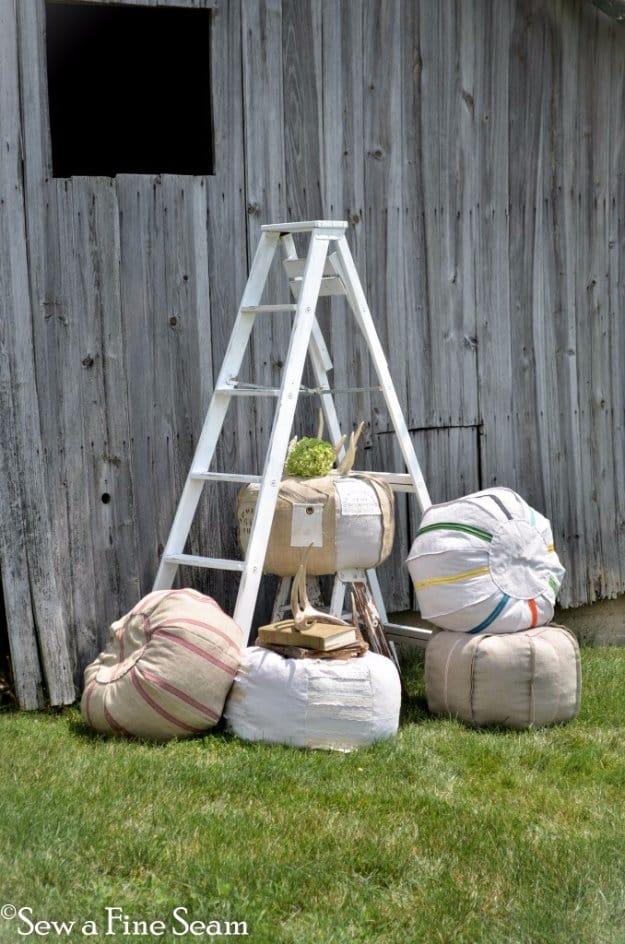
Eight long oval panels and two circles, out of one and three quarter yards of sixty inch fabric, filled with roughly two cubic feet of bean bag pellets. The ovals join along their curved edges into a ring, and one seam is deliberately left part open at the bottom so a wide mouth funnel will fit. Filling is a two person job, indoors, away from any draft, because the pellets are full of static and go everywhere. Fill it far fuller than looks sensible. The circles hand stitch on last, top and bottom.
Get the full tutorial at Sew a Fine Seam.
2. No-Sew Floor Poufs Tutorial
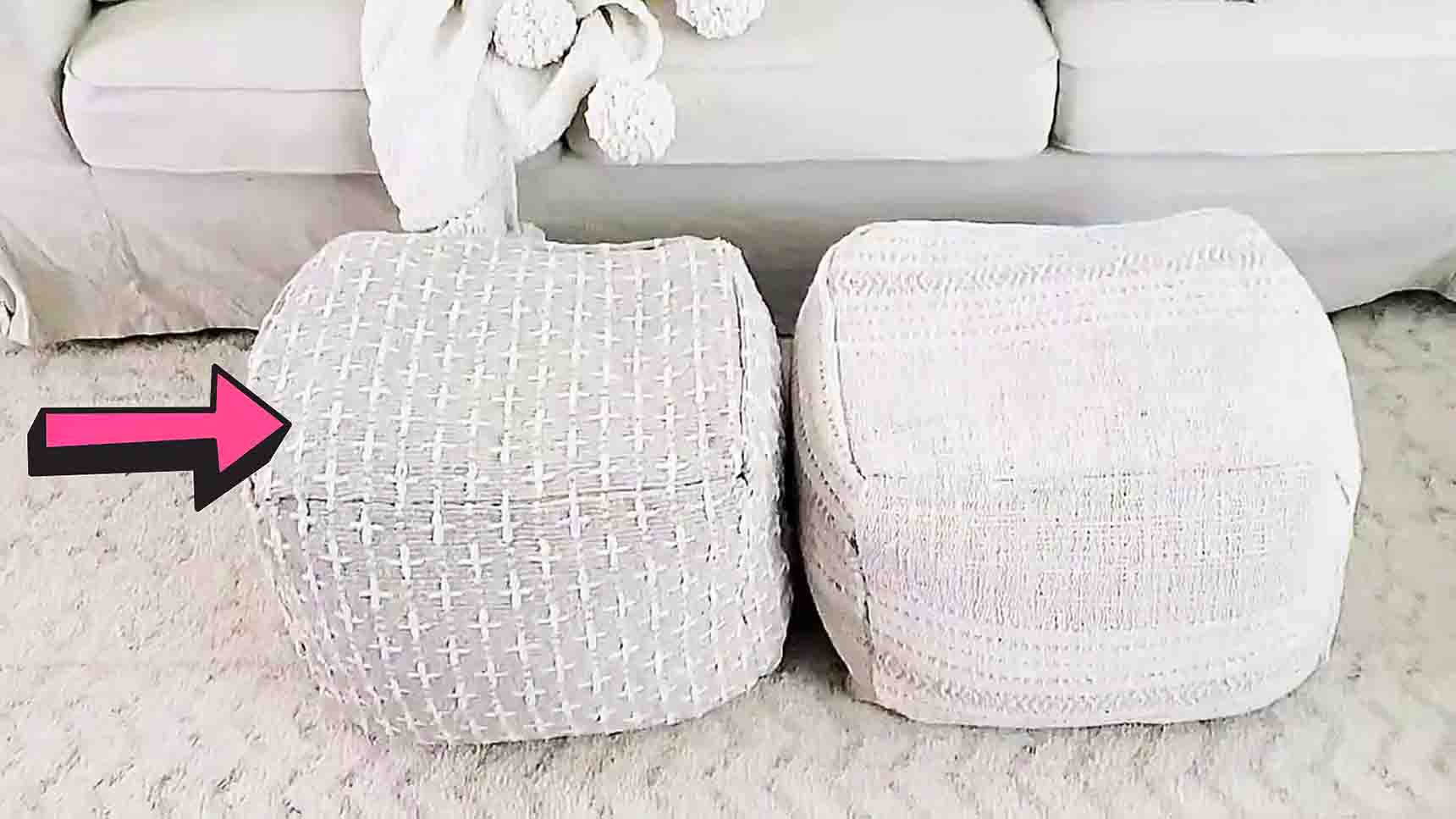
No sewing machine, no needle, no thread. Three scatter rugs at twenty by thirty two inches, six throw pillow inserts, two old bath towels and a glue gun make the whole pouf. Two rugs go right sides together and get glued along the outside edges, then turned right side out, and a small crease folded and glued along each end fakes a proper seam. Once all four corners are closed, the pillow inserts go in as stuffing. The third rug is cut in half and glued on as the bottom. Rug fabric is what makes this hold its shape without any structure inside.
Get the full tutorial at DIY JOY.
3. Easy DIY Floor Pouf Cushion Sewing Tutorial
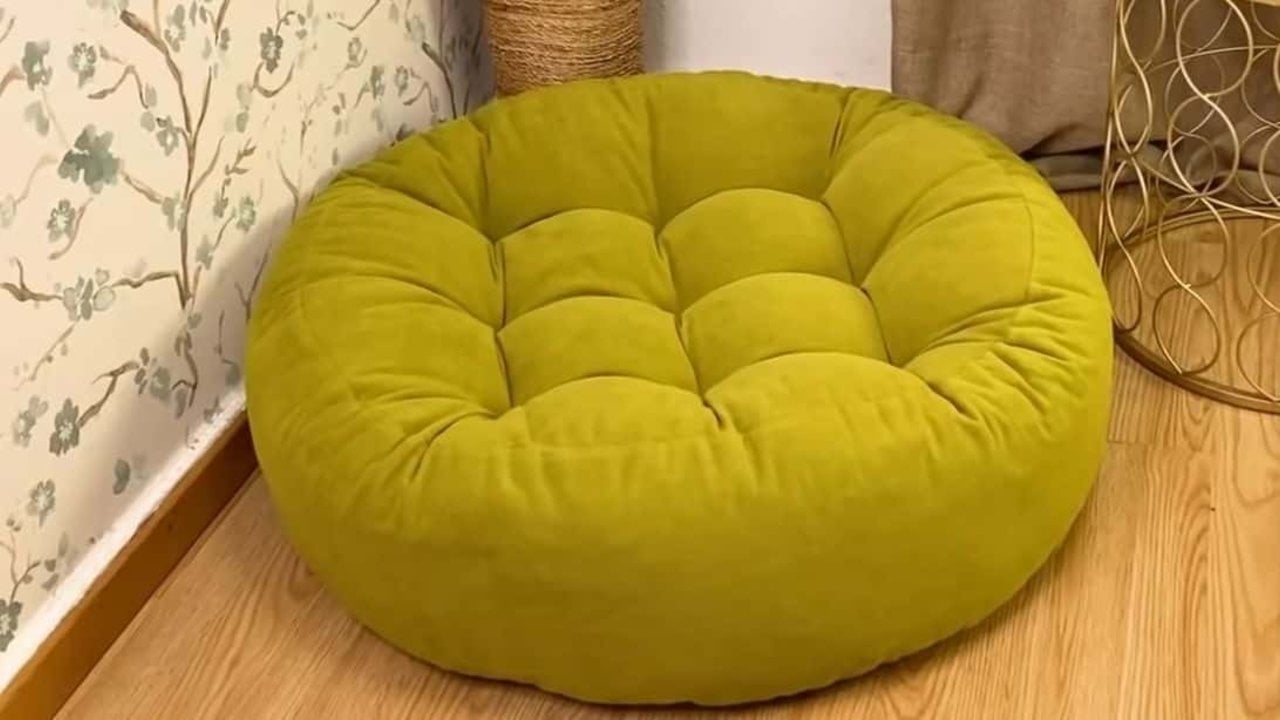
One piece of upholstery fabric at 180 by 140 centimeters, roughly 70 by 55 inches, becomes the whole cushion. Fold it in half lengthwise, then fold both sides in toward the center, and mark 40 centimeters out from the fold. Pivot the tape measure and keep marking until the line runs straight upward, then join the marks into a curve and repeat on the other side. That curve is what gives the finished cushion its soft shape instead of a flat cube. Sturdy matching thread matters more than it sounds, since every seam on a floor cushion carries somebody’s whole weight.
Get the full tutorial at DIY JOY.
4. DIY Quilted Tuffet Floor Pouf

A tuffet is the quilted cousin of the pouf, sitting somewhere between a footstool and a small upholstered seat. The body is pieced from narrow strips that radiate from the center out, so it is the right home for a pile of batik scraps too pretty to throw out and too small for anything else, and the color run is what gives a tuffet its whole character. A single covered button pulls the top down where every strip meets. It reads as a lot harder than it is, since the piecing is straight seams and the shaping happens when the panel is gathered onto the base.
Get the full tutorial at DIY JOY.
5. Indoor/Outdoor DIY Pouf Ottoman
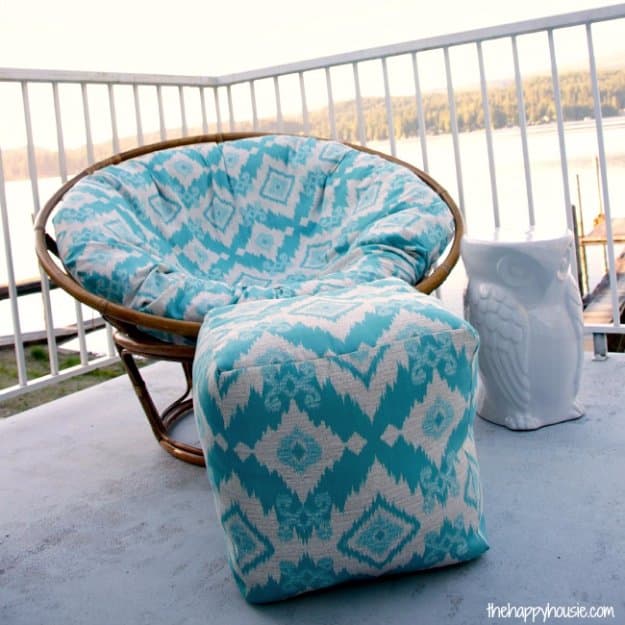
Outdoor fabric is what makes this one work on a deck as well as in a den, and the whole cube comes out of a single yard of 54 inch goods if you plan the cuts. Six 18 inch squares, pinned into a T shape before anything is stitched, which is the layout trick that stops you sewing a panel on inside out. Use a stronger stitch setting than usual, because this gets stood on. Four cheap pillow forms, stripped out of their covers, do the stuffing. The last seam closes with a ladder stitch. Around twenty four dollars against eighty at retail.
Get the full tutorial at The Happy Housie.
6. Carkai Poufs for the Kids
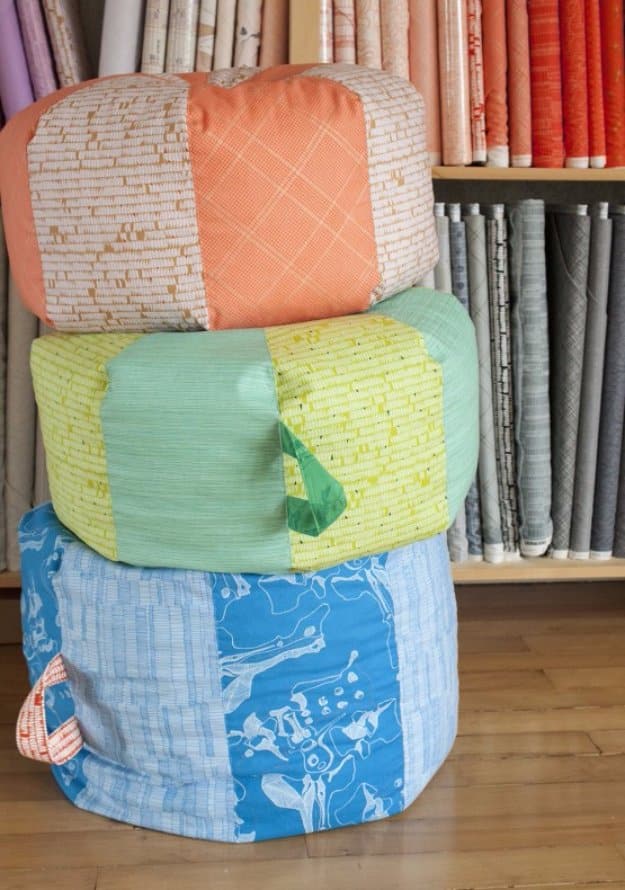
Three stacked poufs in a quilt shop, each pieced from a different colorway of the same fabric line, and each one takes about a yard. The starting point was an HGTV pattern that ran too big, so the straight section between the triangular pieces was shortened to about nine inches. Two changes are worth stealing: use a three eighths inch seam allowance rather than a quarter, because at a quarter the pieces do not line up, and press the seams to one side and topstitch rather than pressing them open, which is what makes the seams survive being sat on. Bean bag pellets fill them.
Get the full tutorial at Carolyn Friedlander.
7. Log Slice Pouf
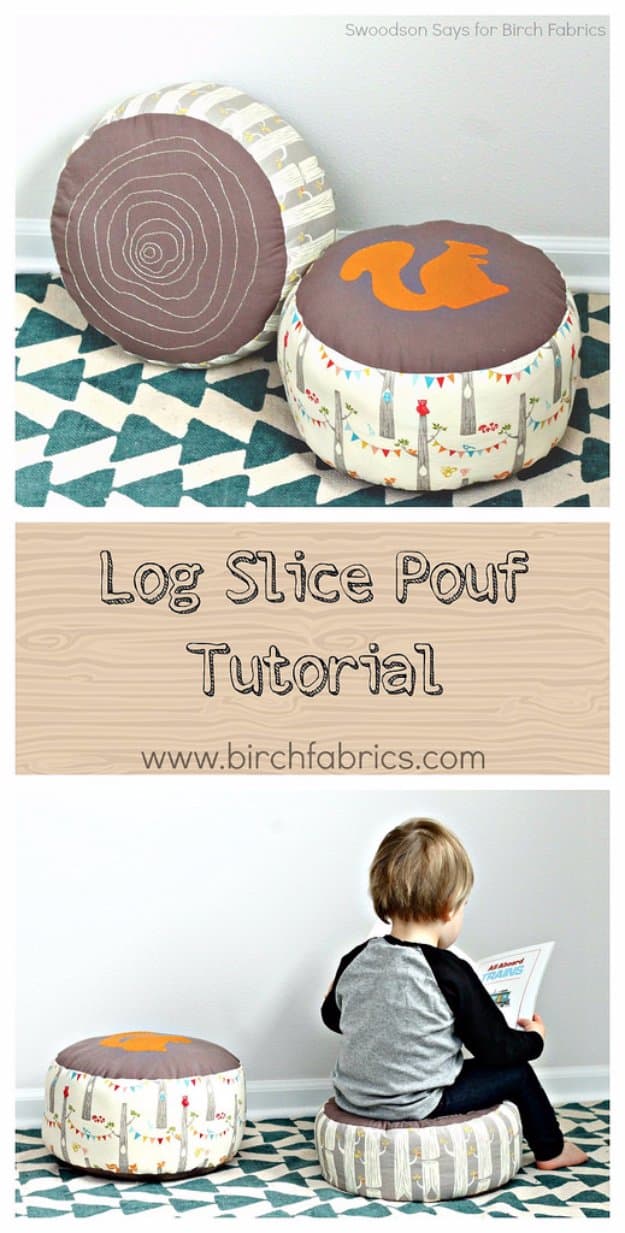
A low round pouf printed and appliqued to look like a cut tree stump, with concentric rings on the top of one and a squirrel applique on the other. Two rectangular side strips at 7 by 42.5 inches and 6 by 42.5 inches give two different heights, which is what stops a pair of them looking like matching drums. Fuse fleece to every piece before any embellishing happens, because appliqueing onto unsupported cotton puckers and no amount of pressing fixes it afterward. The fill is Poly-fil on the outside with fabric scraps packed in the middle, and a ladder stitch closes the opening.
Get the full tutorial at Birch Fabrics.
8. Drum Floor Pouf DIY
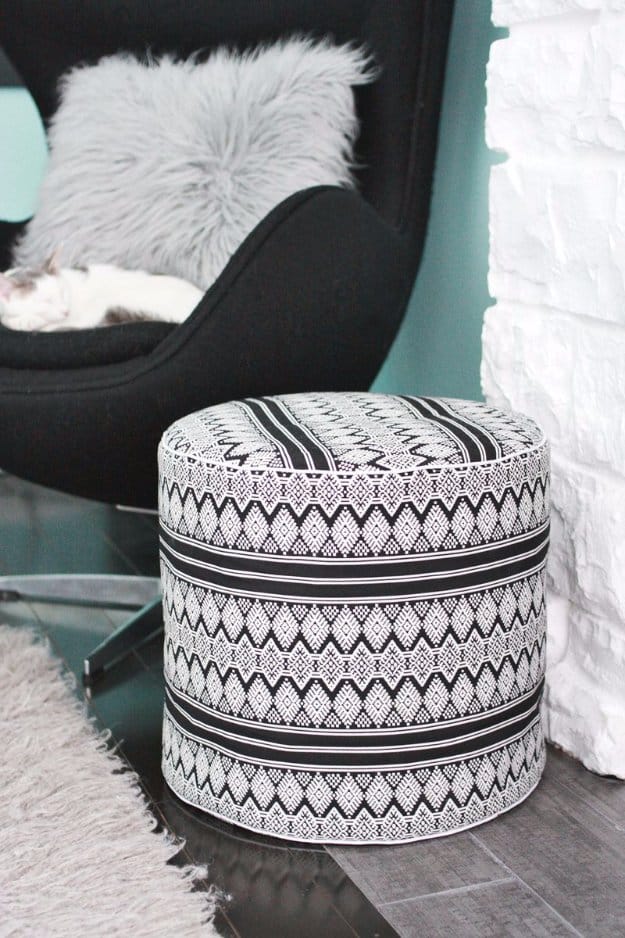
Two yards of upholstery fabric, a twenty two inch zipper, piping trim and bean bag filling. The top is an eighteen inch circle cut from a paper template. The base is the clever part: it is made from two half pieces with the zipper sewn in between them, so the cover can be opened and the fill topped up later, which is exactly what goes wrong with a bought pouf. Piping is pinned and stitched around both circles with a zipper foot, then a sixteen by fifty six inch rectangle wraps around as the side wall.
Get the full tutorial at A Beautiful Mess.
9. Wool Blanket Pouf Ottoman
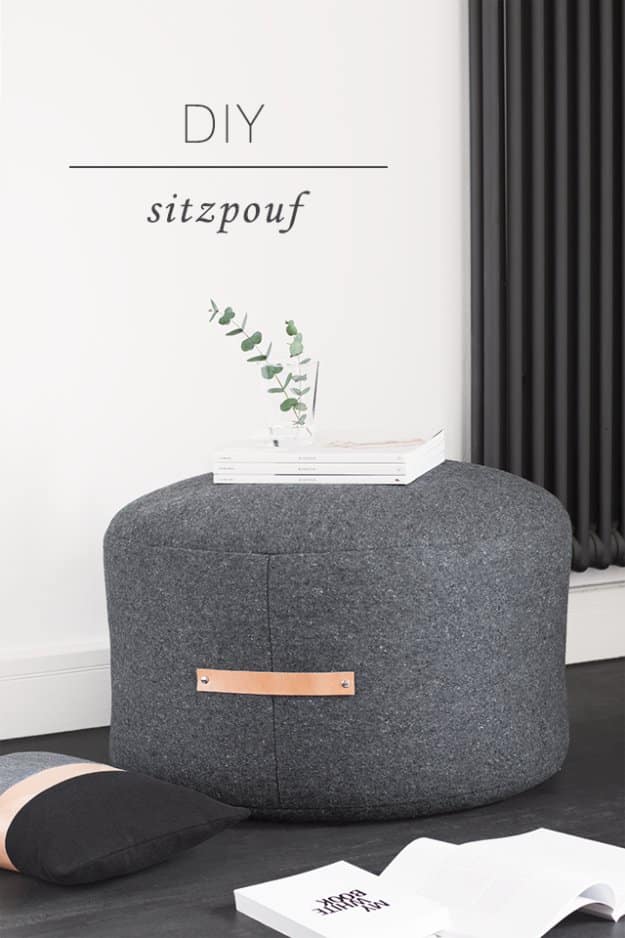
A grey wool blanket in a military weave, chosen because it is tough and cheap, made into a low round pouf about 65 centimeters across and 33 centimeters high. Three pieces do it: two circles and one long rectangle that becomes the side wall. A 25 centimeter zipper goes into one of the circles before anything is joined, and that is what lets you fill it and, later, empty it. The fill here is 150 liters of polystyrene pellets, though foam flakes or fabric scraps work the same. A cognac leather handle riveted to the side finishes it and makes it portable.
Get the full tutorial at Bildschoenes.
10. How To Knit Chunky Yarn Pouf Pillows
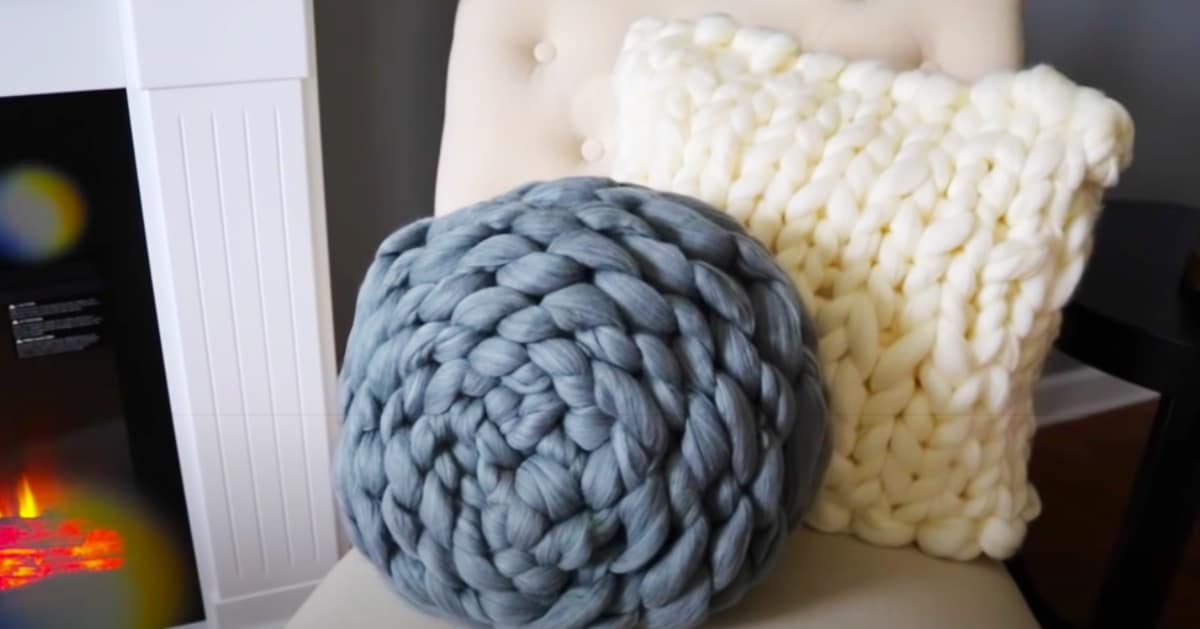
Chunky yarn is the reason these go so fast. The materials list is genuinely two lines, yarn and scissors, because the pouf pillows are knitted by hand rather than on needles, with the loops pulled through by hand at a scale where each stitch is inches across. That speed is the appeal: unlike most knitting projects, several of these can be finished in one evening, which makes them the rare craft where the room changes the same day you start. They are soft enough to lean on while reading and firm enough to sit on, which is not true of every pouf here.
Get the full tutorial at DIY JOY.
11. Dollar Store Rag Rug Floor Pouf
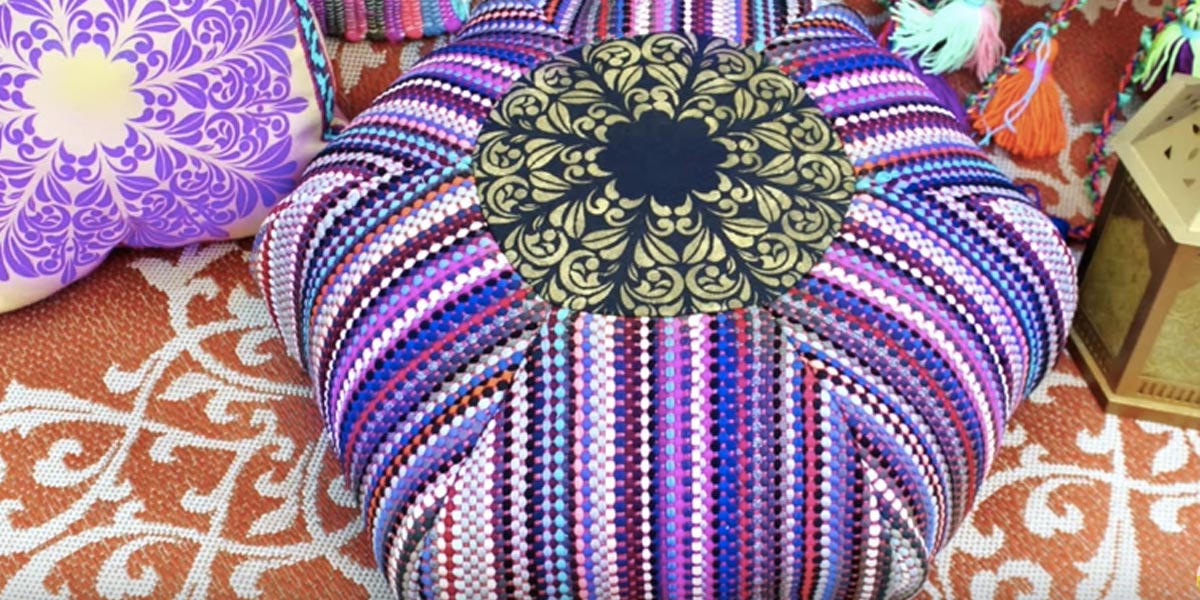
Dollar store rag rugs, stitched together into a Moroccan-style round pouf for under ten dollars, which is the cheapest thing on this list by a distance. The rugs arrive in exactly the bright stripes that give it a boho look, so there is no dyeing or piecing to do. A fabric fusion glue is used to bond a lining to each rug before they are stitched, and that step does two jobs: it stops the rug edges fraying where they are cut and it stiffens the whole thing so the finished pouf holds its shape. Fill it with old towels, scrap fabric or Poly-fil.
Get the full tutorial at DIY JOY.
12. Giant Donut Floor Pouf
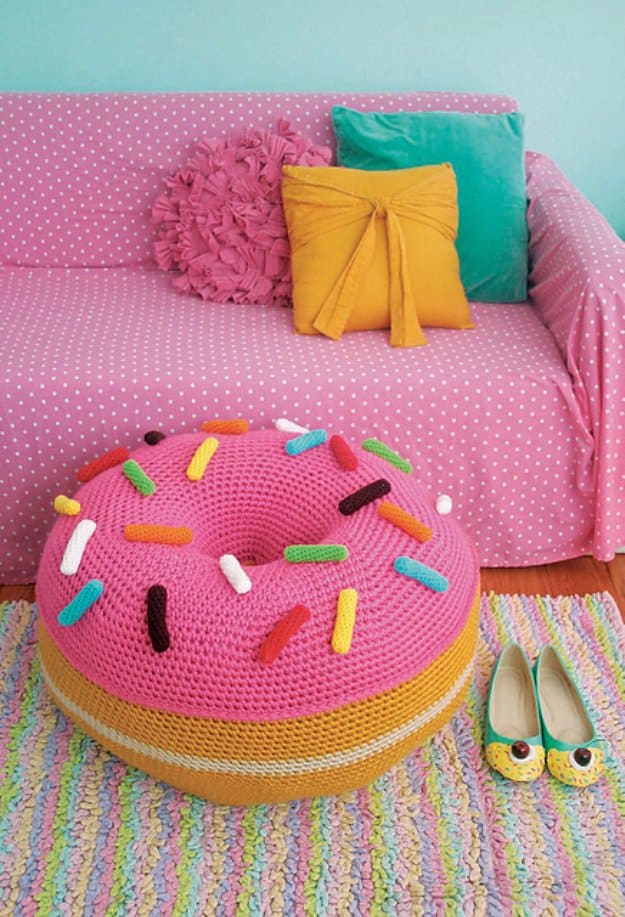
A crocheted donut two feet across, 26 inches in diameter and 15 inches high, in pink frosting over a tan cake base with multicolored sprinkles worked on top. It takes around fifteen skeins of super bulky yarn, five pink, seven mustard and one tan plus scraps for the sprinkles, on a 9mm hook with a 5mm hook for the small details, and four 32 ounce bags of stuffing. The designer’s own advice is to crochet a trial donut in worsted weight first if you have never worked a torus shape, which is sound. Note that this is a paid book pattern rather than a free one.
Get the full tutorial at Ravelry.
13. DIY Pouf Ottoman for Extra Seating
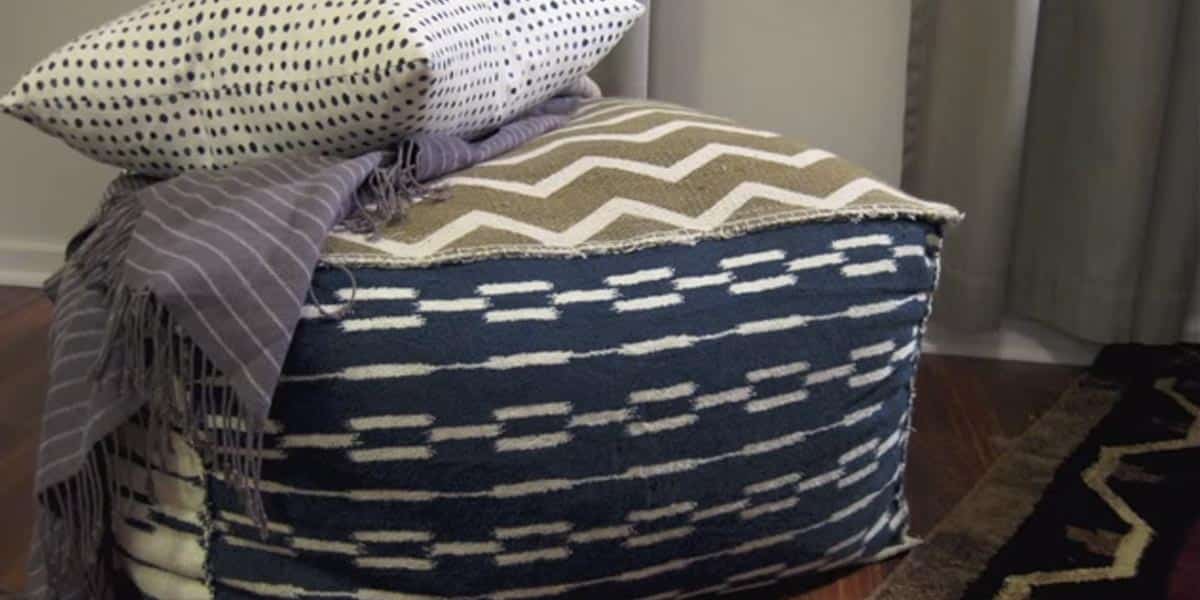
Pouf ottomans are everywhere and the price is the problem, which is the whole reason this one exists. The appeal of a pouf over a bought ottoman is that it is light, it moves around the room with one hand and it solves the seating shortage that shows up the moment the whole family is in one house. Somebody always ends up on the floor, or chairs get dragged in from every other room. A pouf takes up less space than a chair, gets used as a footstool the rest of the year and costs a fraction of the catalog version.
Get the full tutorial at DIY JOY.
14. DIY Tufted Pouf Ottoman for Under Ten Dollars
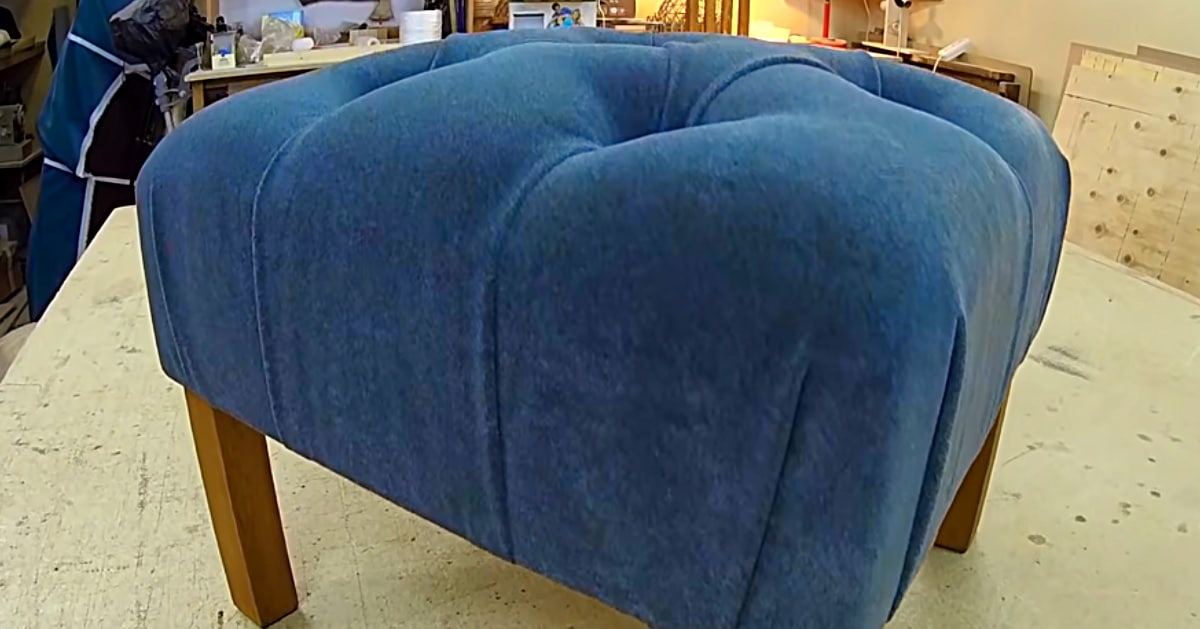
This one has a real frame inside, which makes it firmer than a stuffed pouf and better as a footstool for an armchair. The build uses four 2 inch battens, five pieces of plywood, one at 450 by 450 millimeters and four at 430 by 120, sanded and stained. The smaller plywood pieces nail into a square and the top glues on. Six inch thick foam at 450 by 450 goes on top, a yard of batting softens the edges, and a yard of fabric covers the lot. Four buttons pulled through make the tufting. Under ten dollars in materials.
Get the full tutorial at DIY JOY.
15. Square Cube Cushion
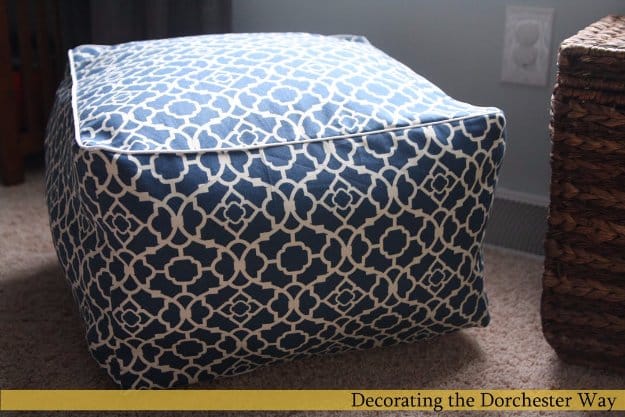
Eighteen inches square and twelve inches high, in a home decor weight lattice print, with white cording piped around the top edge. Five patterned pieces plus a plain white canvas bottom, because there is no reason to spend patterned fabric on the face nobody sees. The fill is layered batting rather than a foam block, two packages of blanket batting plus about three quarters of a package of loose fill worked in between the flat layers, which gives a softer seat than foam and lets you tune the firmness. Sew the corner seams on the open edge before stuffing so there is almost no hand stitching left at the end.
Get the full tutorial at Decorating the Dorchester Way.
16. Denim Pouf
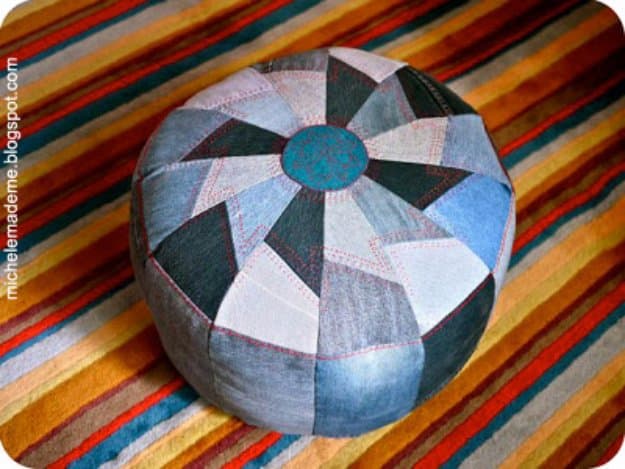
An 18 inch circle template is divided into twelve 30 degree wedges, and each wedge gets a 10 inch rectangle added below it to form a house shape. Four pieces each of light, medium and dark denim cut from old jeans make the twelve. Quarter inch seams throughout, and the imperative step is aligning the joint between the wedge and the rectangle when pinning, or the whole pouf comes out askew. A 5 inch circle covers the center. Old cushion stuffing fills it, and the creator’s own verdict after a year of a child jumping on it is that it is one tough pouf.
Get the full tutorial at Michele Made Me.
17. From Floor Mats to Poufs
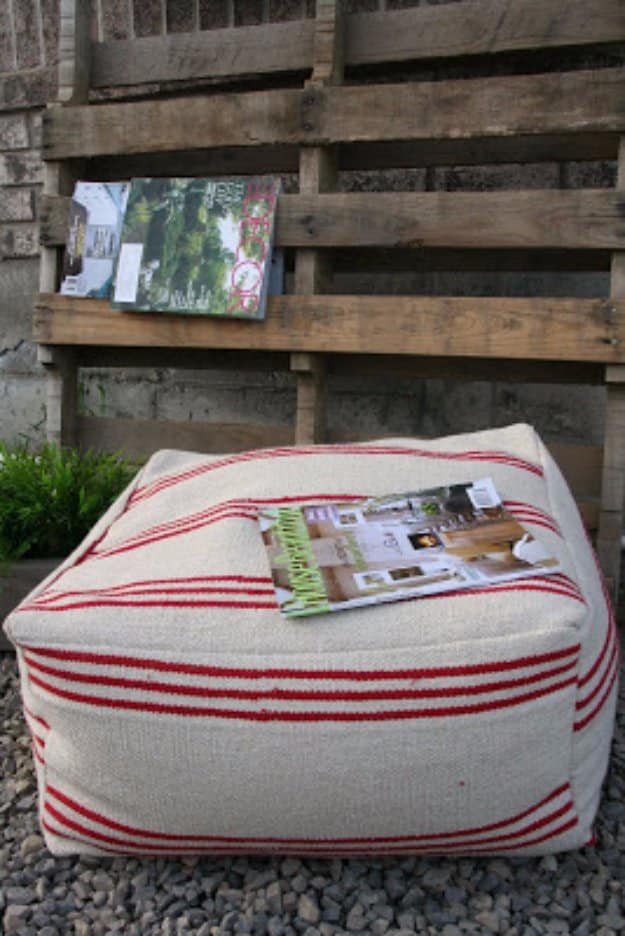
Three IKEA striped floor mats at three dollars each become one pouf for about thirty dollars all in, against two hundred and nineteen for the catalog version being copied. The rugs are cut into two pieces at 23 by 23 inches and four at 12 by 23 inches, which makes a top, a bottom and four sides. Sew the sides together in sequence, join the corners, close two of the bottom seams and put a 22 inch zipper along the last one so the cover comes off to wash. Bean bag pellets hold the shape far better than loose fill does. Straight lines are the only skill required.
Get the full tutorial at Retropolitan Hip.
18. Felt Flower Pouf
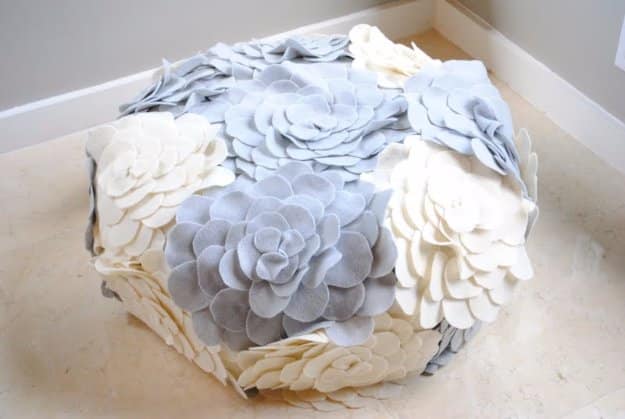
Seventeen felt flowers with about forty five petals each, which is the number to read before starting. A yard of grey and a yard of cream felt supply the petals, cut as two inch circles, and Fabric-Tac bonds them. Each flower builds outward in concentric rings on an eight inch base circle, and the creator’s own tip is to place the petals as far out as possible on each ring because that is what makes the flower read as big rather than tight. The pouf underneath is two circles and a side strip, gathered by pulling one thread of a long stitch to curve it.
Get the full tutorial at J and J Home.
19. Make an Easy DIY Floor Pouf
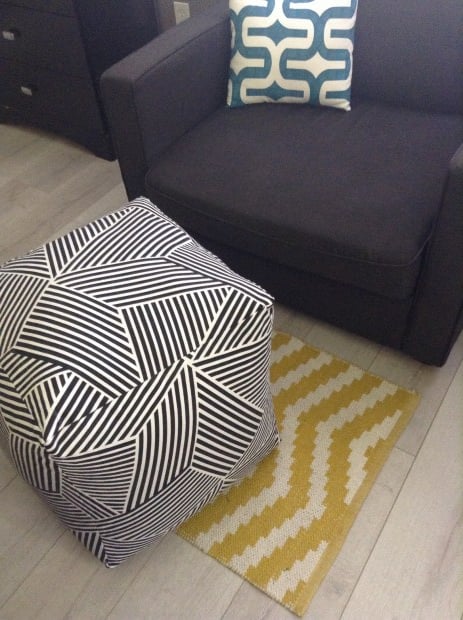
A 19 inch cube in a black and white geometric designer print, and the fabric was 1.75 yards bought at half price, which brought it in under twenty dollars. Six pieces at 19 by 19 inches, sewn in pairs with quarter inch seams leaving gaps at the top and bottom, then joined into a ring, then the top, then the bottom with half the last seam left open to turn it. The fill is styrofoam balls topped up with Poly-Fil batting, and that combination is deliberate: the balls give volume and the batting stops the sag that pellets alone develop. About thirty five dollars in total.
Get the full tutorial at Modern Day Moms.
20. Crochet Floor Pouf
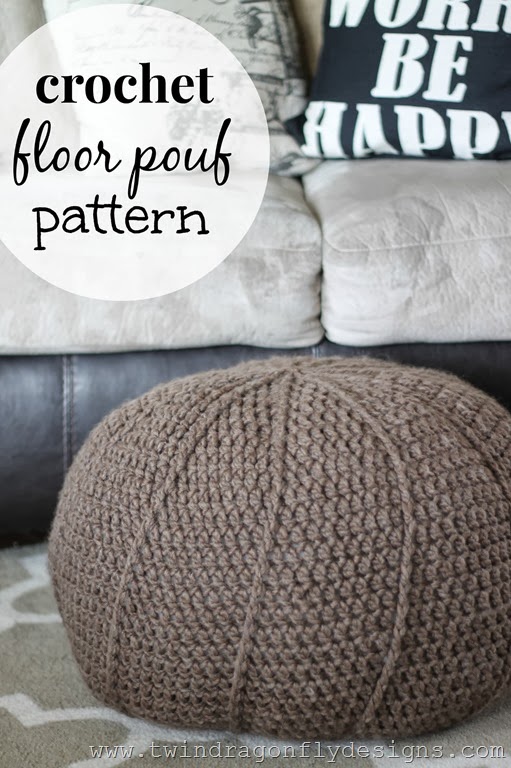
A round crocheted pouf in bulky roving yarn, about five skeins at 120 yards each, worked on a 9mm hook. It uses double crochet and front post double crochet, which is what creates the raised vertical ribs running up the sides, and if you have ever made a hat you already know both. It starts with a magic ring and increases through round 10 to 100 stitches, holds that count from rounds 11 to 24 to build the height, then decreases back down. Stuff after round 30. The pattern calls for 32 ounces of fiberfill and a reader who made it used closer to 64.
Get the full tutorial at Homemade Heather.