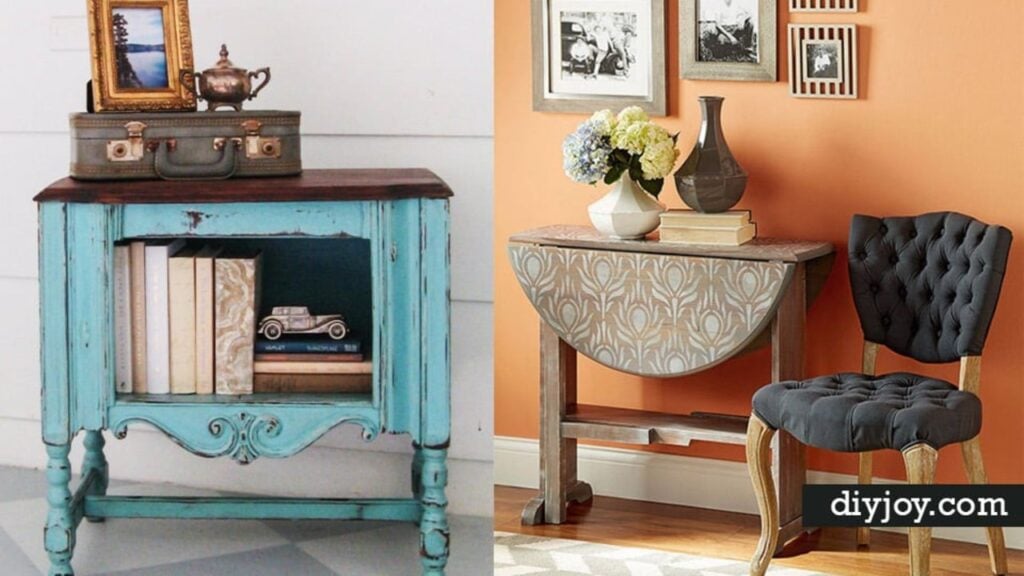
19. Watercolor Nesting Tables Makeover
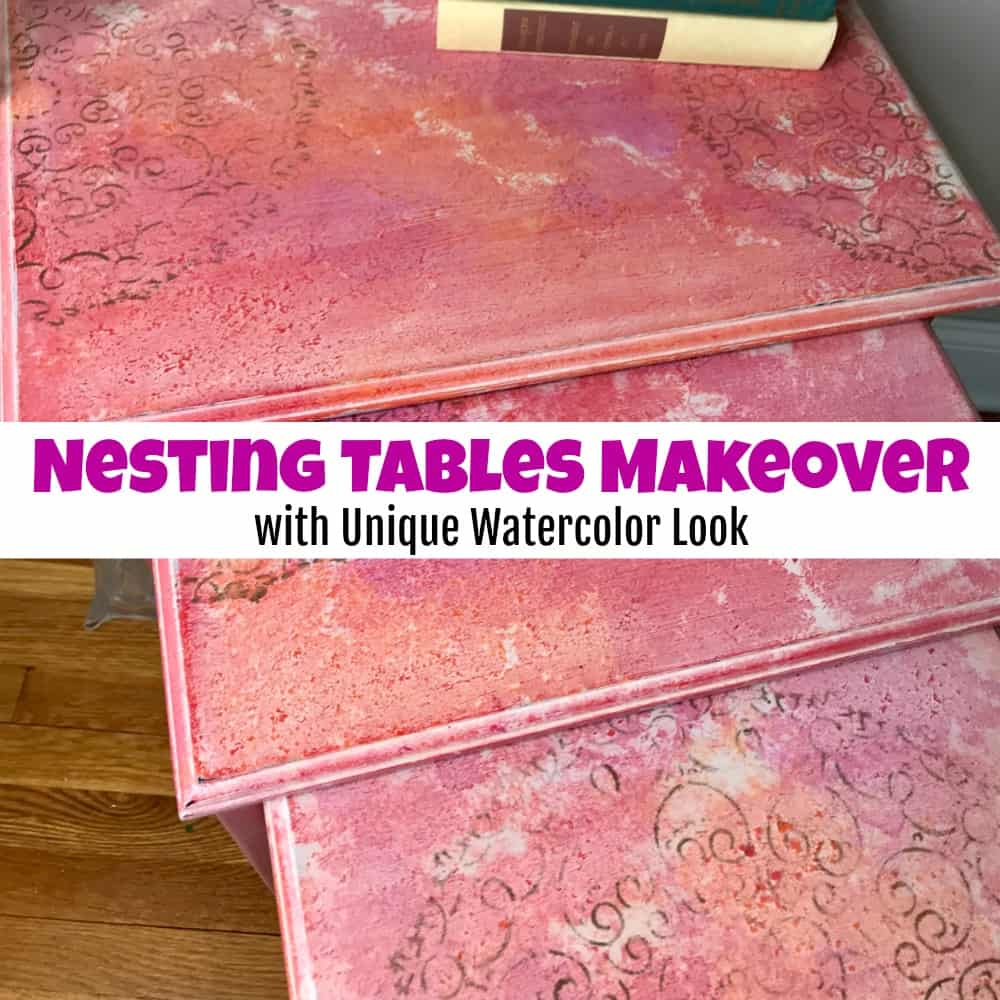
Nesting tables are secretly the overachievers of small-space living, and giving them a watercolor finish turns a practical set into actual art. Just the Woods blends soft colors so they bleed into each other like a real watercolor wash, and the effect is dreamy without being fussy. What I love is that watercolor paint techniques forgive a shaky hand, since the whole point is soft and imperfect. Working wet-on-wet lets the colors move, so keep a spray bottle close and do not overthink it. A matte sealer locks the whole thing down and keeps it looking like paper rather than plastic. It is the rare finish that looks expensive and beginner-proof at the same time. You can follow the full nesting tables makeover at Just the Woods.
20. Quick And Easy Way To Refinish Wooden Furniture
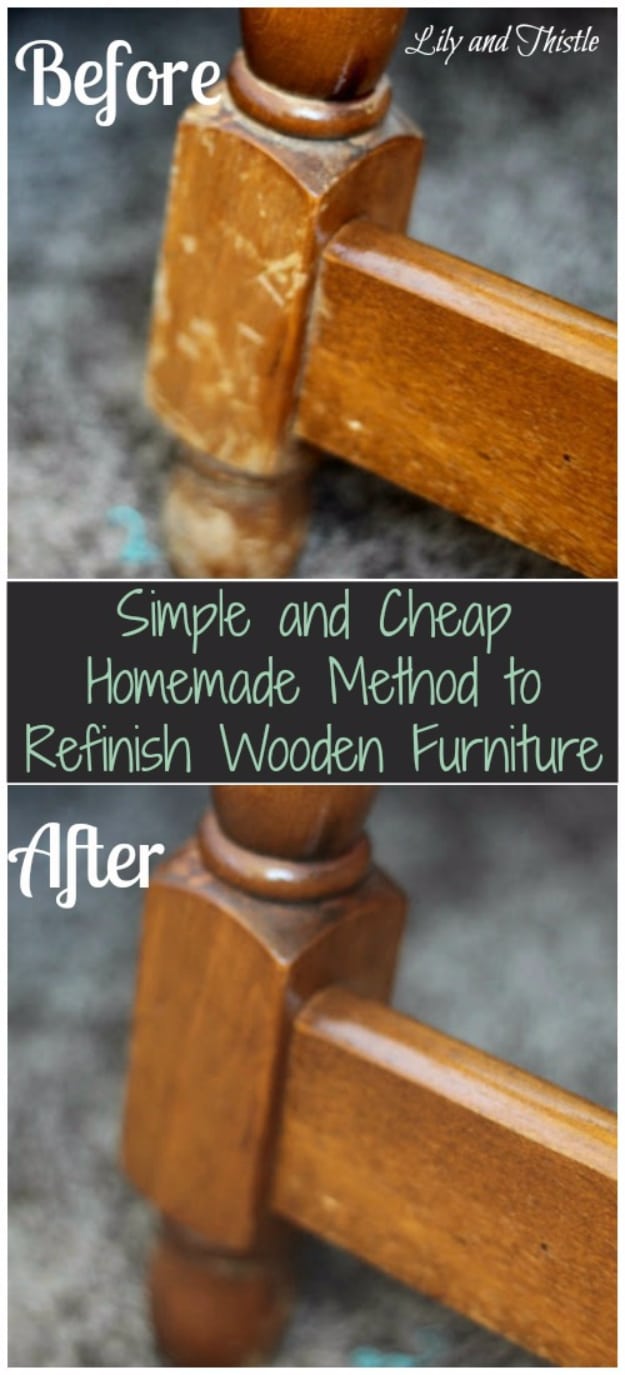
For the piece that needs help today, not next weekend, this quick method compresses refinishing to its essentials: a good cleaning, a scuff sand, and a wipe-on finish that revives color and sheen in a single afternoon. It is triage rather than surgery, and honest about it – perfect for rentals, hand-me-downs in transition, and furniture auditioning for a permanent spot. Wipe-on poly is the beginner’s friend here, forgiving and puddle-proof. The walkthrough at DIY n Crafts keeps every step simple. Fast, presentable, done: sometimes that is the whole assignment.
21. Stain Over Stained Furniture Without Sanding
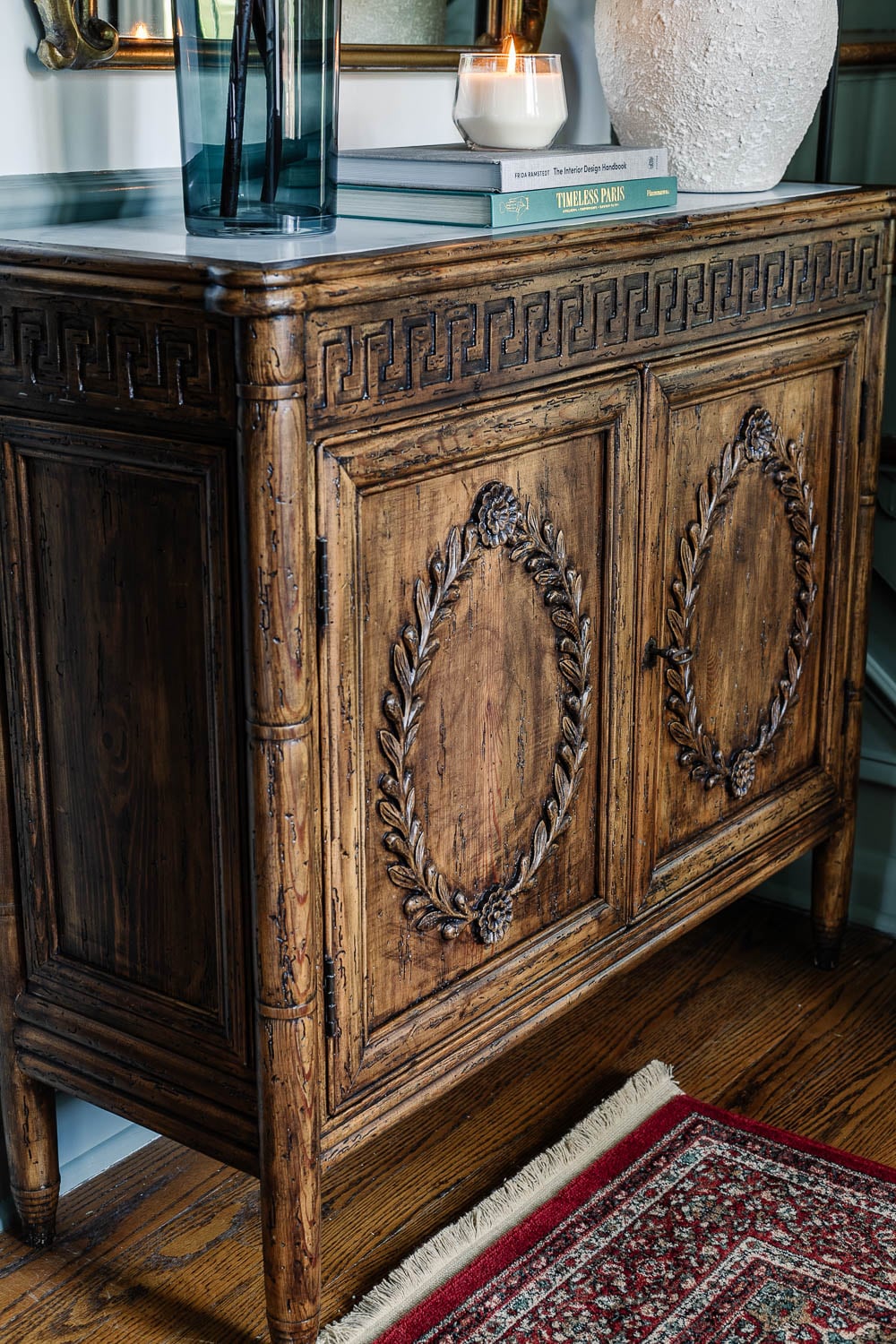
The no-strip method is the busy refinisher’s secret weapon, and this guide makes the case persuasively: clean deeply, scuff lightly, and apply gel stain or paint straight over the old finish, skipping the chemical warfare entirely. Gel stain in particular performs miracles here, adding rich color over existing finishes like a tinted topcoat. The technique from Bless’er House suits pieces with sound but dated finishes, the orange oak generation especially. A full weekend project becomes an evening one. Stripping still exists for the special cases; for everything else, there is this. You can get the no-sanding tutorial at Bless’er House.
22. Revive A Bedside Table With Wall Decal
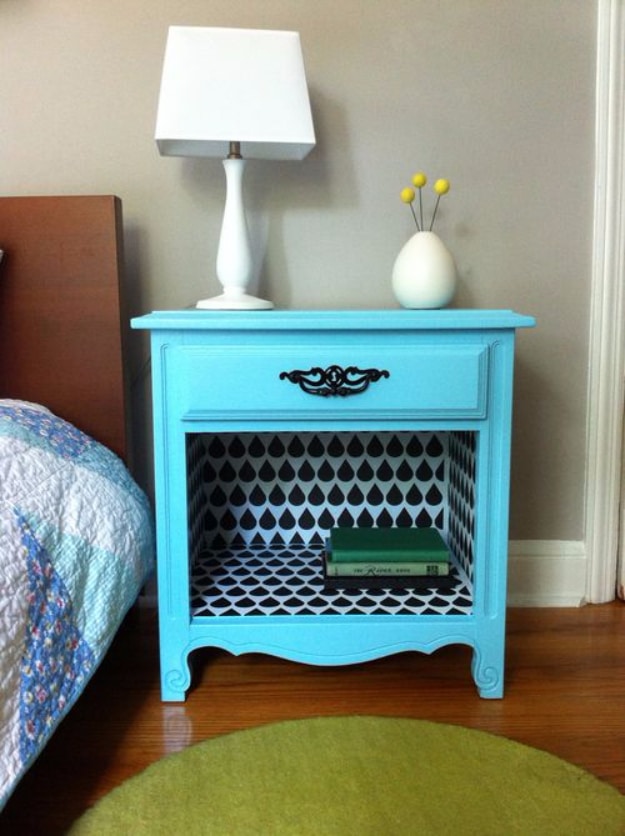
The Spoonflower blog reimagines the humble wall decal as furniture couture: a removable patterned decal smoothed across a bedside table top delivers intricate design no stencil could match, in minutes, with zero paint. Removable material means renters and commitment-phobes play too – peel and the table returns to before. Pattern placement is the craft: center it, smooth from the middle out, and chase bubbles with a credit card. The technique extends to drawer fronts and cabinet doors. Design-forward furniture with an undo button.
23. Fix Faded Aluminum Patio Furniture
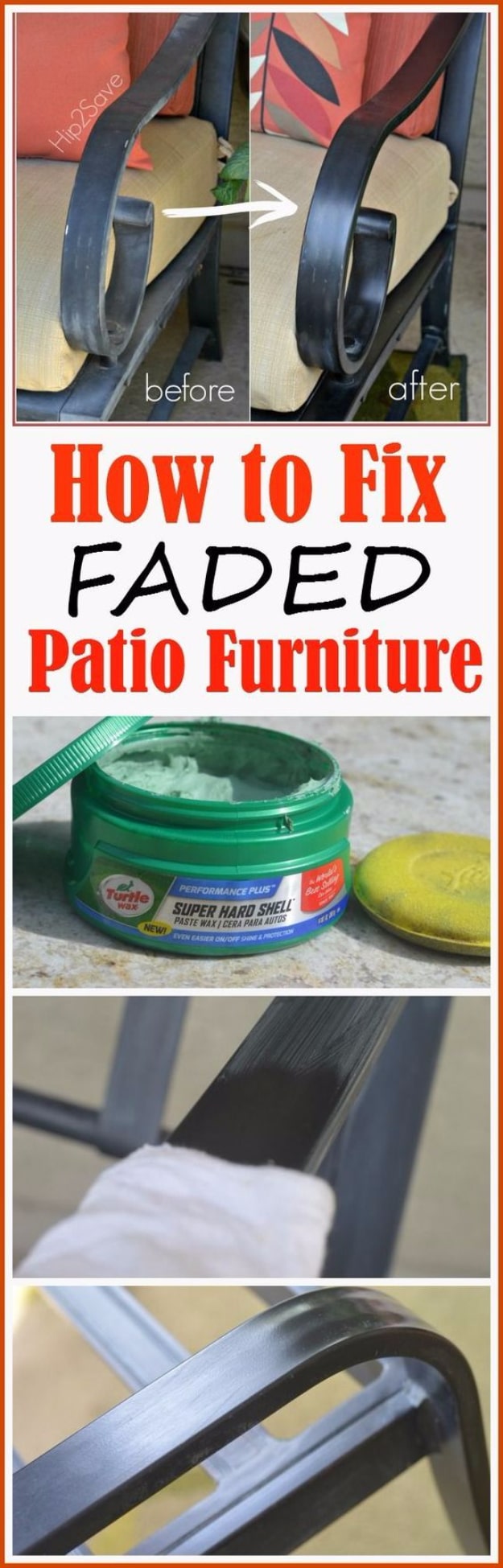
Faded aluminum patio furniture looks terminal and is anything but: this fix wipes the chalky oxidation away and restores deep color with surprisingly little product. The method works the frames back to life while the right cleaner handles slings and straps. It is a classic Hip2Save find – cheap, fast, and effective enough to feel like a loophole. An annual fifteen-minute repeat keeps the finish holding. The patio set survives another budget cycle, and the replacement fund stays funded.
24. DIY Modern Side Table
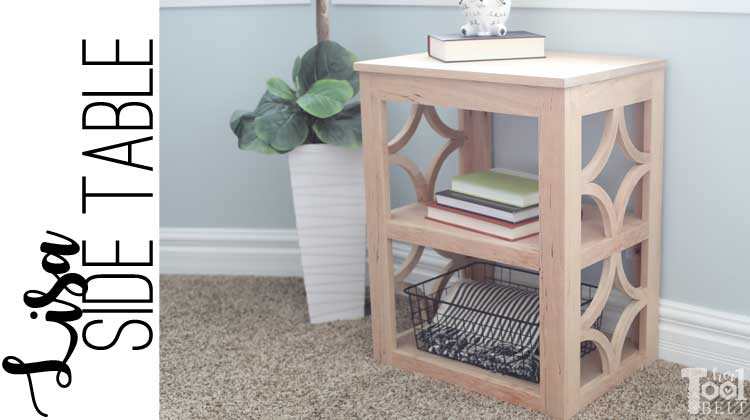
Sometimes the best way to get the exact table you want is to build it yourself, and this modern side table is beginner-friendly enough to be a great first build. Her Tool Belt lays out the cut list and steps so clearly that even a nervous saw-user can follow along. I resisted building furniture for years thinking it needed a garage full of tools, and projects like this one proved me wrong. Clean lines mean the finish does a lot of the talking, so a smooth stain or crisp paint really pays off here. Sanding the edges before finishing is the small step that separates homemade from handmade. The payoff is a piece sized and styled exactly for your space, which no store table quite manages. Grab the plans and build along with Her Tool Belt.
25. Whitewashing Furniture
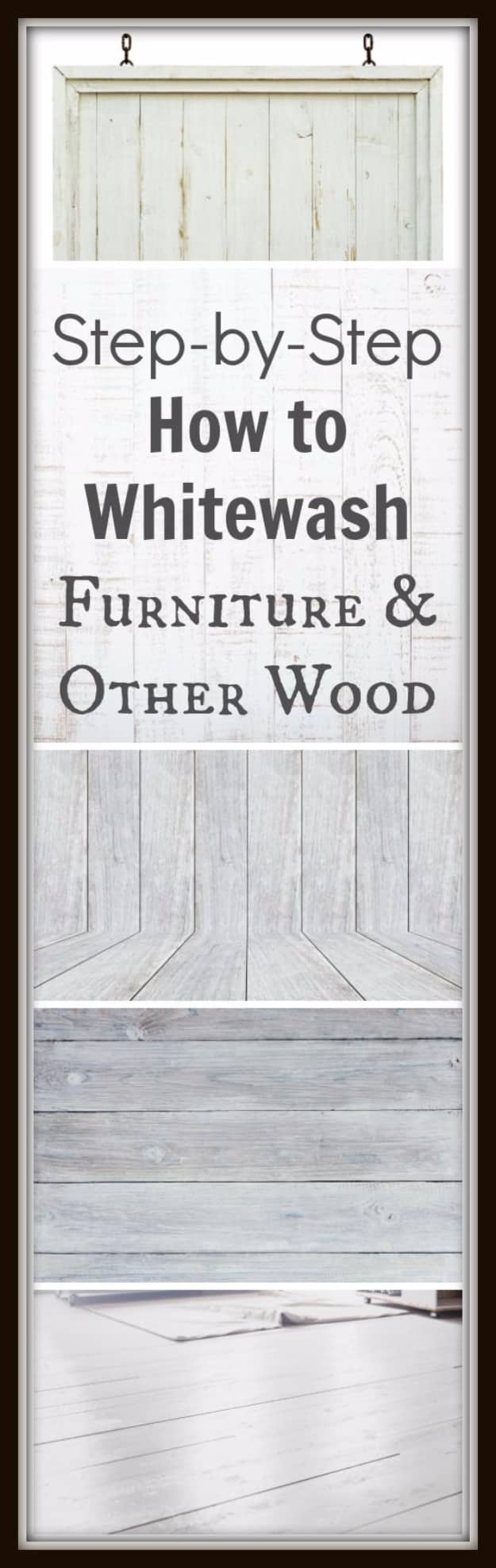
Whitewash lets wood keep its voice while lightening the conversation: thinned white paint brushed on and wiped back, leaving grain visible through a soft, sun-bleached veil. The wipe timing controls everything – sooner keeps more wood, later keeps more white – and a practice board finds your preference fast. The finish suits coastal, farmhouse, and Scandinavian rooms equally, which explains its long reign. Painted Furniture Ideas covers ratios and technique clearly. It is the finish for people who love wood and light in equal measure.
26. Decoupaged Furniture
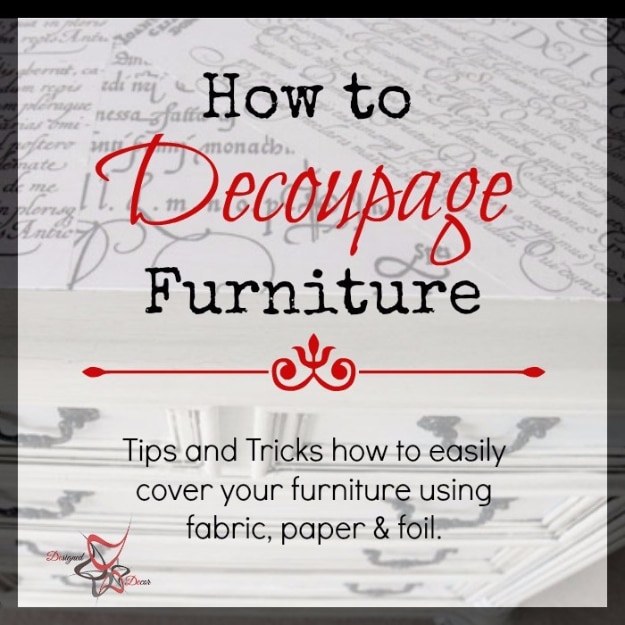
Designed Decor covers furniture in paper the way quilters cover beds – deliberately, beautifully, and with a sealed finish that lasts. Decoupage on drawer fronts or tabletops brings pattern that paint cannot: florals, maps, book pages, wrapping paper worth immortalizing. Mod podge layers under and over the paper do the structural work, and a final poly topcoat armors high-touch surfaces. Bubbles surrender to a brayer or credit card, chased outward while wet. It is scrapbooking that graduated into furniture, and the results hang together far better than that sentence suggests.
27. Refinishing Wrought Iron Patio Furnitures
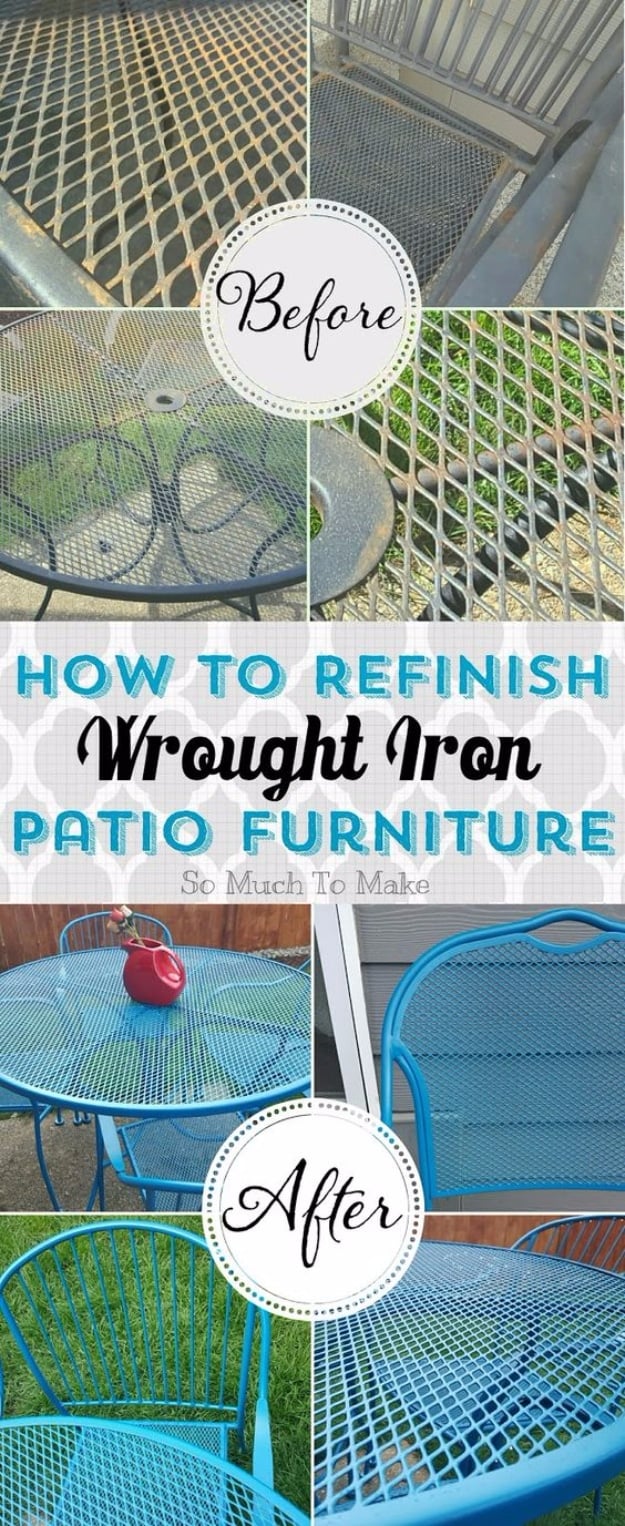
Wrought iron earns its forever reputation only with occasional rescue, and this walkthrough delivers the full treatment: wire brush the flaking spots, convert or prime the rust, and spray in thin passes that respect the scrollwork. The ornate curves that make iron beautiful also make brush painting miserable, which is why spray technique matters here more than anywhere. So Much To Make paces the coats honestly. Refinished iron outlives every plastic patio set sold this decade. Heavy, ornate, and immortal with maintenance – they literally do not make it like this anymore.
28. Perfectly Striped Drawers
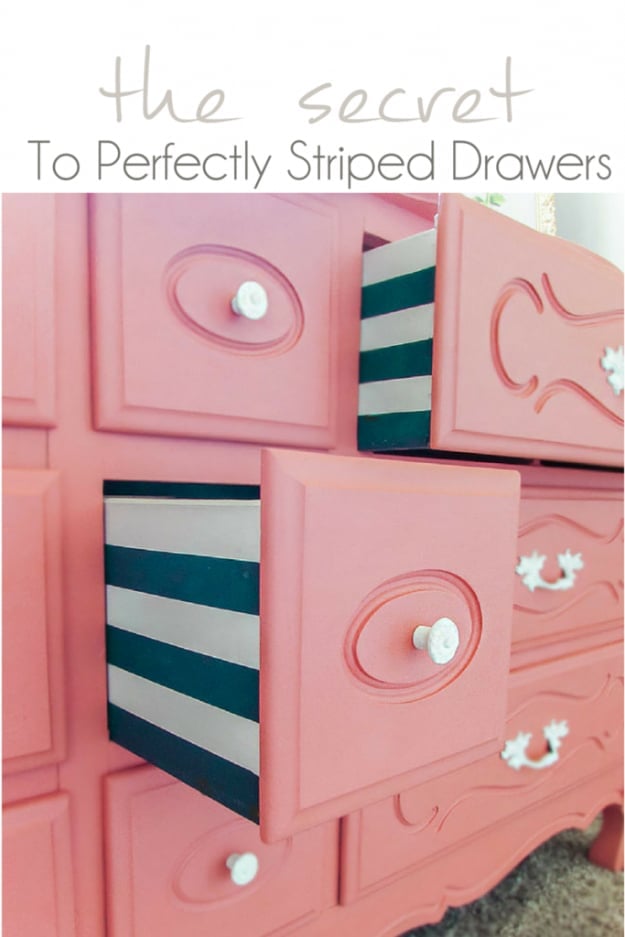
Stripes on drawer fronts read designer, and the technique is pure tape discipline: measure, tape, seal the tape edge with the base color first, then stripe. That base-color seal step is the whole secret – any bleed happens in the invisible color, leaving the stripe edge razor sharp. Pocket of Posies demonstrates on a dresser where the stripes carry the entire design. Horizontal widens a piece visually; vertical adds height. One roll of tape separates wobbly from professional, and now you know which side of the roll you are on.
29. Sanding Furniture Tips
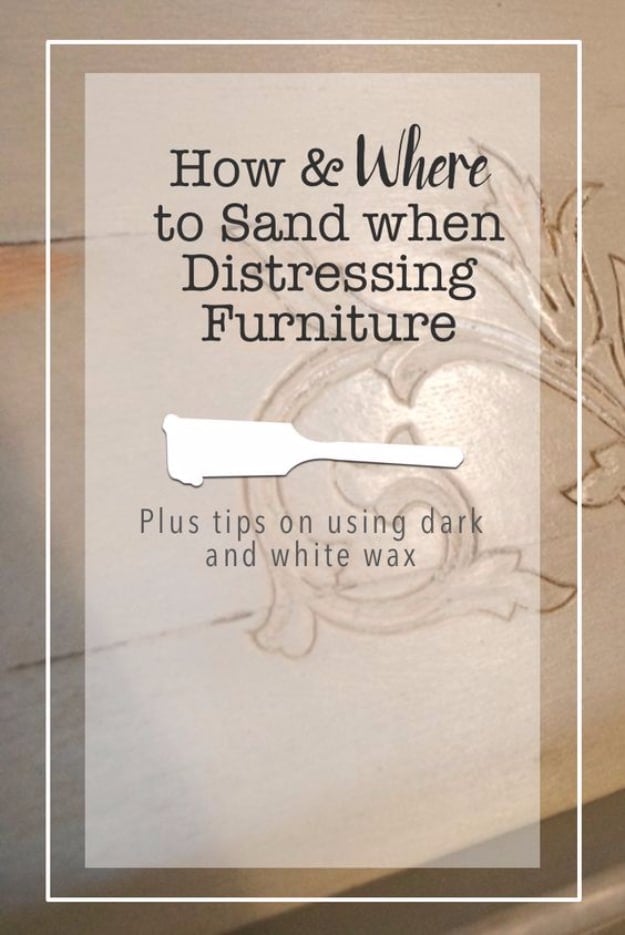
Sanding is the unglamorous foundation under every glamorous reveal in this list, and doing it right is the highest-leverage skill in the whole craft. The essential furniture refinishing tips here cover grit progression – coarse to fine, never skipping wildly – plus with-the-grain discipline and the tack cloth ritual before any finish touches wood. Country Design Style explains why each step exists, which makes the patience easier to find. A sanding block beats fingers for flat surfaces every time. Boring done well is what beautiful is built on.
30. Limewashed Table Makeover
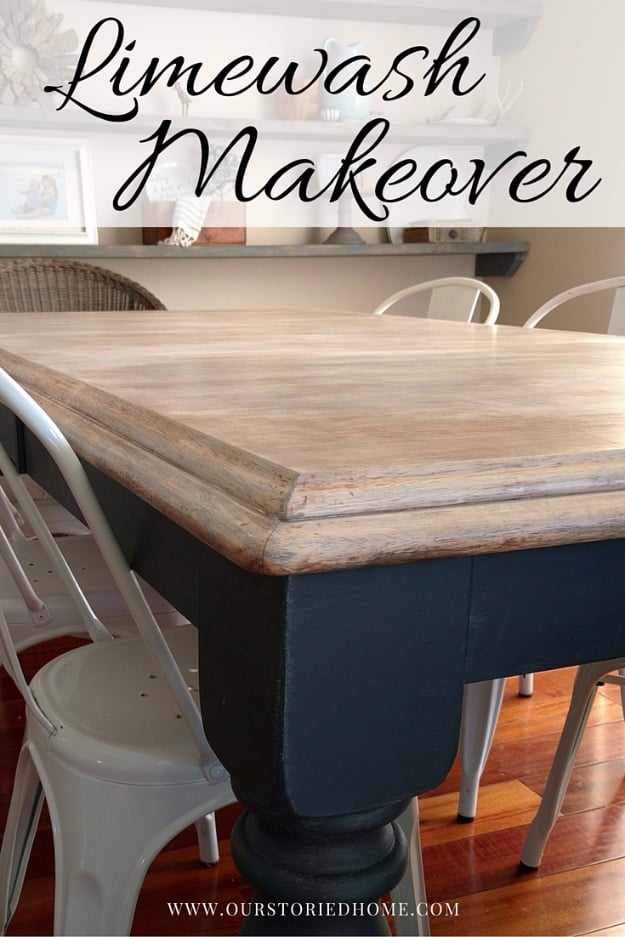
Our Storied Home limewashes a table into that chalky, sun-softened European finish that design magazines charge admission to look at. Limewash sinks into raw wood rather than sitting on top, so stripping or raw wood is the starting line, and the mineral finish ages gracefully instead of chipping. The application is forgiving – brush it on, let it dry, buff to taste. The look pairs with linen, stoneware, and every neutral room built this decade. Old-world technique, weekend timeline.
31. Create Two Pieces Of Furniture From A Hutch
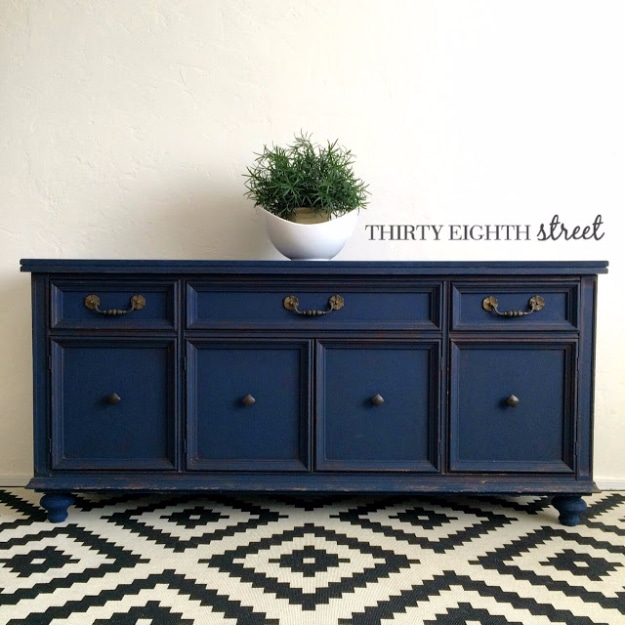
The two-piece hutch is furniture mitosis: separate the top from the base and suddenly one thrift store monolith becomes a bookshelf and a buffet, each refinished for its new life. Hutches sell cheap precisely because they are huge, which makes this split the best value play in secondhand furniture. The separation is usually just screws; the refinishing makes them strangers to each other in the best way. Thirty Eighth Street documents both halves’ journeys. One purchase, two rooms furnished – math worth driving to an estate sale for.
32. Liming Wax Drum Table Makeover
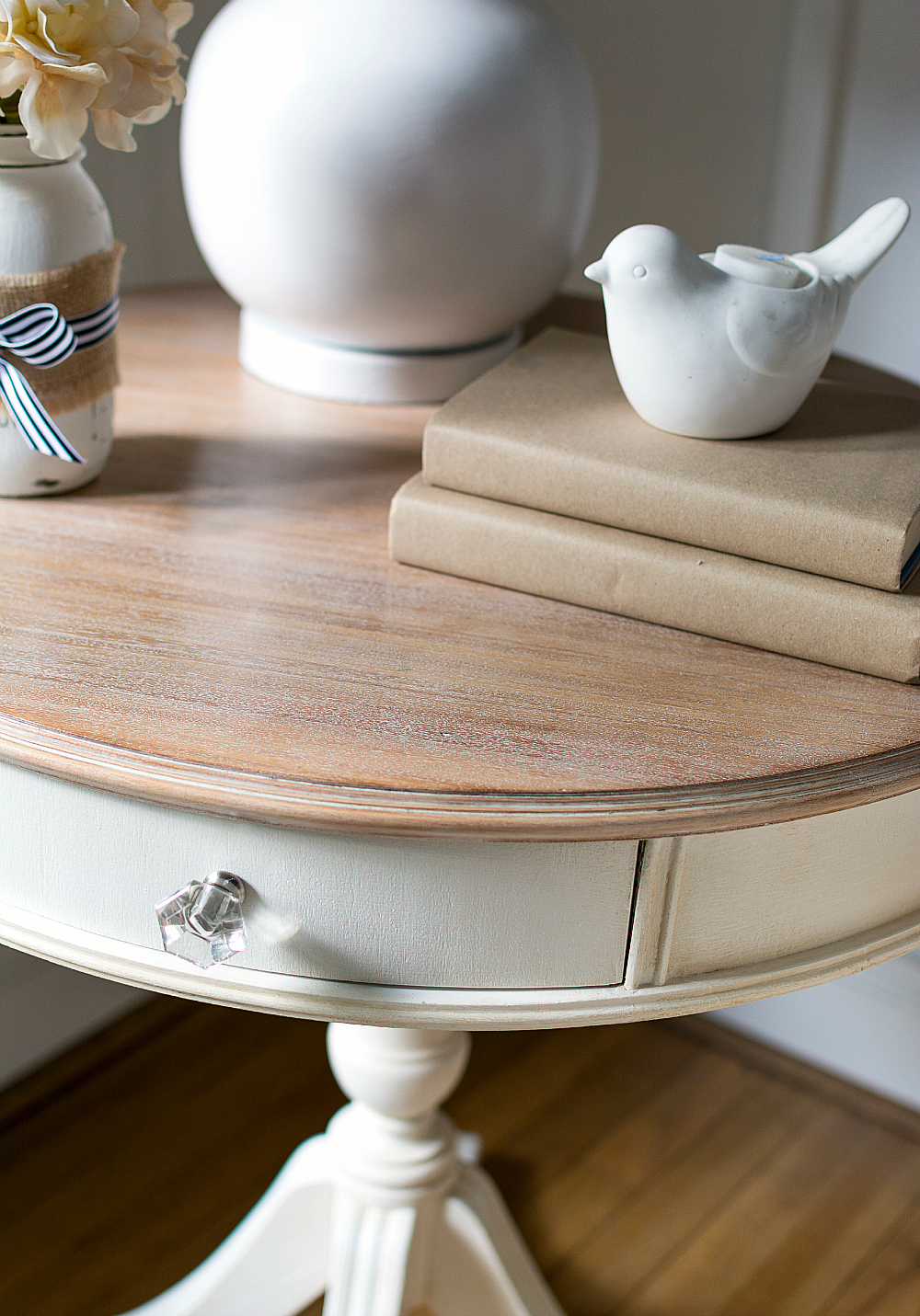
Liming wax is one of those old-world finishes that sounds intimidating and turns out to be almost embarrassingly easy, and this drum table shows off exactly what it can do. It All Started With Paint rubs the soft white wax into the grain so it catches in all the low spots, leaving a chalky, sun-washed glow. I think of it as a glaze’s laid-back cousin, since it adds depth and age without a fussy multi-step process. Working it in with a rag and buffing back the excess is genuinely the whole technique. It looks best over raw or lightly sanded wood where the grain can drink it in. The result reads coastal, farmhouse, and European all at once, which is a lot of mileage from a tin of wax. See the whole finish come together and read the tutorial at It All Started With Paint.
33. Faux Distressed Metal Furniture Makeover
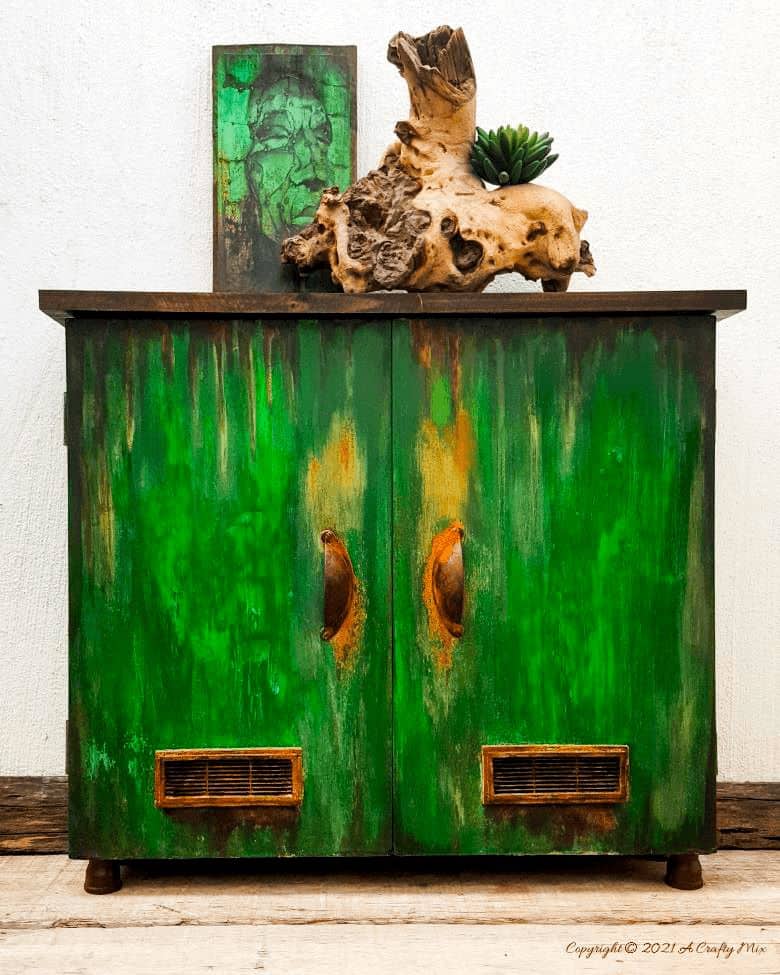
Metallic finishes turn ordinary furniture into something that looks pulled from an industrial loft, and this faux distressed metal treatment is pure paint-can magic. A Crafty Mix layers metallic and rust-effect paints so a slick surface ends up looking like salvaged aged metal, which is a delicious little trick to pull off. I love that this hides the shiny, hard-to-paint pieces most people avoid, since the whole look leans into imperfection. Dabbing and layering rather than smooth-coating is what sells the aged effect, so put the perfectionism away. A matte sealer keeps the finish from looking like fresh paint and locks in that convincing patina. It is the fastest way to fake decades of character on a piece that has none. Take a look and follow the metal finish tutorial at A Crafty Mix.
34. Vintage Cedar Chest Modern Redo
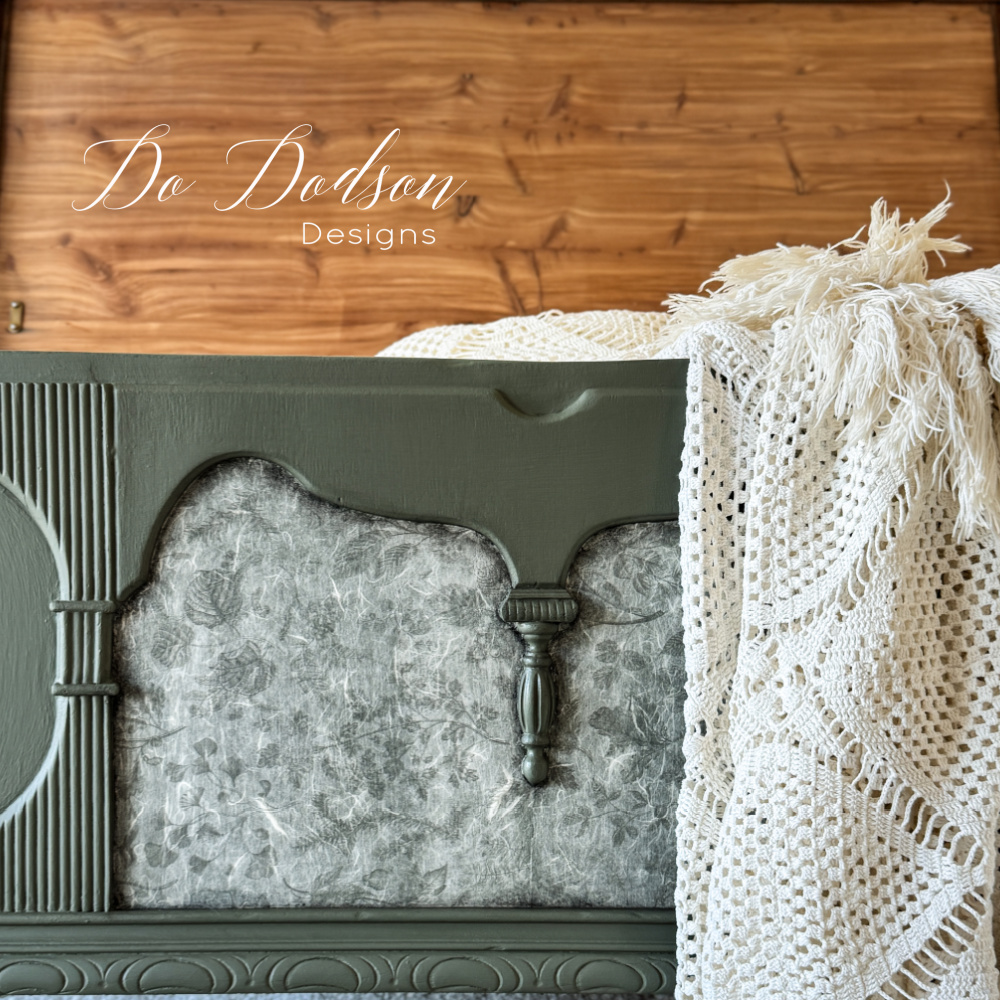
Grandma’s cedar chest is one of those pieces nobody wants to part with and nobody quite knows how to use, and this modern redo solves both problems beautifully. Do Dodson Designs keeps the sentimental bones while updating the finish so the chest actually fits a current room instead of hiding in a spare bedroom. I appreciate that a real refinish like this respects the wood rather than burying it, so the character still gets to show. Cleaning off decades of old wax and buildup is the unglamorous first step that makes everything after it look flawless. A careful new finish, whether stain or paint, is where a tired heirloom turns into a showpiece. It is proof that keeping family furniture does not mean living with dated family furniture. See the full transformation and get the details at Do Dodson Designs.
35. Paint Laminate Furniture Without Sanding
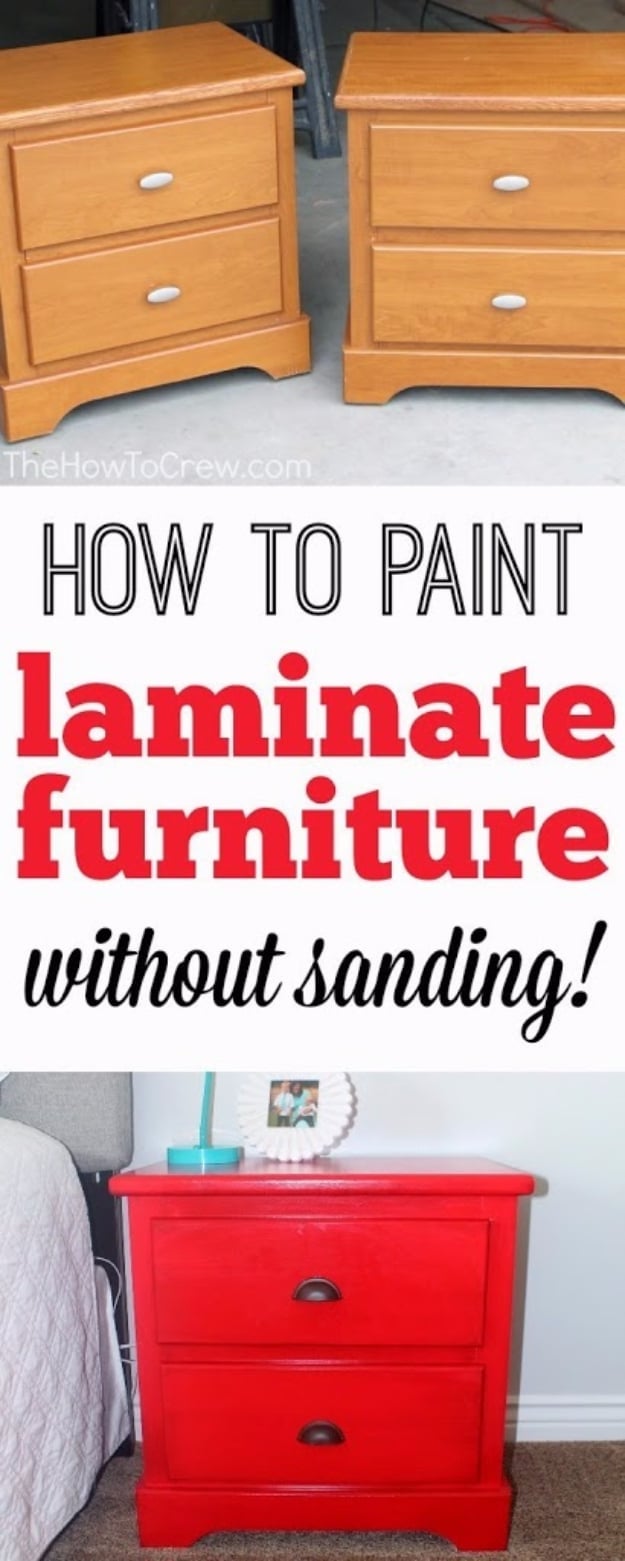
Family Food Fun cracks the laminate code: the right bonding primer grips the slick surface that regular paint slides off of, no sanding required. Laminate furniture is everywhere, cheap, and structurally fine – its only crime is the finish, and this method pardons it. Primer choice is everything; the tutorial names what works. Light coats and patience between them keep the smooth surface smooth. Every apartment’s worth of flat-pack furniture just became a candidate for better.
36. Thrift Store Coffee Table Turned Tufted Ottoman DIY
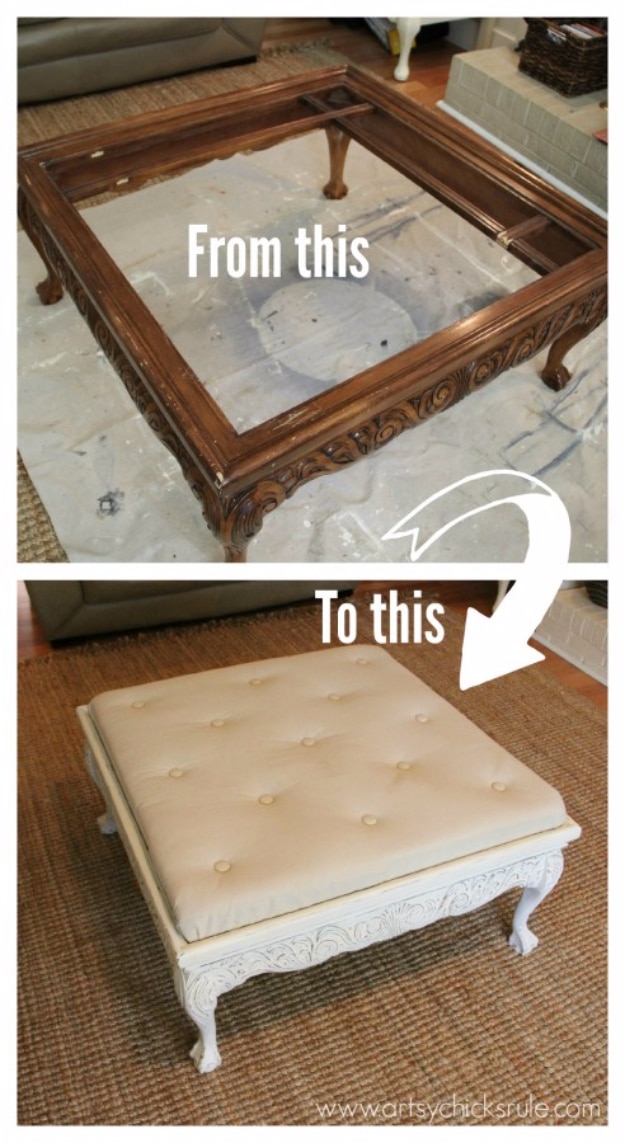
The finale transforms furniture across categories: a thrift store coffee table gains foam, batting, fabric, and buttons, emerging as a tufted ottoman that belongs in a catalog. The table supplies the bones and the legs; the upholstery supplies everything else, including the tufting that sounds hard and is mostly just long needles and patience. It is the gateway project into upholstery, with a forgiving rectangular canvas. Total cost runs a fraction of retail ottomans with half the personality. Artsy Chicks Rule walks the whole conversion, and the thrift store furniture aisle becomes a fabric-store companion trip forever after.