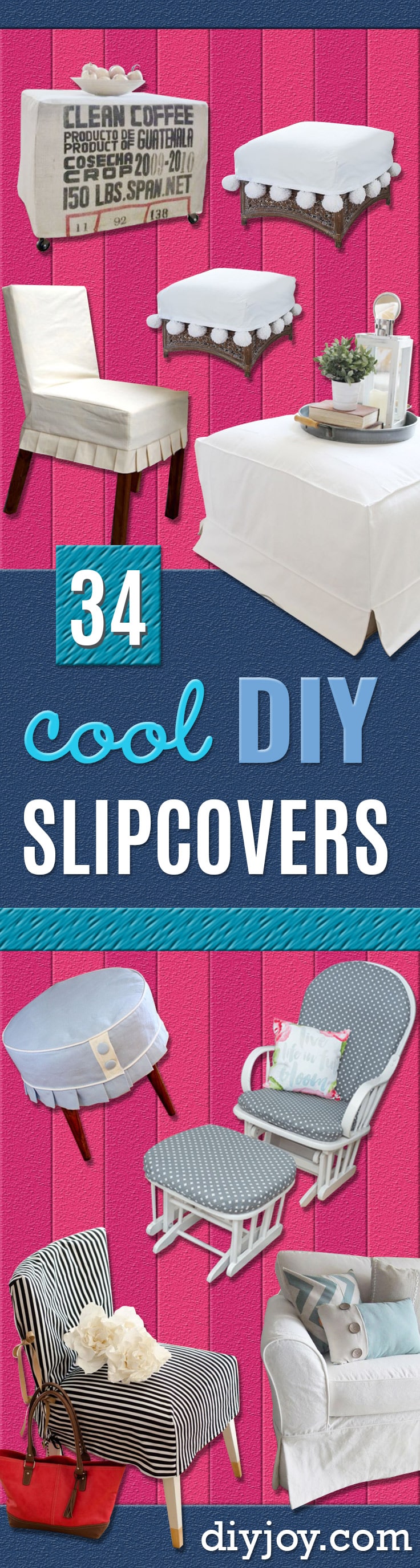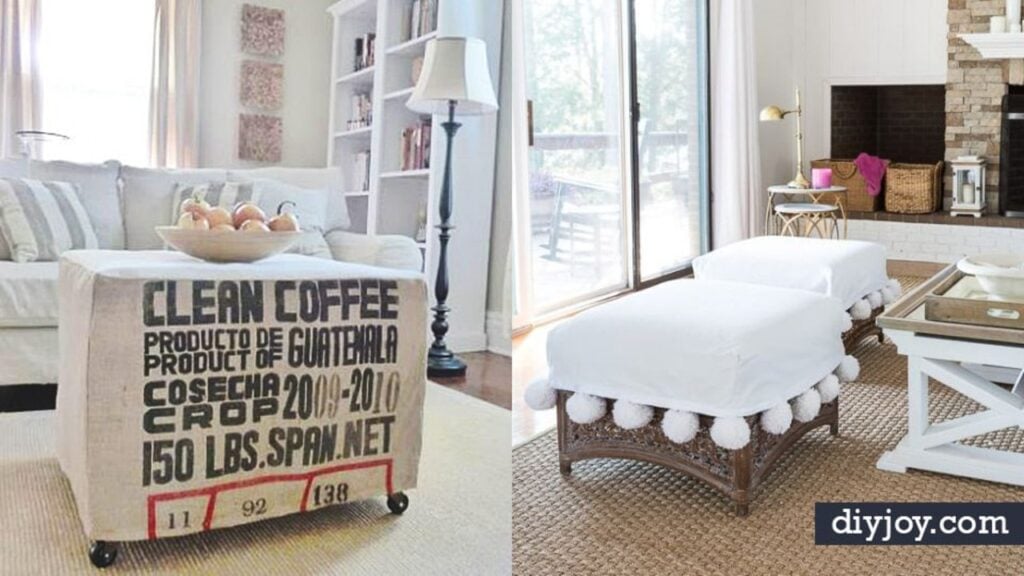
One of my favorite ways to redecorate without spending real money is a slipcover, and the thing nobody tells you is that a slipcover is not sewing so much as wrapping. You pin the fabric onto the furniture inside out, follow the seams the upholsterer already put there, sew along your pins and turn it right side out. That is the whole method, and it is why a painter’s drop cloth for under twenty dollars can cover a wing chair. Some of these are a weekend with a basic machine, some are a single minute with a square of fabric and no sewing at all, and every one of them either hides something worn out or lets you change a room without buying furniture. Chairs, couches, ottomans, recliners, a settee, a lampshade and a coffee table, all covered.
1. Bandana Pillow Covers

Two bandanas, sewn right sides together along a quarter inch seam, turned out and stuffed around an 18 inch insert, and you have a pillow cover you will not find in a shop. I have made a great many of these, which is how I know you will not stop at one. Twenty by twenty inch bandanas are the right size, and the no sew version swaps the machine for fabric glue and clothespins. Leave only eight inches open on the last side so the bit you close by hand is small.
Get the full tutorial at DIY Joy.
2. Black, White, and Gold Slip Covered Chair
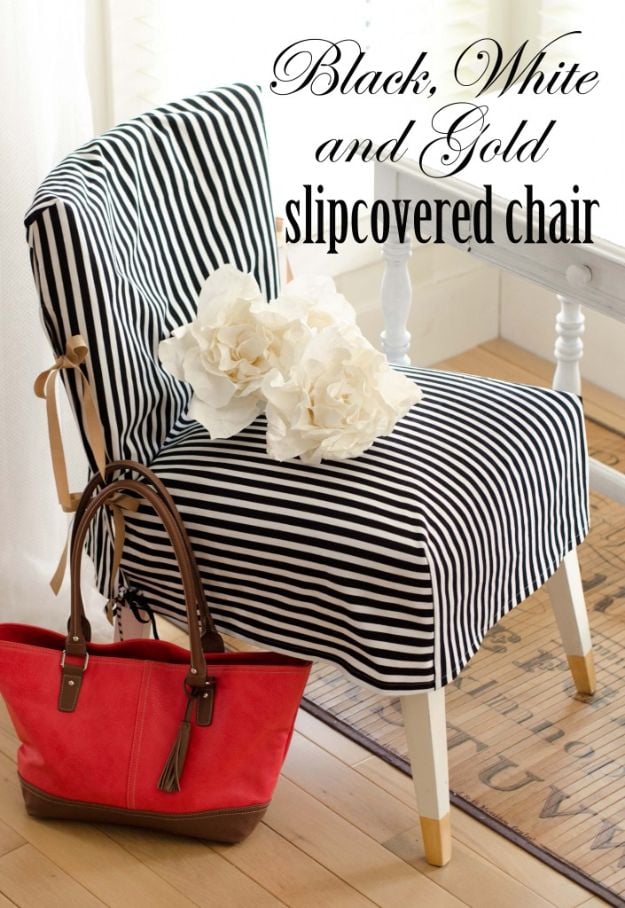
One dollar at auction, sturdy and comfortable and stained beyond saving, and now wrapped in a bold black and white stripe. The lesson buried in it is that a slipcover is the right answer for a chair whose bones are good and whose fabric is finished. A broken spring was fixed first, which takes five minutes and is the difference between a chair you use and one you keep meaning to deal with. Gold dipped legs finish it off.
Get the full tutorial at Sew a Fine Seam.
3. No Sew Cushion Cover In A Minute
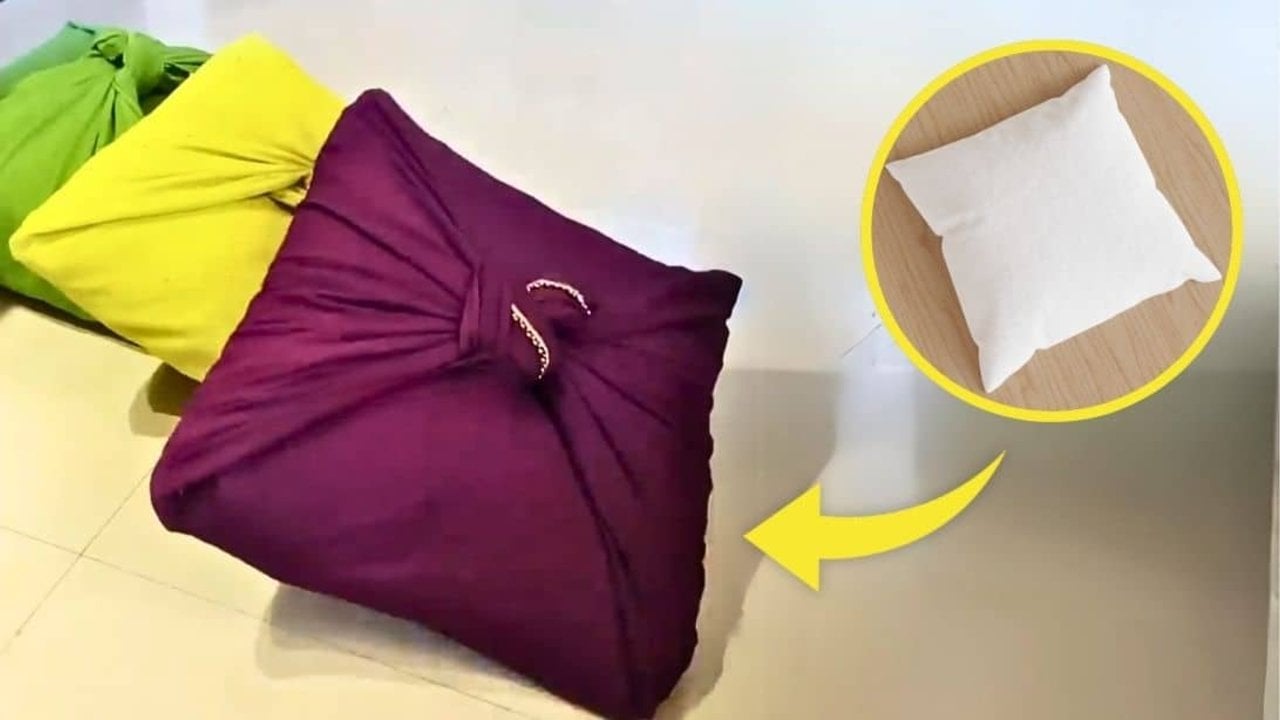
No sewing, no measuring, no pattern, about sixty seconds a cushion. Lay a large piece of fabric flat, set the cushion in the middle at a 45 degree angle, fold the bottom right corner in tight and flat over it, do the same with the top left, then bring the two remaining ends into the middle and tie them in a knot. Tuck the ends into the folds and the knot disappears. Perfect when somebody rings to say they are twenty minutes away.
Get the full tutorial at DIY Joy.
4. Sew A Slipcover For A Wingback Chair
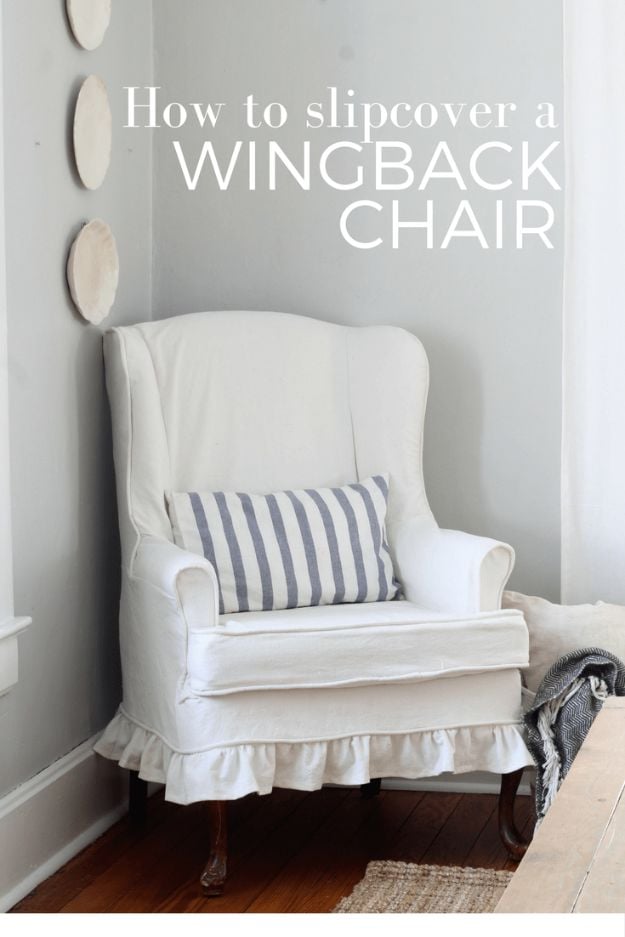
Bleached painter’s drop cloth on a wingback, and the maker is straight with you that this one was hard. Her rules are the best short summary of slipcovering anywhere on this list: follow the original seams and lines of the chair, and work inside out. The fabric warning matters too. Drop cloths are only bleachable if they are 100 percent cotton, and the 50 percent polyester ones turn grey or stay off white no matter what you do. There is a video as well as photos.
Get the full tutorial at Farmhouse on Boone.
5. Linen Slipcovered Couch
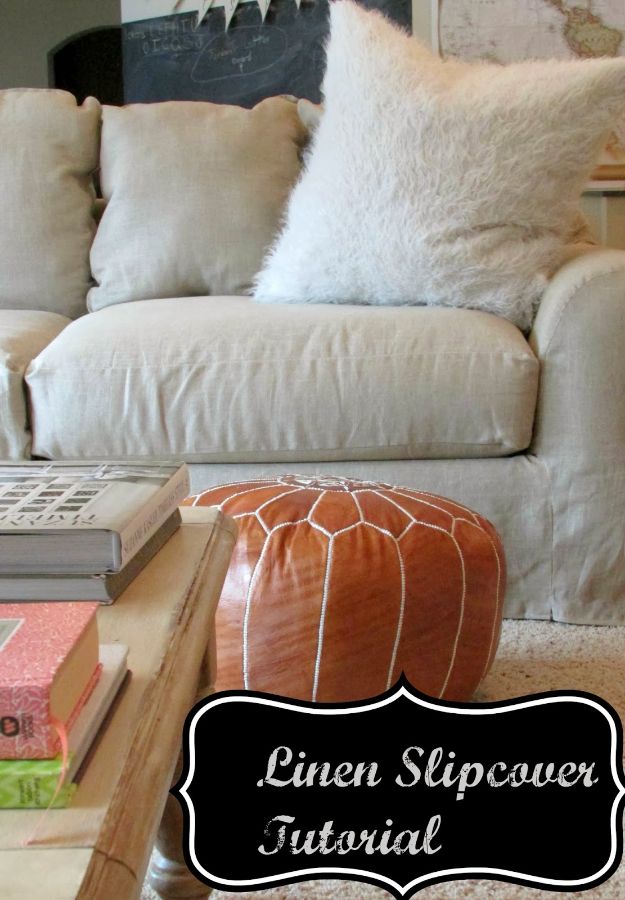
Holes worn through the arms and cushions and a tired olive green, all covered in a thick slub linen from a craft store rather than reupholstered professionally. The detail worth noticing is that this cover has no piping at all, which is both a design choice and a large reduction in work, since piping is the fiddliest part of any slipcover. The maker had already covered the matching chair in the same fabric months earlier, and it held up through daily use.
Get the full tutorial at SimplyLinen.
6. Sew A Rocking Chair Slipcover
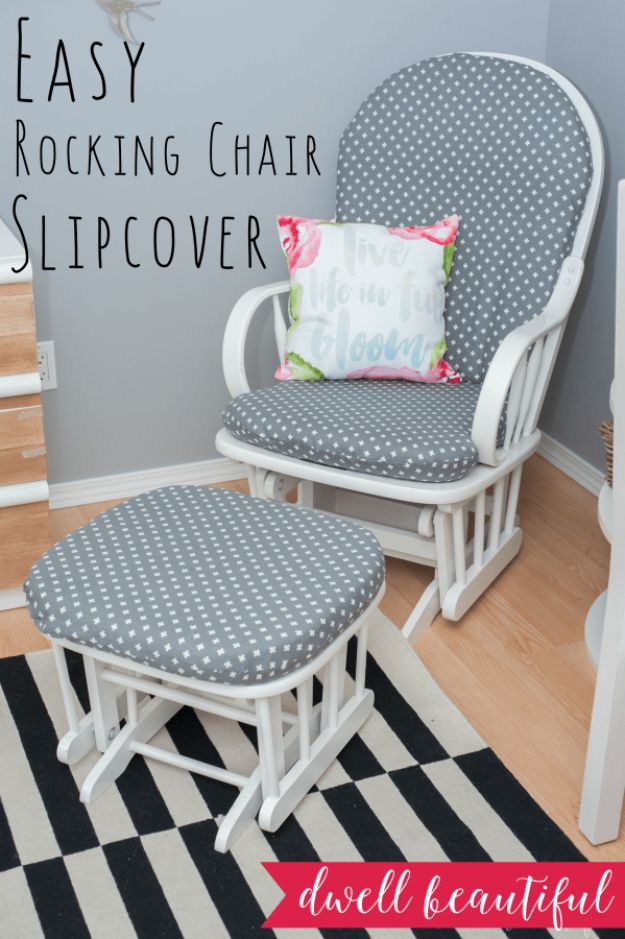
Cushion covers for a rocking chair, written by somebody who describes herself as not a good sewer, which makes it the right starting point on this list. Three yards of fabric covered both cushions, though she wishes she had bought another half yard for cutting errors and wider seam allowances. Buy the extra half yard. Cushions are the easiest slipcover there is, because you are covering two flat rectangles rather than a shape with arms, and nobody has to see the inside.
Get the full tutorial at Dwell Beautiful.
7. Kitchen Chair Slipcover
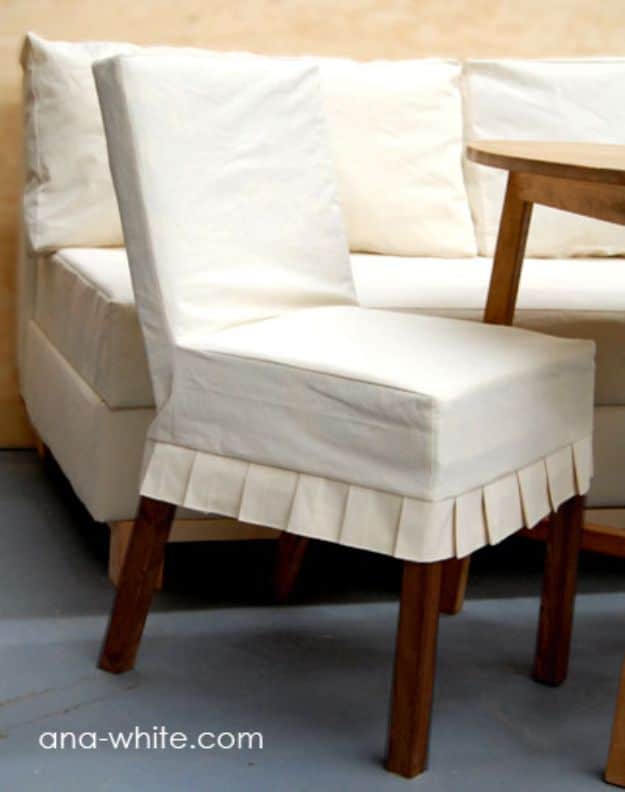
Parson chair covers in leftover drop cloth, and the reason to start here is that every single seam is a straight line from point A to point B. No curves, no bias, no piping. The knife pleat hem sounds like the hard part and is not, and it is what makes the cover look tailored rather than thrown over. Aim for snug but not tight, so it holds its shape and still comes off to go in the washing machine.
Get the full tutorial at Ana White.
8. Cottage Style Canvas Slipcover
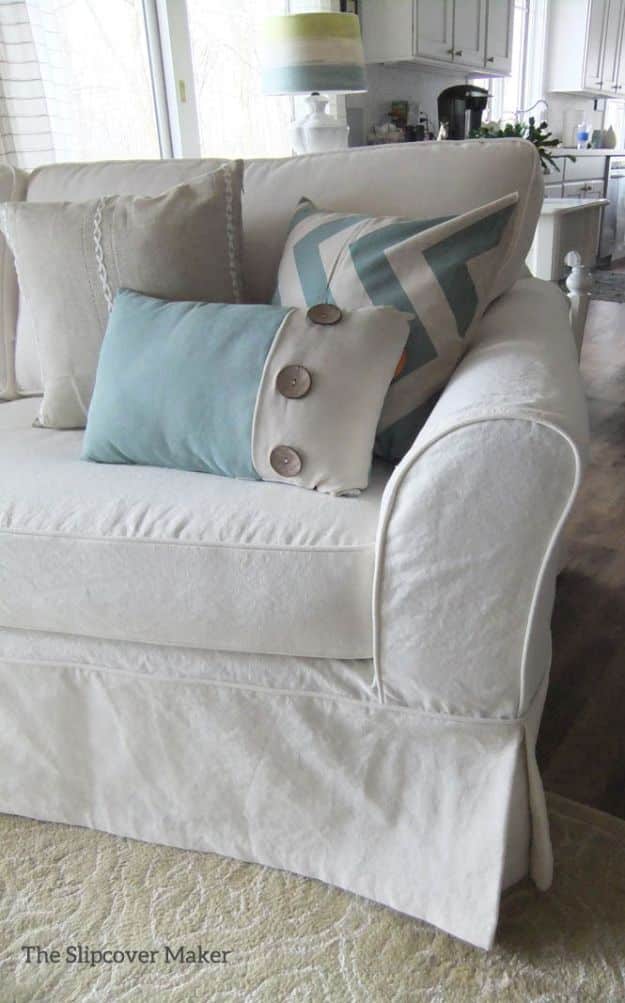
A cotton poly canvas cover in creamy white, made and fitted by a professional slipcover maker, which is why the fit looks different from the homemade ones above and below it. The value here is the reference photograph rather than a set of steps: this is what a properly fitted cover looks like at the arm, the skirt and the back, and it is worth studying before you pin your own. The relaxed cottage look comes from the fabric, not the tailoring.
Get the full tutorial at The Slipcover Maker.
9. Ottoman Slipcover
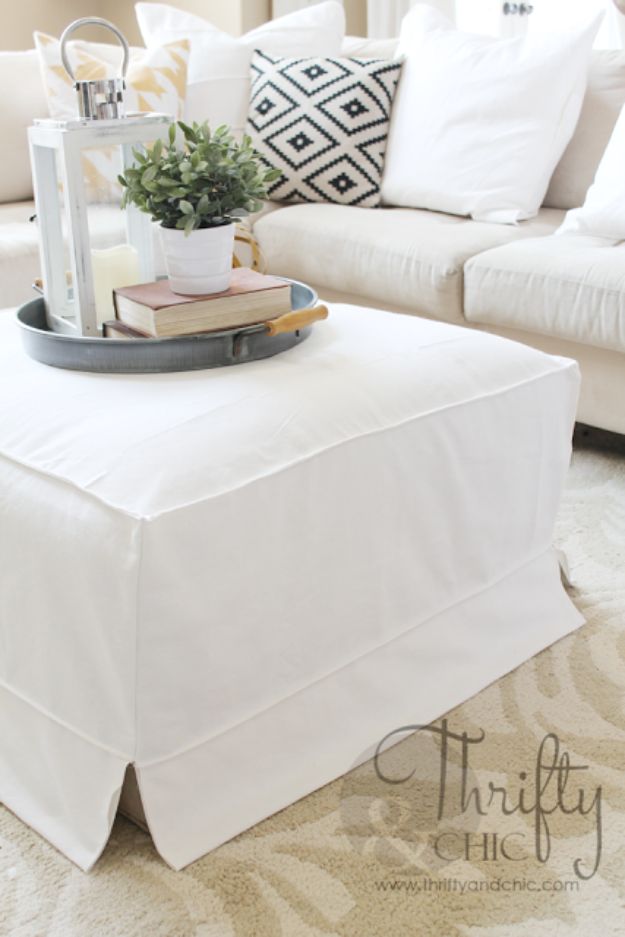
Thirty dollars, then ruined by a toddler, and now covered in white so it can be washed whenever it needs it. Because the ottoman is a perfect square the maths is the easy part: the top measured 33 by 33 inches and the sides 17 by 33, and the fabric was cut at 35 by 35 for the top and 24 by 35 for the sides. Two rules carry it. Measure twice and cut once, and do the whole thing inside out.
Get the full tutorial at Thrifty and Chic.
10. Make A Couch Slipcover

A whole couch in white duck canvas, made because every ready made cover the maker could find was both expensive and not quite what she wanted. She had already covered a wing chair, which is how she knew a couch was possible. Her honest update years later is the useful bit: she has since switched to beige, because white canvas is harder to keep looking good than she expected. If you want white anyway, plan on bleaching it and keep a quilt or two nearby.
Get the full tutorial at Honeybear Lane.
11. Holiday Pillow Slipcovers

Eleven pillow covers made in a couple of days out of flannel plaid and linen, with felt shapes, buttons and bells added on, for a fraction of what eleven new holiday pillows would have cost. The real argument for covers rather than pillows is storage. Eleven seasonal pillows need somewhere to live for the other eleven months of the year, and eleven covers fold flat into a drawer. Make one set for fall and one for Christmas off the same measurements.
Get the full tutorial at Simply September.
12. Recliner Slipcover

A mauve recliner turned casual and coastal in drop cloth, and the maker made four separate covers rather than one: the back, the bottom half including the arms, the footrest and the cushion. That is the insight. One giant cover on a recliner is impossible to get on and off, and four means the thing can actually be washed. She bought two 12 by 15 foot drop cloths and used about two thirds of one. The back attaches underneath with velcro so the pleats hang straight.
Get the full tutorial at Blue Roof Cabin.
13. Slipcovered Settee

Brown velvet turned summer linen, sewn by somebody who describes her own sewing skills as limited and who had never slipcovered a piece of furniture before. It took four days of piecing it together bit by bit. Two honest notes come with it: pin the cover inside out, and keep the linen tight while you sew but not too tight. Linen wrinkles if you breathe on it, and it works here because the settee underneath is so tailored.
Get the full tutorial at Centsational Style.
14. Office Chair Slipcover
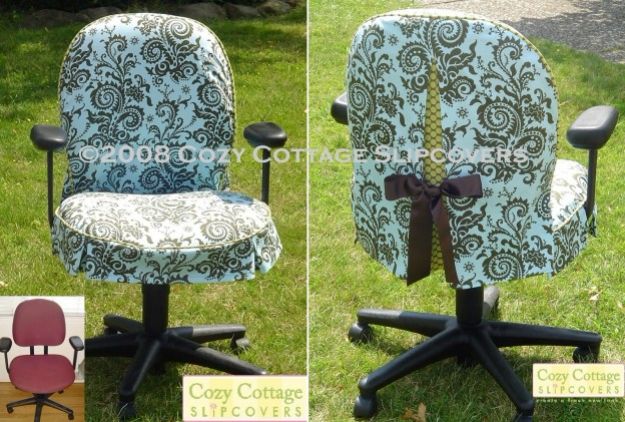
An office chair covered in a printed cotton, and the clever constraint is that the cover is built so the chair stays fully adjustable. That is the whole problem with office chairs: the seat tilts, the height moves, the back swivels, and a cover that fights any of it makes the chair worse. The fabric used here is Amy Butler’s Nigella print. If you work from home and stare at a grey mesh chair all day, this is the smallest possible fix.
Get the full tutorial at Cozy Cottage Slipcovers.
15. French Settee Slipcover

A curvy French settee, covered by somebody who has made many, many slipcovers and still calls this one her hardest. Her method is the best single sentence in this whole roundup: think of the chair as your dress form. Pin the fabric onto the furniture itself to work out where the seams belong, use the design of the piece as your guide, and make the cover as much like the original upholstery as you can. She sketches the piece and labels every surface first.
Get the full tutorial at Cedar Hill Farmhouse.
16. Wing Chair Slipcover

Under twenty dollars of drop cloth on a flame stitch wing chair, by somebody who had never attempted a slipcover before. Two tips here are worth more than the rest of the post. Put a fresh needle in your machine before you start and keep spares beside you, because a denim or jeans needle gets through the thickness and still dulls before you finish. And the cording strips were cut two and a half inches wide from the center length of the drop cloth.
Get the full tutorial at At Home on the Bay.
17. Chevron Ottoman Slipcover

Five years in a basement for this discount store ottoman, now covered in a blue chevron with a pleated ruffle around the bottom. The measuring is the whole job: the top gets an extra inch on the width and the height, the sides get about two inches spare for the pleated ruffle, and the seam allowances are kept as small as you dare so the finished cover still slides on. Draw the whole thing out on paper first if you think visually.
Get the full tutorial at Tatertots and Jello.
18. Coffee Table Slipcover

Skirted covers for a coffee table, and the maker makes the case for it being the best first slipcover anybody can attempt. Her reasoning is that sewing a slipcover is not hard at the machine, it is hard in the planning, and a coffee table is a straightforward box. Wrapping a present is easy when the present is a box and awful when it is an odd shape, and sofas and chairs are odd shapes. Choose an upholstery weight fabric so you never have to line it.
Get the full tutorial at Bibbidi Bobbidi Beautiful.
19. Lampshade Slipcover

Two dated brass lamps painted white and glazed, and then the shades got a burlap slip cover rather than being replaced, because the plain white ones read as too white once the bases changed. That is the real reason to make one: a shade cover lets you add texture without spending anything, and it comes off again if you change your mind. A nice painting trick comes with it. Push a long nail through cardboard and sit the finial on top so you can paint the underside too.
Get the full tutorial at Red Door Home.
20. Slipcovering a Recliner

Fifty dollars on Craigslist bought this glider recliner, covered for a nursery, and the post is tips and tricks rather than a full tutorial, which is exactly what makes it useful after you have made one badly. The honesty is welcome too: eight yards of fabric cost eighty dollars, and she says plainly that making a slipcover is not easy, not fast and not especially cheap. Nursing chairs come unslipcovered from the factory, which is a strange decision nobody has ever explained.
Get the full tutorial at BonnieProjects.