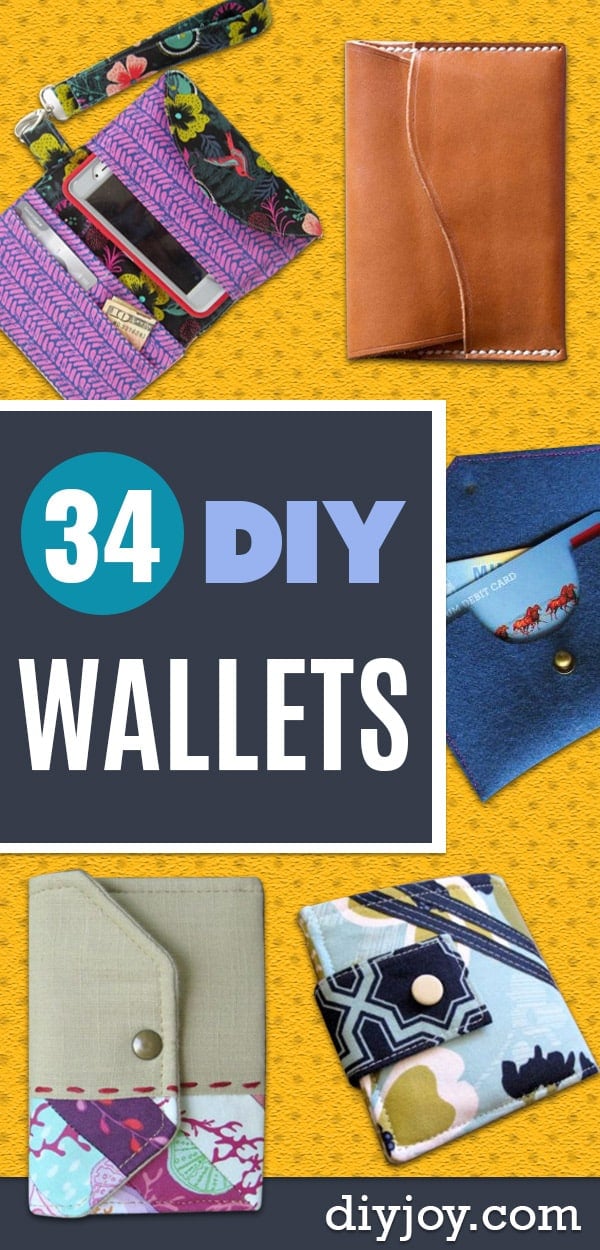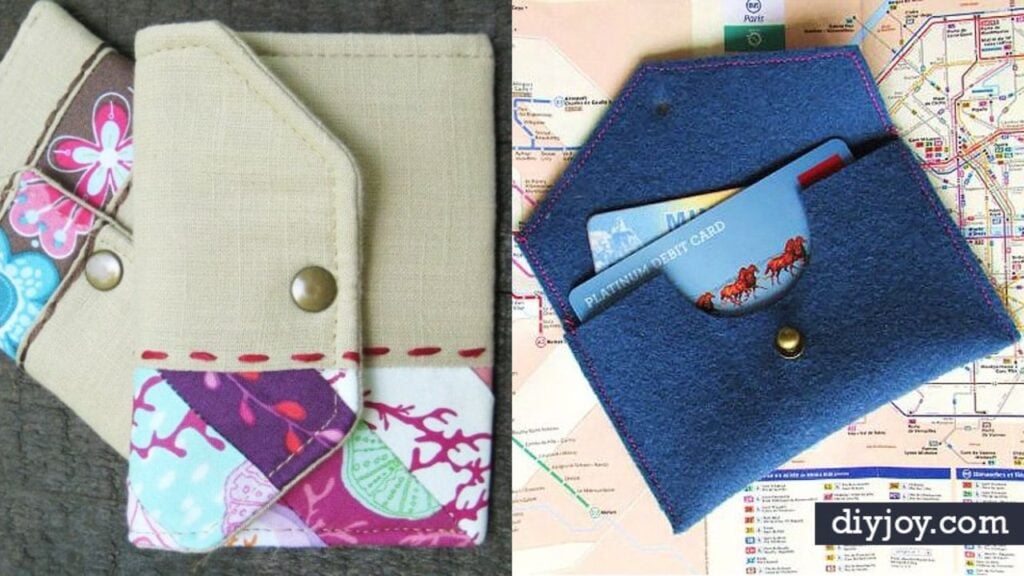
A wallet is the one thing you touch every single day and almost never think about, which is exactly why making your own is so satisfying. These 25 DIY wallets cover every skill level and just about every material: a square foot of vegetable tanned leather saddle stitched by hand, quilting cotton scraps turned into card holders, a roll of flamingo duct tape, an old road map folded in five minutes, even a sheet of pink felt that needs no sewing machine at all. Most of them use less than a quarter yard of fabric, so the cost is usually whatever is already sitting in a scrap bin. Several make excellent gifts, which is handy, because the moment someone sees yours they will want one. Every project links straight through to the full tutorial.
1. DIY Leather Business Card Wallet
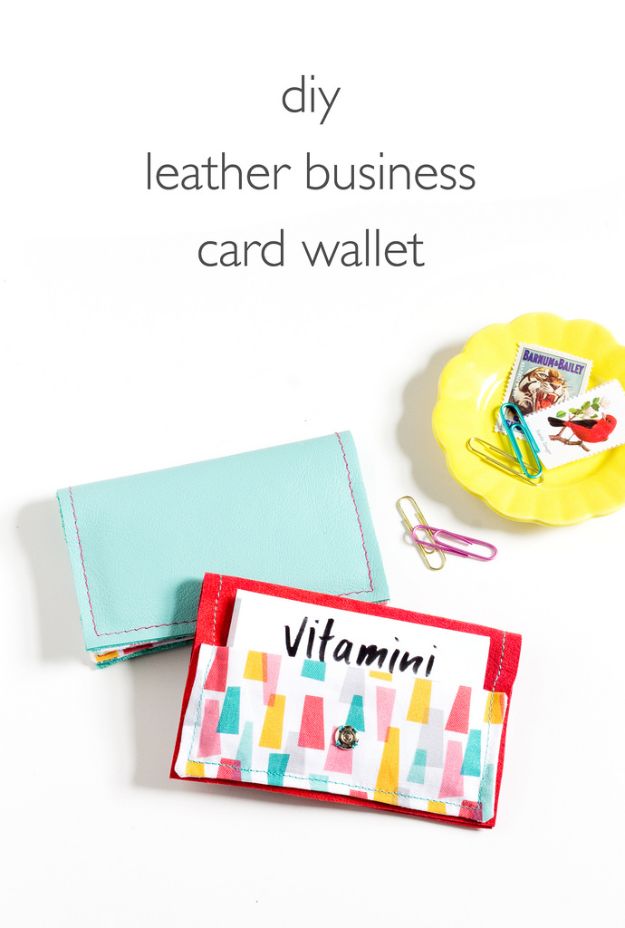
A palm sized leather envelope with a bright cotton pocket hidden on each inside face, so the plain exterior opens onto something loud. It takes one 4.25 by 5.5 inch piece of leather, two 4 by 4.75 inch fabric rectangles and a pair of sew on snaps. The fabric pieces fold in half, get sewn around three edges with a quarter inch seam and turn right side out, a chopstick pushing the corners crisp. Clip the pockets to the leather with wonder clips rather than pins, since pins leave permanent holes, then topstitch the perimeter at an eighth of an inch.
Get the full tutorial at Vitamini Handmade.
2. Chic Pocket Laminated Wallet
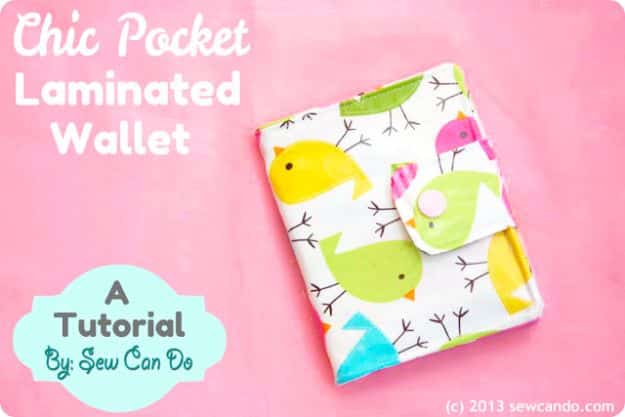
Laminated cotton gives you a wallet that wipes clean, which matters more than it sounds if anything in your life involves children or coffee. A quarter yard makes the whole thing: three 8.5 by 2 inch strips become six card pockets, an 8.5 by 8 inch piece becomes the bill section, and a snap on a short strap holds it shut. The trick that makes it work is lip balm. Run a little along the edge before sewing so the laminate slides under the presser foot instead of sticking, then wipe it away. Hair clips or binder clips replace pins, which would leave holes.
Get the full tutorial at Sew Can Do.
3. Make A Leather Wallet
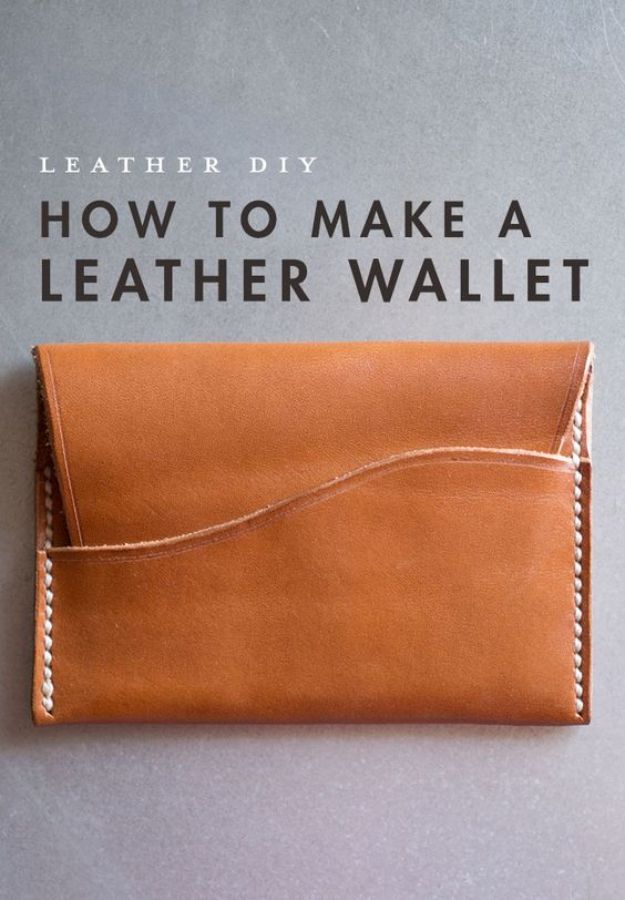
A proper introduction to leatherwork disguised as a small project. The wallet body is cut at 7.5 by 4.25 inches from about a square foot of vegetable tanned leather, roughly ten dollars, with the corners freehanded around a penny for a consistent curve. Veg tan starts stiff, so neatsfoot oil softens it first. Contact cement joins the pieces in two or three light coats because leather drinks glue, then a groover marks the line, a stitching chisel punches the holes and a saddle stitch with two needles on one thread makes the seam. Burnishing the edges is the long part, and the difference between homemade and handmade.
Get the full tutorial at Primer.
4. Mini Card Wallet
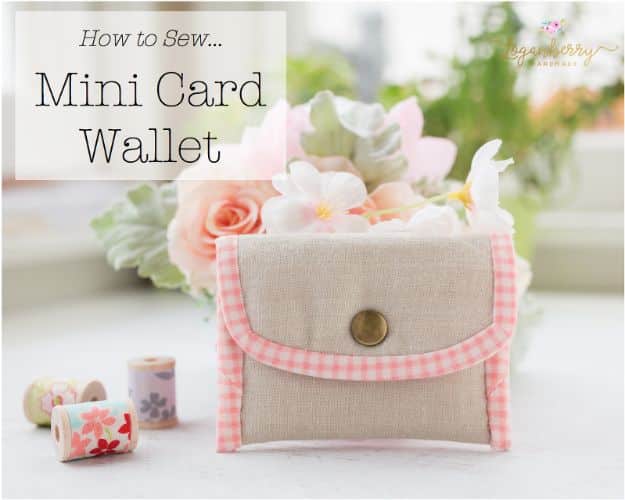
Two 8.5 by 4 inch rectangles, a piece of cotton batting and fourteen inches of bias binding, and you have a padded little card wallet with a rounded flap and an antique brass snap. The batting is what stops it feeling flimsy. One detail is worth copying exactly: when the end is folded up 2.75 inches the fabric layers shift as they go, and they are meant to. Let them slide, because forcing them square makes the whole thing bunch. The top curve gets traced around an eight inch plate, and the binding looks neatest hand stitched on the back rather than machined.
Get the full tutorial at Loganberry Handmade.
5. DIY iPhone Wallet
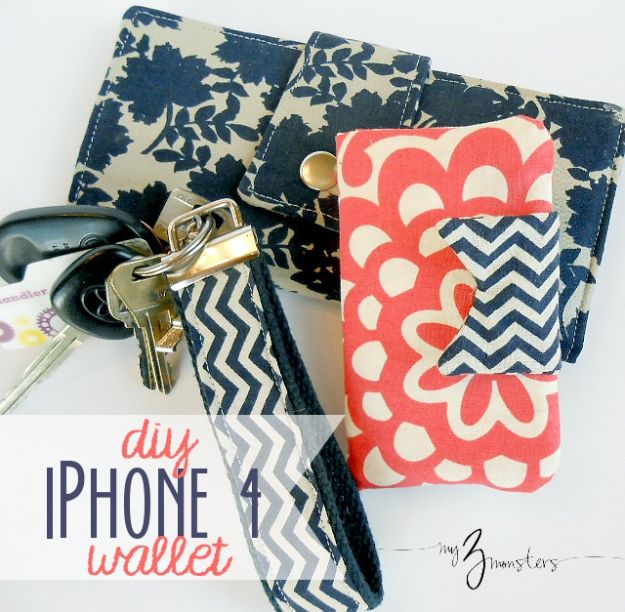
A fabric case that holds the phone, the license, a debit card and a folded note, so a school run needs no handbag at all. It takes a quarter yard of fabric, a magnetic purse snap, an inexpensive hard plastic phone case and some embroidery floss, and runs under an hour once the pattern is cut. Two details carry it: the camera opening is finished by hand like a buttonhole using all six strands of floss, and the plastic case is glued in with E6000 and left overnight. Stitch across the bottom of the card pocket or cards sink too low to grab.
Get the full tutorial at My 3 Monsters.
6. Mini Scrap Wallets
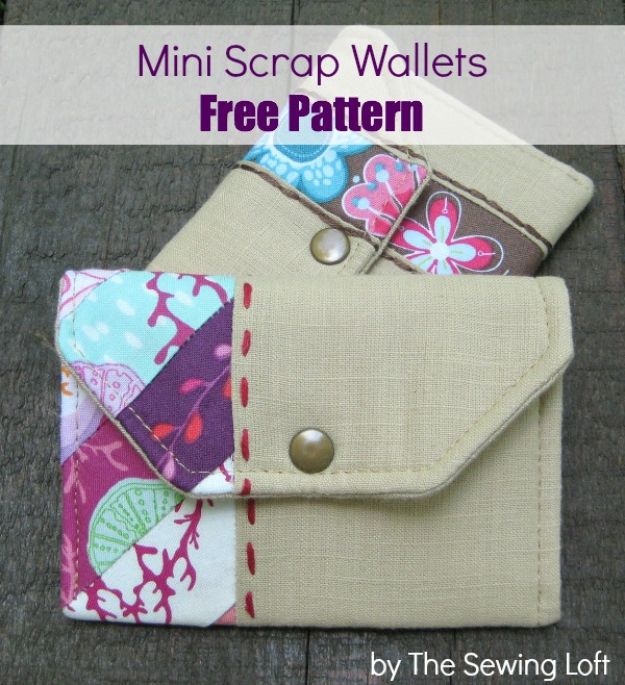
Two 6 by 10 inch scraps, a piece of fusible fleece the same size, a snap and a free downloadable template, which is about as short as a supply list gets. The clever version shown draws random pencil lines across the printed template and treats it as a paper piecing foundation, so the scraps land in an unrepeatable patchwork. Shorten the stitch length if you go that route, because it makes tearing the paper away far easier afterward. Leave a two inch gap for turning, press hard, then fold the straight edge up about three inches and stitch the sides.
Get the full tutorial at The Sewing Loft.
7. Make a Duct Tape Wallet
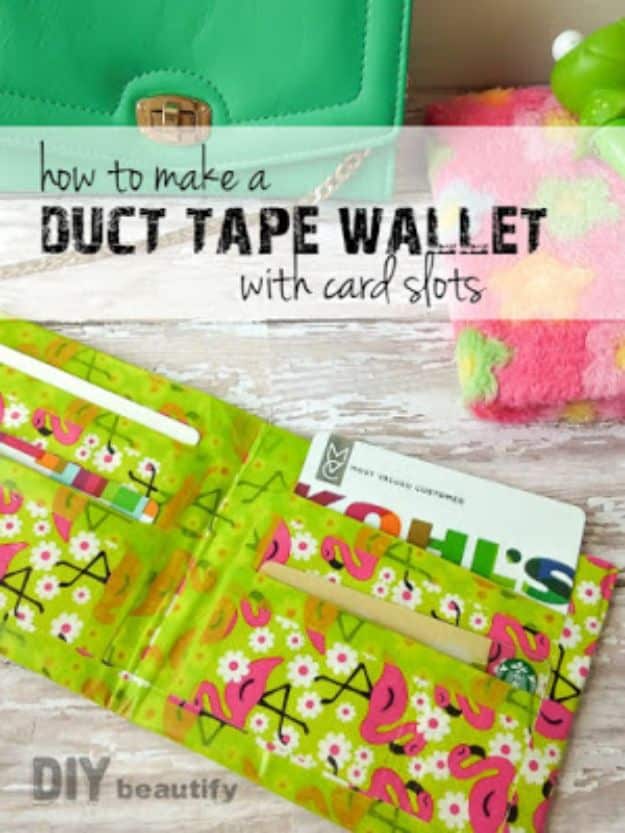
The classic school holiday project, done properly, with real card slots instead of one sad pocket. Build a sheet ten inches wide and seven and a half tall from five strips overlapped a quarter inch, then flip it and cover the sticky side with five more, so the sheet is double sided. Fold it twice, check it against an actual credit card, and trim to four and a half inches closed. Four more small double sided pieces become the pockets. A self healing mat with a printed grid is what keeps the strips straight, and a craft knife beats scissors every time.
Get the full tutorial at DIY Beautify.
8. Man's Wallet Project
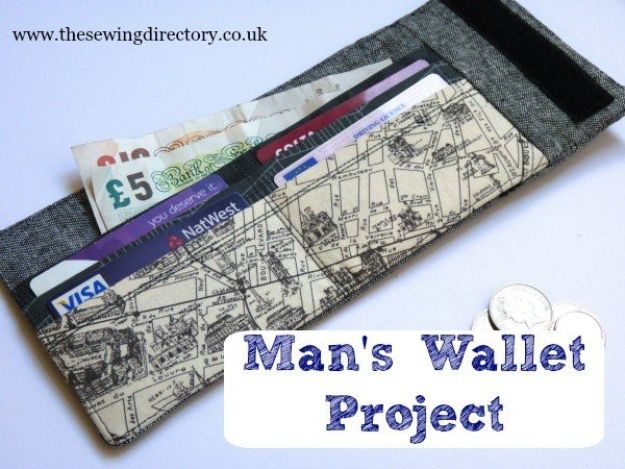
A flat billfold with two stacked card pockets, a note pocket and a zipped coin section, cut entirely from one fat quarter of quilting cotton plus a quarter metre of firm iron on interfacing. Twelve pieces come off that fat quarter and several are near enough identical, which is exactly why the labelling tip earns its place: stick a scrap of masking tape on each one and write on it as you cut. One line is stitched two inches down behind the top card pocket, hidden under the lower one, and it stops cards sliding out of reach inside the pocket.
Get the full tutorial at The Sewing Directory.
9. Kids Wallet Tutorial
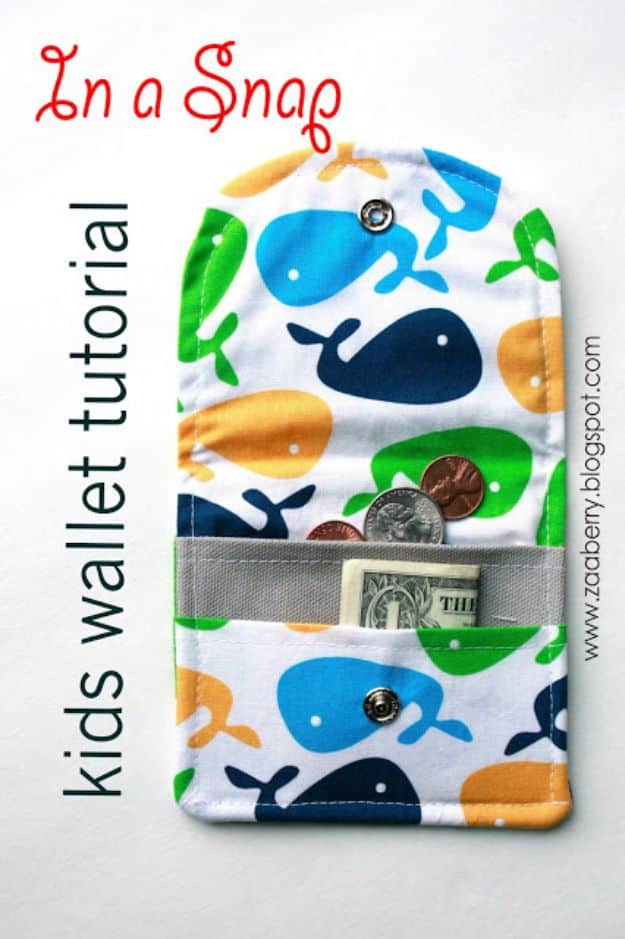
Six rectangles, one snap, and a wallet a child can actually work, which is the real test. The cuts are two exterior pieces 5 by 9 inches, a pocket piece 5 by 5.5, a contrasting piece 5 by 7 and interfacing 4 by 8. Fold and topstitch the pocket pieces, stack the larger over the smaller, round the top corner, sew a quarter inch seam and leave an opening just above where the pocket starts. If the snap will be punched through a lightweight print, slip a scrap of interfacing between the pocket layers first so it does not tear out over time.
Get the full tutorial at Zaaberry.
10. Zipper Wallet DIY
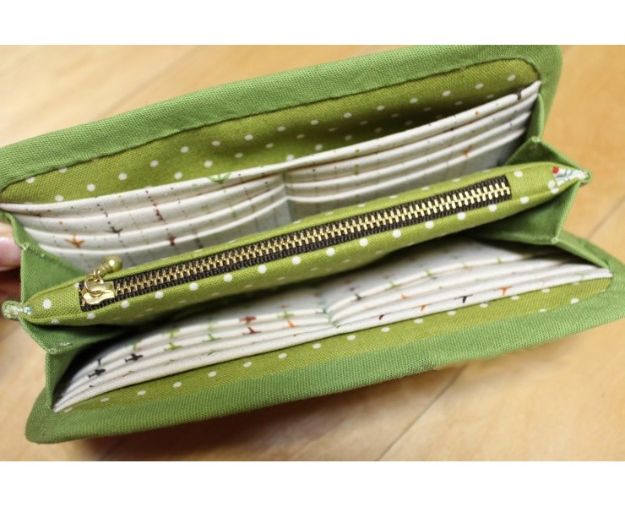
A structured fabric wallet with a zipped coin channel down the middle and a row of card slots stacked on each side, so nothing has to come out to reach anything else. The green outer against a small scale print lining is worth copying, since a busy lining hides wear and a plain one shows every mark. Be warned before you start: this tutorial is photographs and diagrams only. There are no written measurements and no cutting list, and readers in the comments have asked repeatedly for both. Measure a credit card and a note and work the dimensions back from those, which is how the ones who finished it got there.
Get the full tutorial at Handmadiya.
11. DIY Paper Wallet
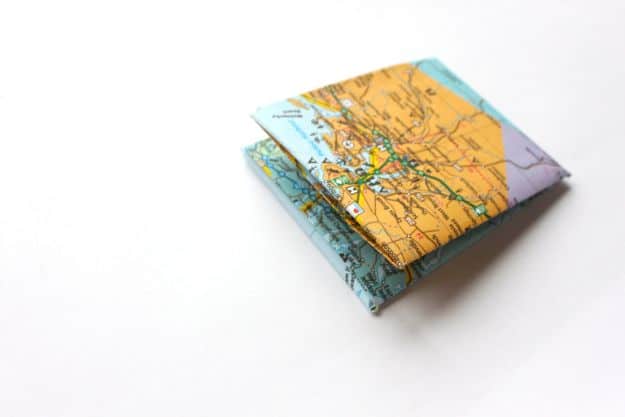
An old road map folded into a billfold in about five minutes, with no glue, no stitching and nothing to buy. You start with a sheet 8.5 by 11 inches, fold it into eight equal rectangles, then cut a short slit in the folds along each long side. Cut a small triangle off the corner carrying the most layers and that is the whole trick, because it opens into a diamond a debit card slides straight into. Fold the ends in, tuck the two flaps into the slits at either end, and add a dab of glue only if you want it to last.
Get the full tutorial at Yours Truly G.
12. Business Card Wallet With Easy Elastic Closure
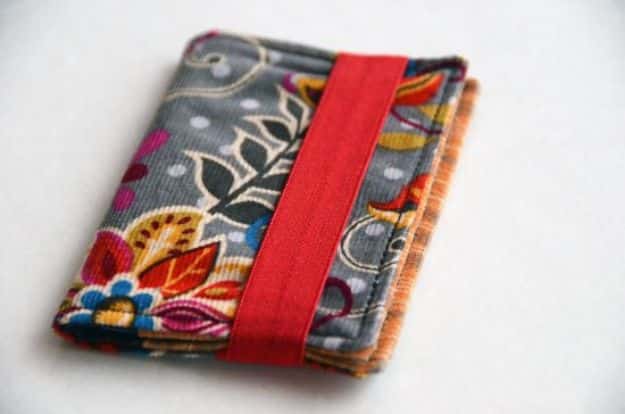
A flat card wallet with two pockets inside and a strip of fold over elastic sewn to the back that flips round to the front and holds it shut, no snap and no button to install. Every piece is 6 by 4.5 inches or smaller, so it comes entirely out of the scrap bin and costs nothing. It is a much better way to hand over a gift card than a paper envelope, since the wallet outlives the gift by years. Business cards, credit cards or a couple of folded notes all sit in it equally happily.
Get the full tutorial at Craft Gossip.
13. Loyalty Card Wallet
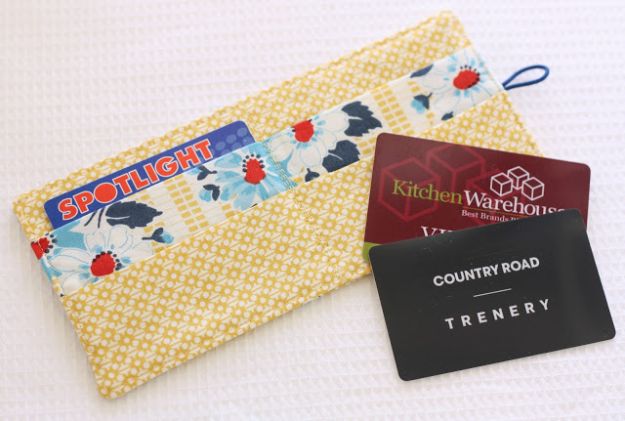
A slim fabric sleeve sized to take up to sixteen loyalty cards, which is a specific and slightly depressing number that will ring true for anybody who has hunted for a coffee card at a till. Scraps and linen, a vintage style button, and the pockets run sideways in rows rather than stacked. The author has carried her original since 2009 and only replaced it because it wore out, which is a better endorsement than any photograph. One caution: the tutorial is a PDF hosted on Scribd, and several readers have reported trouble downloading it.
Get the full tutorial at A Spoonful of Sugar.
14. DIY Fabric Wallet
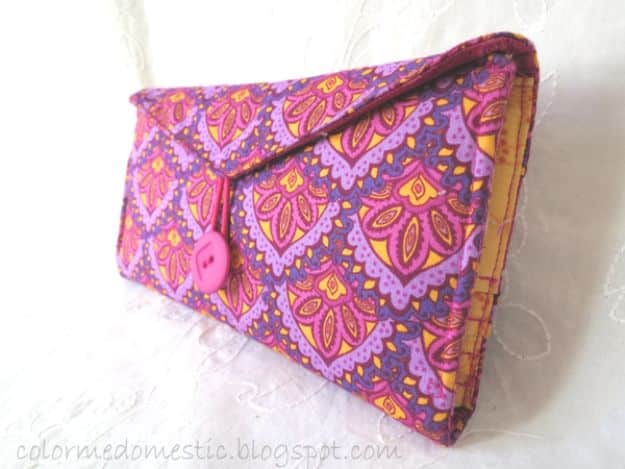
A clutch style wallet with a pointed flap, a button and elastic loop closure and a zipped coin section reachable without closing the bill side first, which was the whole reason it got made. Three fat quarters, a seven inch zipper, interfacing and a button, and the total spend was under twelve dollars. Two warnings from the maker are worth passing on. Buy decent hair elastic rather than dollar store elastic, which perishes. And expect six hours as a beginner, three or four if you are experienced, which is honest in a way most tutorials are not.
Get the full tutorial at Color Me Domestic.
15. Basic Wallet Tutorial
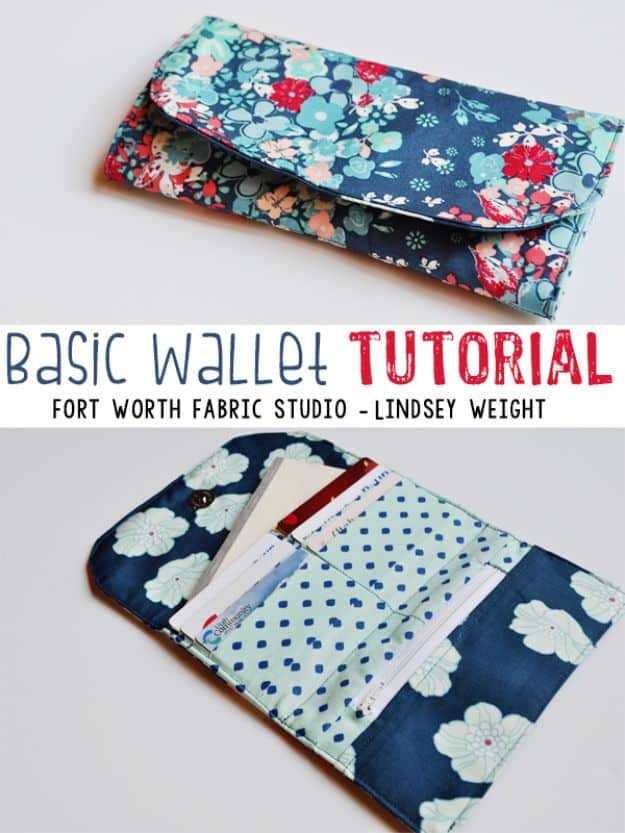
A full size wallet with a zipped change pouch, six card holders, a cash and checkbook pocket and a magnetic snap, and the author reckons a relatively new sewer can finish it in about two hours. A quarter yard each of exterior, interior and pocket fabric, plus fusible fleece and interfacing, with two printable pattern pieces to tape together. The card pockets are folded like a paper fan against a real card, so the spacing comes out right without any measuring. One thing not to do is press against an actual credit card, because a hot iron will warp it and flatten the numbers.
Get the full tutorial at Fort Worth Fabric Studio.
16. Basic Boys Wallet
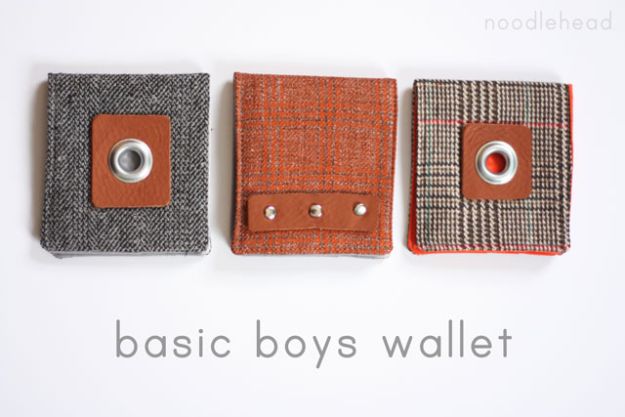
A square little wallet in fall suiting, tweed or plaid, with a leather patch and a grommet or a row of rivets on the front, and it comes out looking properly grown up rather than novelty. A quarter yard of suiting makes several. The card slots come from one 8.5 by 9.75 inch piece folded like an accordion, up at 2.25 inches, down 1.5, up 2, down 1.5, which presses down to 3.75 inches tall and yields four slots. Topstitching thick corners is the fiddly bit, and a chopstick pushing from behind helps the feed dogs grab.
Get the full tutorial at Noodlehead.
17. DIY Easy Wallet Tutorial using Felt
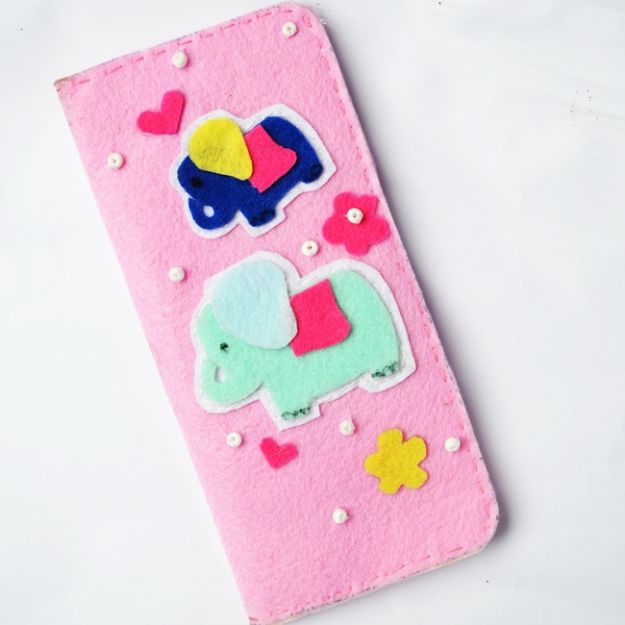
A felt wallet built entirely by hand, no sewing machine anywhere, which makes it the one project here a child can do start to finish. Shapes are traced onto colored felt from a paper pattern and cut out, a zip is hand sewn into a rectangular opening, and little felt elephants, hearts and flowers are glued onto the front panel before the pieces are assembled into a sandwich and hand stitched around all four sides. Pearl beads scattered between the appliques finish it. A kit was used here and the printed instructions came in Chinese, so the written walkthrough does the translating.
Get the full tutorial at Sew Some Stuff.
18. Credit Card Wallet
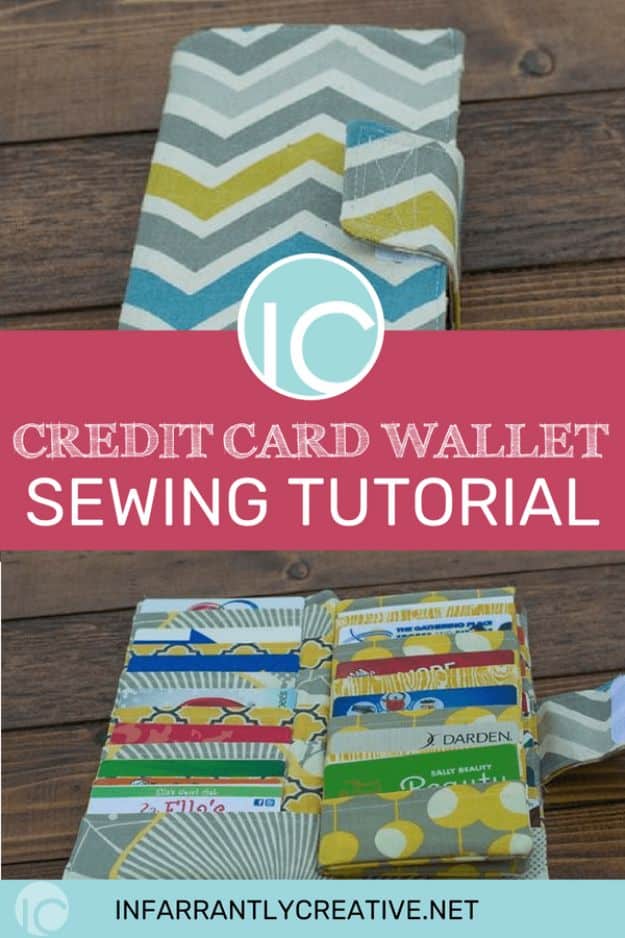
A wallet for somebody whose current one will not shut, with thirty eight card pockets spread across three facing panels, so it opens more like a small book than a billfold. Two nine inch squares make the covers and two eight inch squares the inner pages. The pockets are cut as two and a quarter inch strips in alternating prints and sewn down on lines marked an inch apart, which is far less fiddly than it looks. Medium weight interfacing goes behind one cover only, and a fabric strap with two inches of hook and loop holds the stack closed.
Get the full tutorial at Infarrantly Creative.
19. Bi-Fold Wallet
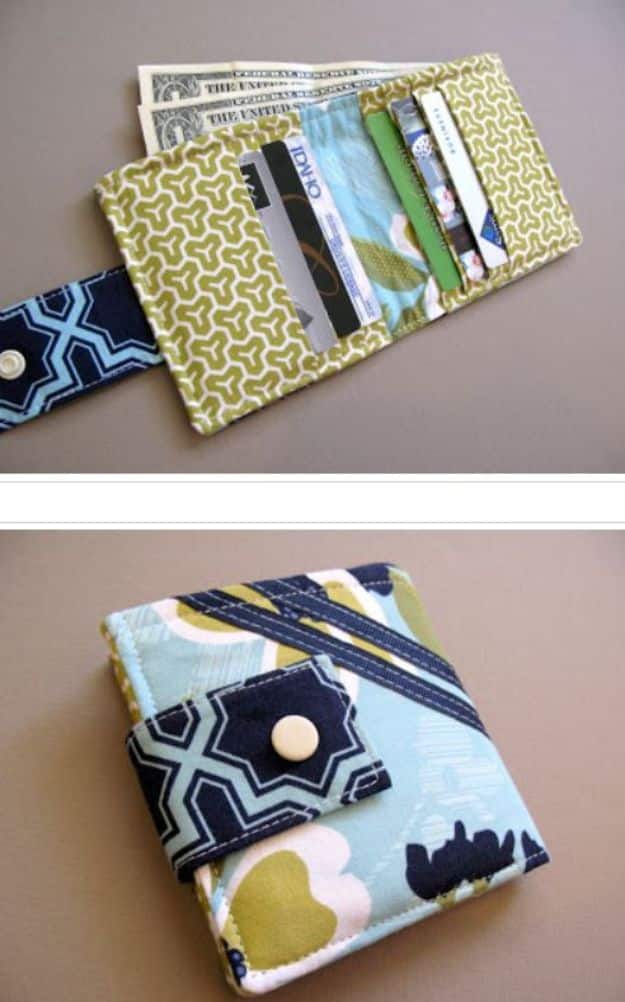
The design solves a real annoyance: the card slots face inward, so nothing slides out while the wallet is shut. Cut two 9 by 5 inch rectangles for the outer and inner, two 9 by 4.5 pieces for the bill lining, a 3.5 inch square for the tab and two 5 by 19 inch pocket pieces. The pockets fold like an offset paper fan and trim down to 4 by 5 inches each. Use a gift card rather than a credit card when pressing the folds, because an iron warps plastic and flattens raised numbers, and never iron directly on the card.
Get the full tutorial at Modest Maven.
20. Make A Simple Leather Wallet
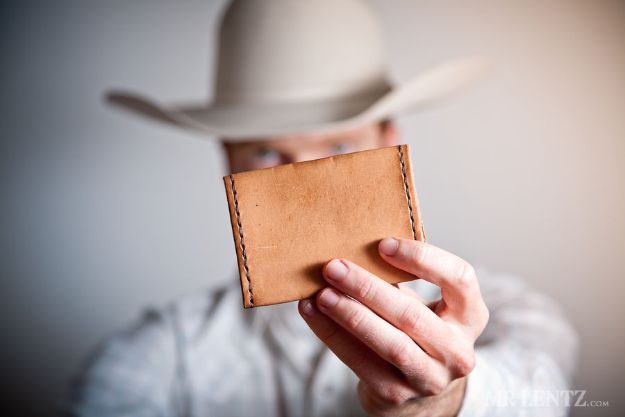
A single piece of leather folded into a billfold, which is about the simplest wallet there is and still teaches most of leatherwork. Cut a rectangle 9.5 by 4.25 inches from 3 to 4 ounce vegetable tanned hide and mark two fold lines 7.75 inches apart, which is what lets a note sit in flat with only one fold. Wet the leather to case it before bending, cut a stitching groove, punch the holes with a diamond chisel and saddle stitch it. Walnut dye, olive oil and beeswax finish it. Allow two hours the first time.
Get the full tutorial at Mr. Lentz.
21. Criss Cross Card Mini Wallet
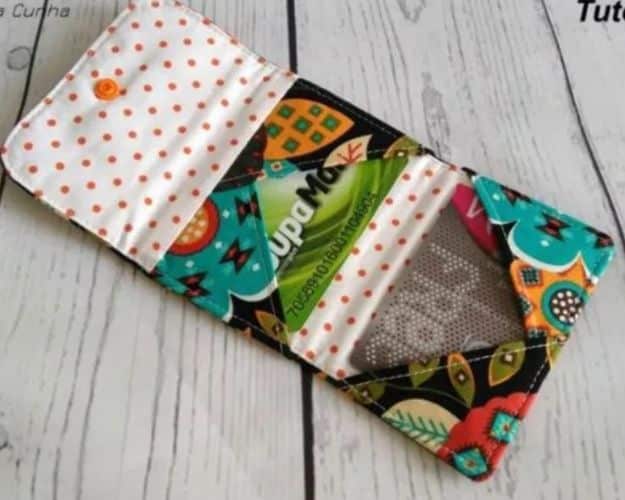
A tiny wallet with two diagonal card slots on each side, finishing at roughly 4 inches by 3 and an eighth, so it takes a few cards and a folded note and nothing more. Two fat quarters, medium weight fusible interfacing, fusible fleece and a snap, with the pattern pieces and instructions free to download. The diagonal slots are what make it work at this scale, since a straight slot on a wallet this small leaves no room for fingers to get a grip. Add a small D ring and it clips straight onto a set of keys.
Get the full tutorial at Sew Modern Bags.
22. Simple DIY Fabric Wallet
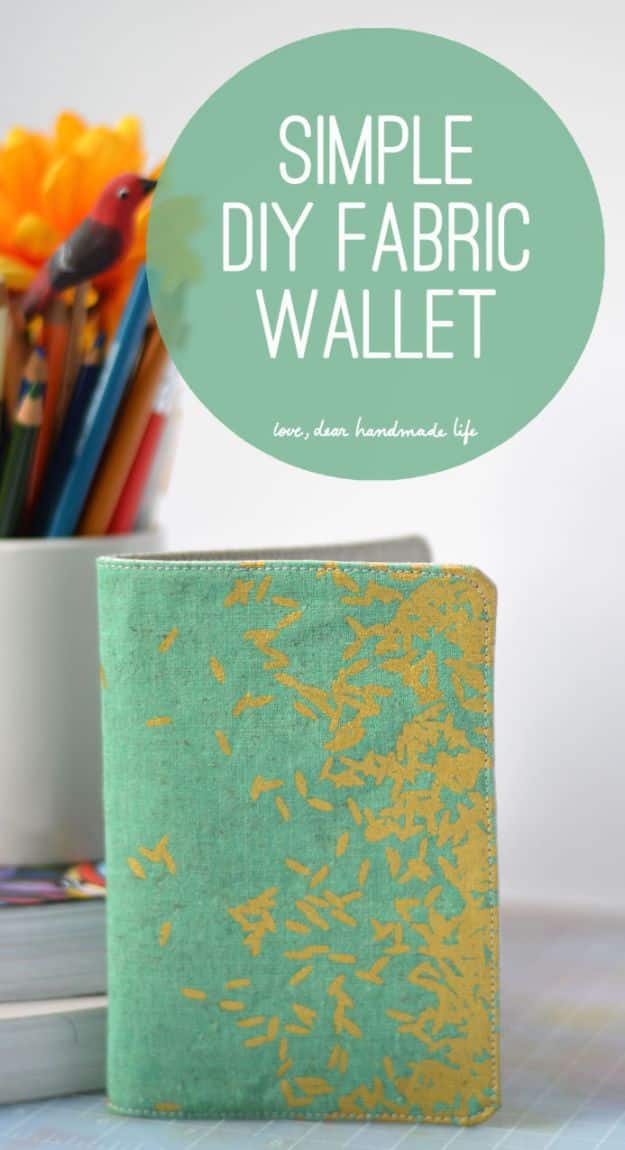
Four rectangles and a straight seam, which is genuinely the entire project, and a very good first thing to sew if the machine still makes you nervous. Two 9 by 6.5 inch rectangles in contrasting fabrics and two 7 by 5 inch pockets, all four backed with fusible interfacing so the finished wallet has some spine. Canvas holds up best. The one place to slow down is the two inch turning gap on each pocket: pin it shut and hide it before topstitching, or it will show. Topstitch the folded edge of each pocket as well, because that is what makes it look finished.
Get the full tutorial at Dear Handmade Life.
23. Clear Vinyl Wallets
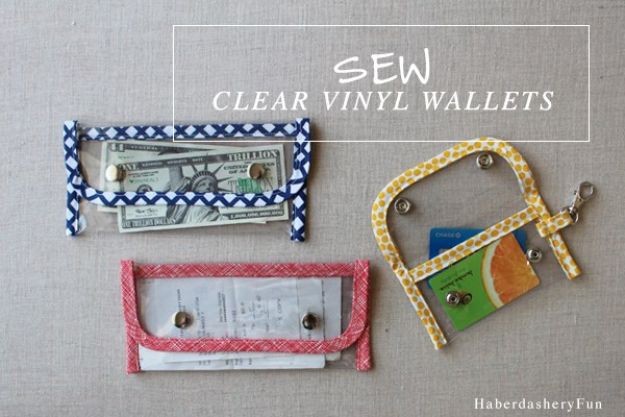
Flat vinyl pouches bound in bias tape with snaps at the top, and the point is that you can see exactly what is inside without opening anything. Receipts in one, cash in another, cards in a third with a small clip so it hangs off a bag strap. Anyone who has excavated a handbag looking for a receipt that turned out to be in a coat will understand the appeal immediately. Bias binding in a contrasting print is what saves them from looking like sandwich bags. Quick to make and endlessly sortable.
Get the full tutorial at Craft Gossip.
24. How to Make A DIY Zip Around Wallet
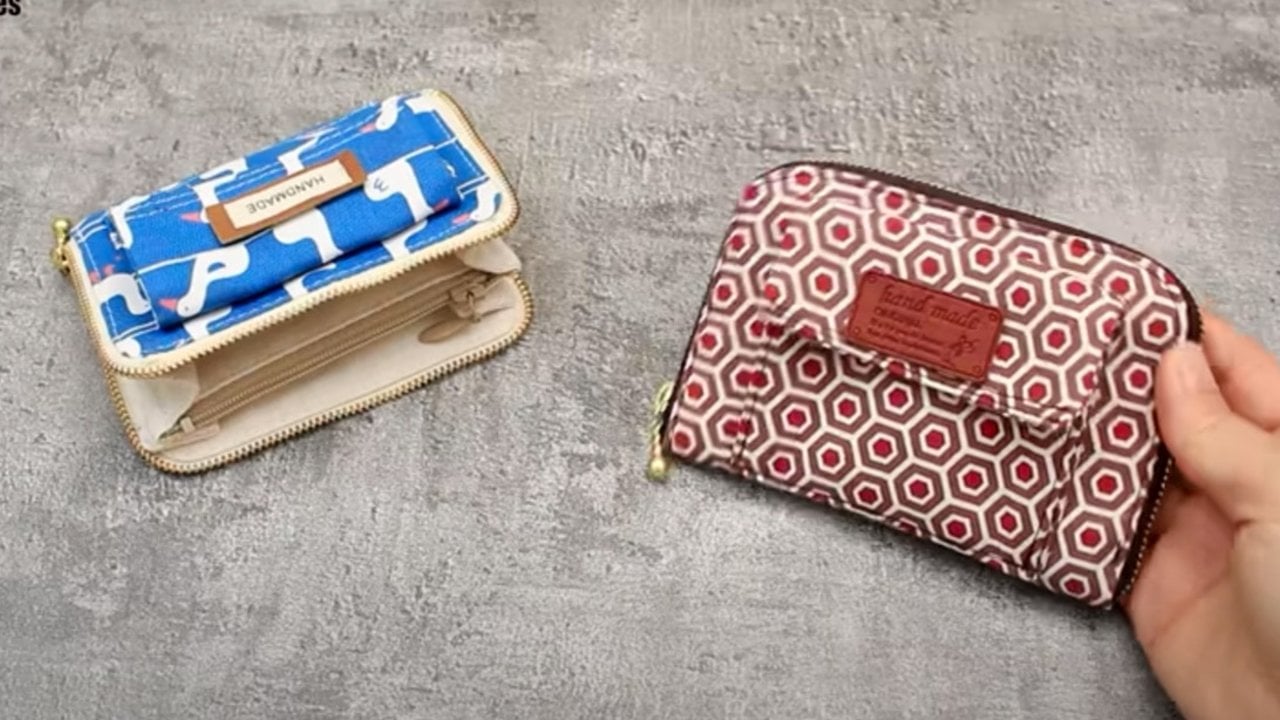
A zip around wallet with pocket covers held shut by hook and loop, an outer zip pocket and side panels, and the maker reckons thirty minutes with a bit of patience. Cut the outer layer at 15 by 20 centimetres plus two smaller pieces, cut the lining to match, fuse interfacing to the wrong side of everything and cut it with three eighths of an inch added around the interfacing edge. A ten centimetre zip does the small pocket and a thirty centimetre zip runs right around the wallet. The side panels get overcast by hand at the ends, which is the fiddly finish.
Get the full tutorial at DIY Joy.
25. Sewing Tutorial: How To Make A Card Wallet
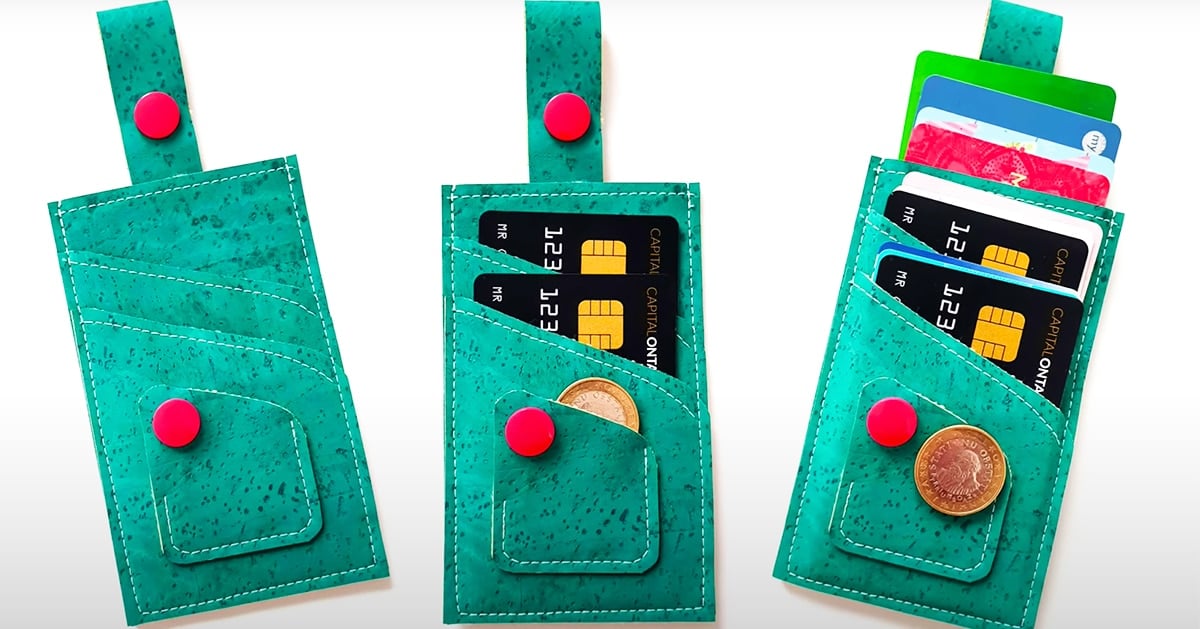
A flat card wallet with stepped slots and a tab on top, cut from one fat quarter of a material that does not fray, so no edge needs hemming and the whole thing stays thin. Cork, leather, vinyl and oilcloth all work. The pattern pieces come as a free printable PDF, which removes the usual measuring, and two plastic snap fasteners are the only hardware. Stitch along the top edge of each card slot, poke the snap holes through using the pattern sheet as a guide, and push the snaps in. The tab means it clips onto a bag handle or a suitcase.
Get the full tutorial at DIY Joy.