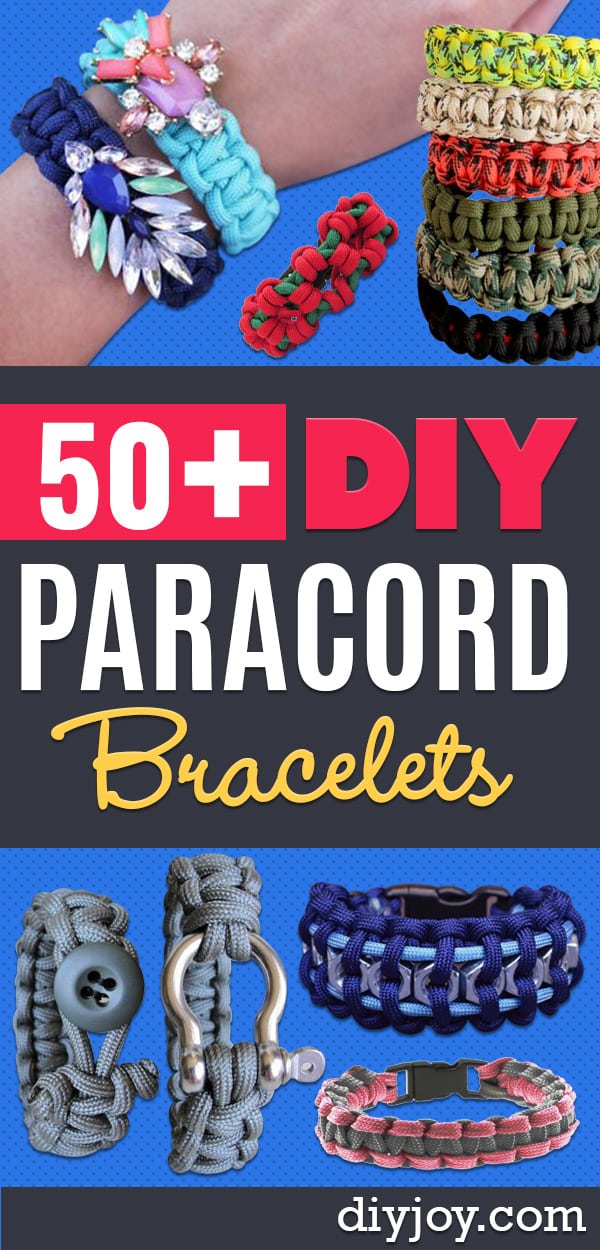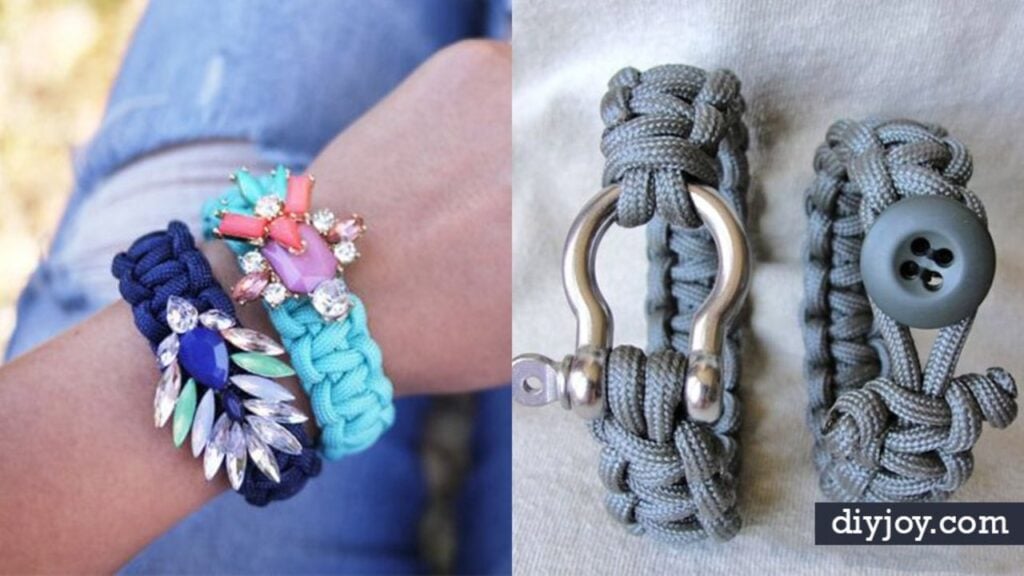
One paracord bracelet swallows eight to ten feet of 550 cord, and every foot of it comes back out when you need a shoelace, a tourniquet or a splint tie, which is the whole reason people wear them. I will be honest with you: knot work is the corner of crafting I came to late, so I judged these tutorials the way a beginner would, by whether the photos show the repeating sequence clearly enough to copy. Start with the plain cobra weave and a side release buckle, then work down the list as the weaves get stranger: fishtail, blaze bar, king cobra, hex nut, a watch band, a daisy chain. Most take one evening and about six dollars of cord. Perfect for scouts, teenagers, a camping gift or your own wrist.
DIY Paracord Bracelets
1. Quick and Easy Survival Paracord Bracelets
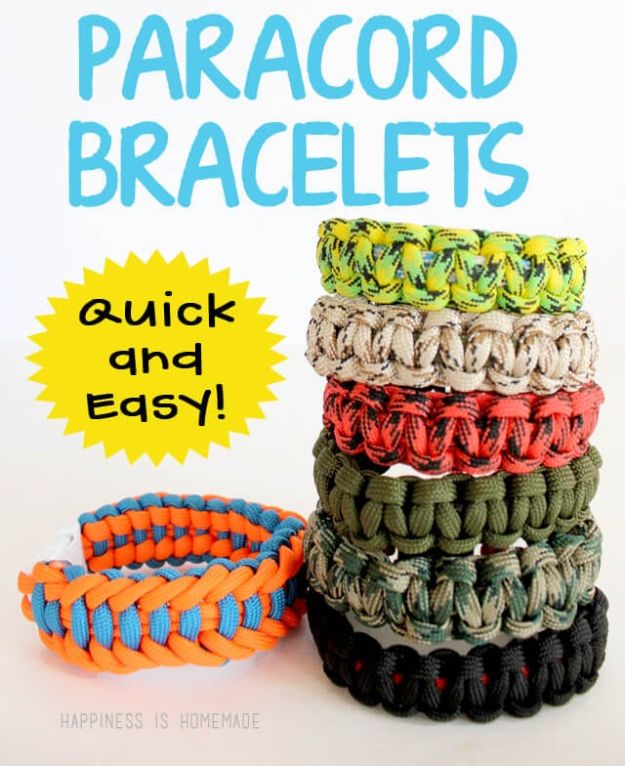
This is the friendliest place on the list to begin, and it was written by a mom of boys who watched her sons burn out on Rainbow Loom and go looking for something sturdier. She teaches it on video rather than in still photographs, which is the right call for a knot, because you can watch the same three seconds again until your hands copy it. A simple weave, a plastic buckle and a band that looks like real gear at the end of it. Easy enough that a kid finishes one and immediately wants three more.
Get the full tutorial at Happiness is Homemade.
2. Paracord Bracelet With A Side Release Buckle
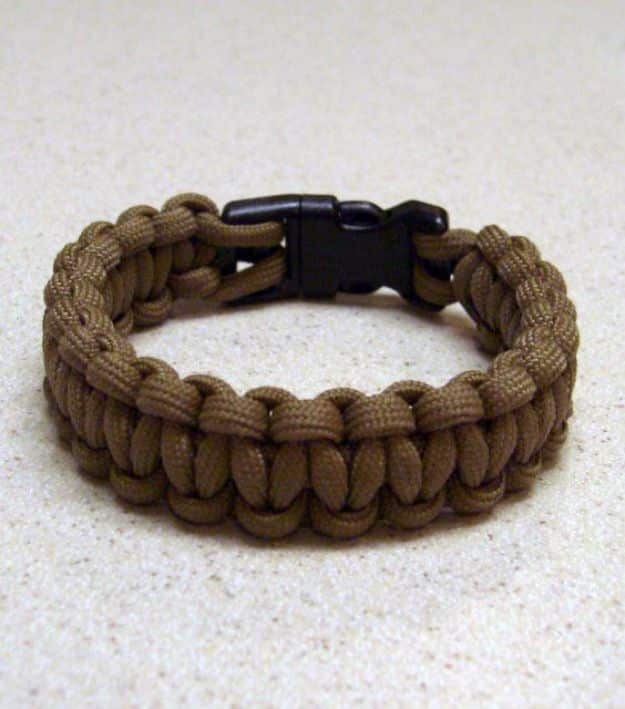
Here is the measurement that saves you from a bracelet that does not fit: one foot of cord for every one inch of finished knotted length. Wrap the cord around your wrist, note where it meets, measure that against a ruler, and start with ten feet. A side release buckle snaps on and off one handed, and a lighter, ideally a torch lighter, seals the cut ends. Scale the same method up and it becomes a dog or cat collar, which is a nice thing to know before you buy cord.
Get the full tutorial at Make It @ Your Library, running an Instructables tutorial by Stormdrane.
3. Parachute Cord Paracord Bracelets
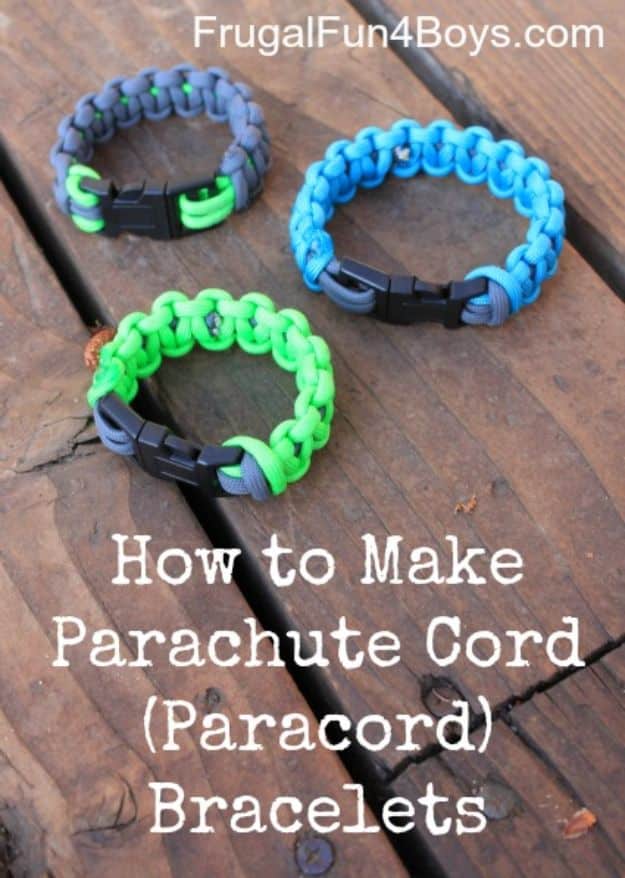
Store bought paracord bracelets are sized for grown men, which is exactly why this one exists: a mom bought the supplies at a craft store so her boys could make bands that fit their own wrists. There are two versions here, a one color made from a single long piece and a two color made from two. The site calls it a solid project from about age eight up, or a younger child who is especially coordinated. Big, clear photos and patient pacing, which is what a kid craft actually needs.
Get the full tutorial at Frugal Fun For Boys and Girls.
4. Mad Max Cobra Stitch Paracord Bracelet
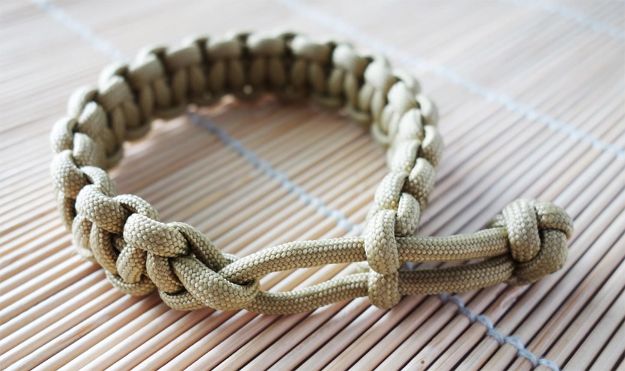
Tom Hardy added this bracelet to his own costume in Mad Max: Fury Road and then started making matching ones for the rest of the cast and crew, which is a better origin story than most craft projects get. There is no buckle at all. The band closes on an adjustable loop and knot, so nothing plastic can snap and the fit adjusts on the fly. The base is the same cobra stitch as everywhere else on this list, just finished rough on purpose.
Get the full tutorial at RECOIL OFFGRID.
5. Quick Release Paracord Bracelet for Emergency Deployment
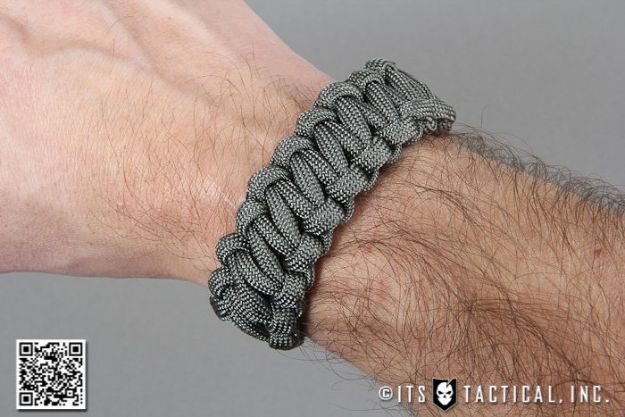
Most paracord bracelets have to be unpicked knot by knot, which is fine on the sofa and useless in an emergency. This build solves that. The cord ends are melted together just enough to hold, never enough to weld, then tucked into a loop; untuck them, pass them back through the buckle, and the whole band pulls apart in one motion. The tradeoff is a slightly looser look. That is a fair price for a bracelet that actually does the job it claims.
Get the full tutorial at ITS Tactical.
6. Aztec Sun Bar Paracord Bracelet
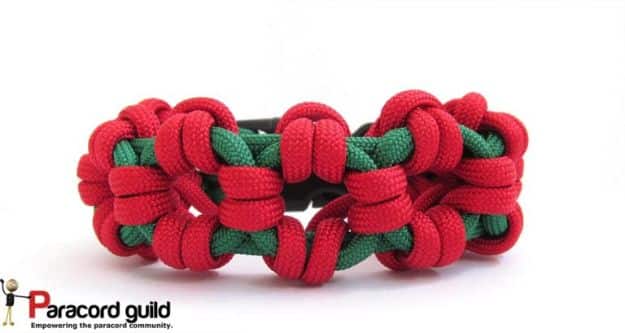
The Aztec sun bar is a series of cow hitches, nothing more exotic than that, and it produces a stepped geometric bar that looks loomed rather than knotted. The supply list for a six inch weave is two cords, roughly eight feet of the main color and four feet of the second, a five eighths inch buckle, scissors and a lighter. A bracelet jig helps a lot here. Yellow on red gives you the sun the name promises, white on green reads like daisies, green on red like roses.
Get the full tutorial at Paracord Guild.
7. XOXO Bar Paracord Bracelet
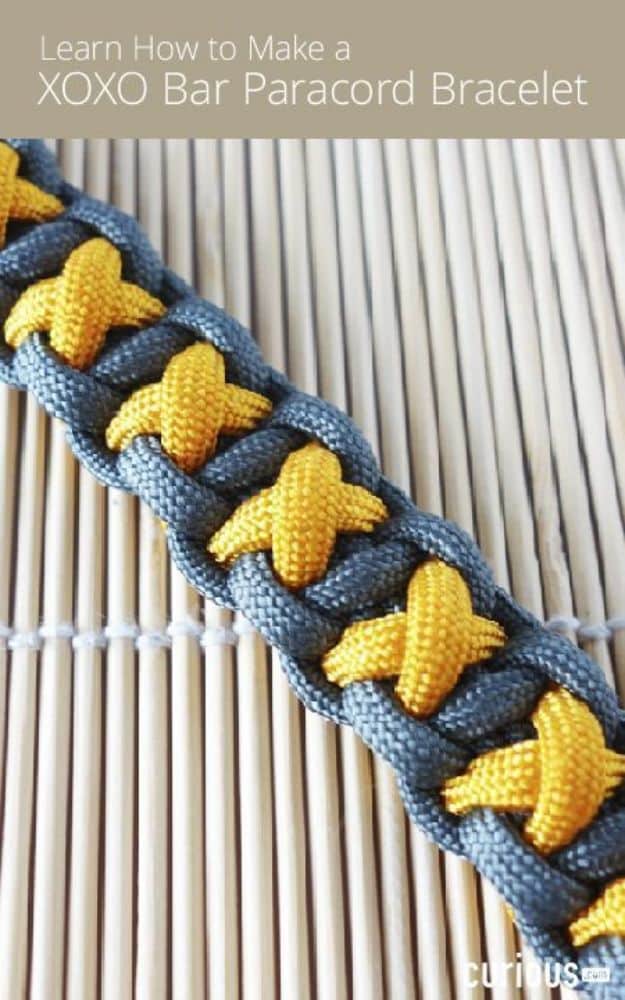
Hugs and kisses, spelled out in cord. The X shapes cross over a contrasting base color down the whole length of the band, and it is one of very few paracord designs that reads romantic rather than tactical. Yellow on denim blue looks like something you would buy, and red on black is the obvious Valentine’s version. It is a lesson from a working paracord maker rather than a blog post, so budget a little time to watch rather than skim.
Get the full tutorial at Weavers of Eternity on Curious.
8. Two Color Core Paracord Bracelet
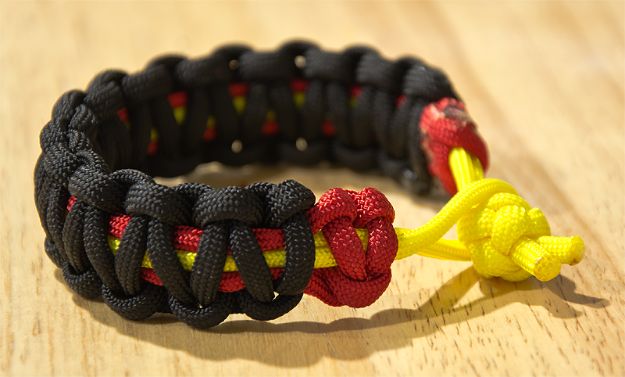
Every one of these bands is a small survival kit holding about ten feet of 550 cord, and 550 means a minimum breaking strength of 550 pounds. The cord came out of the suspension lines of American parachutes in the Second World War, which is the whole reason it is called paracord at all. Running two colors through the core is the easiest way to move past single color weaving, and the join between the two cords hides itself inside the knots, so the finished band looks like it was tied from one impossible two tone rope.
Get the full tutorial at Homemade Gifts Made Easy.
9. Fishtail Paracord Bracelet
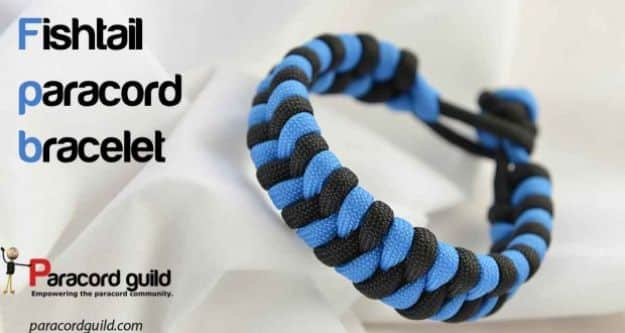
The fishtail borrows its pattern from friendship bracelets, which tells you most of what you need: flatter, smoother, lighter on the wrist than the cobra family, and rated low difficulty and child friendly by the people who tie these for a living. You start with a lark’s head knot, split the cords two and two, and weave over one and under the next, switching colors as you go. Cut your core to wrist length plus about a foot for the lanyard knot that finishes it.
Get the full tutorial at Paracord Guild.
10. King Cobra Paracord Bracelet
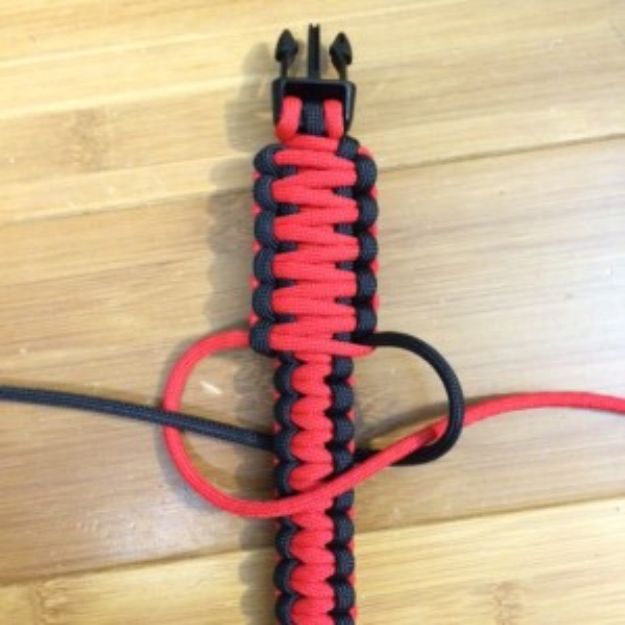
The king cobra is a cobra weave tied a second time over the top of the first, which doubles the width, doubles the cord it carries, and roughly doubles the time you spend on it. That is the appeal: more rope on your wrist than any standard bracelet holds. It eats cord at a rate that surprises people, so buy noticeably more than you think you need before you start. Red over black is the classic, and the doubled layer makes any color pair look richer.
Get the full tutorial at Useful Knots.
11. Paracord Wilderness Survival Bracelet
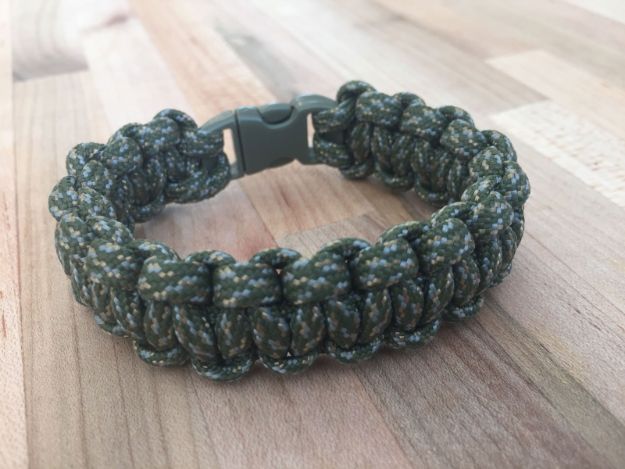
This one explains why the bracelet is worth wearing at all. Eight to ten feet of continuous cord handles snares, lashings, shoelaces, a tourniquet or a splint tie, and the seven inner threads pull out to give you up to seventy feet of lighter string for fishing line, sewing or gear repair. The build is an alternating cobra stitch onto a side release buckle. Measure your wrist, add an inch, and check the length twice before you start knotting, because fixing it later means undoing everything.
Get the full tutorial at Cloudline Apparel.
12. DIY Paracord Survival Bracelet
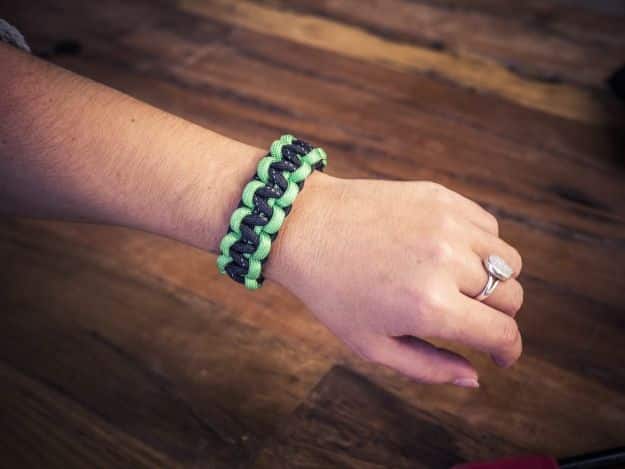
When the co-op that outfits half of America’s trailheads publishes a paracord tutorial, it is worth a look for the finishing alone. This is the standard survival bracelet done properly, with the tension and the melted ends handled the way somebody who sells outdoor gear would handle them. No flourishes and no shortcuts, which makes it the version every other weave on this list is a variation of. Make this one first, then go strange.
Get the full tutorial at REI.
13. Paracord Watch Band
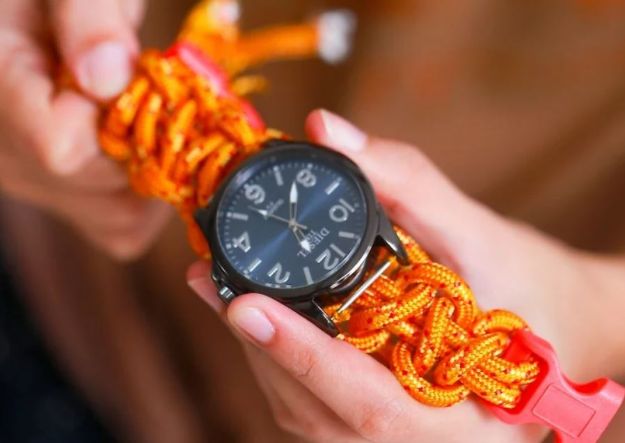
This is the project that makes your survival cord tell the time. The weave goes straight around the watch pins, replacing a worn strap with something sturdier and a lot more interesting to look at, and the illustrated format suits it because the sizing is the fiddly part. Field watches and dive watches carry the look best. Measure twice: a band that comes out an inch long is a band you unpick completely.
Get the full tutorial at wikiHow.
14. Paracord Bracelets For Kids
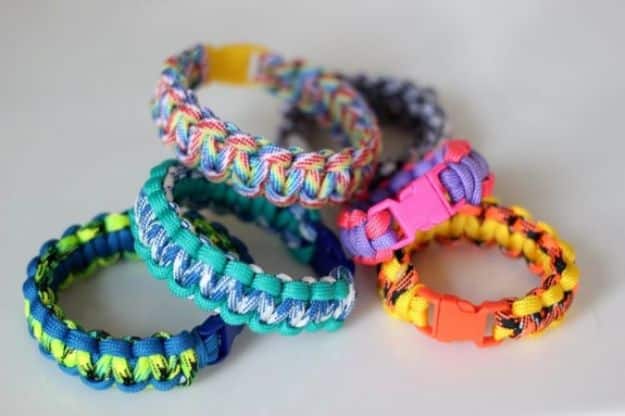
A second kid friendly paracord bracelet earns its place by solving a different problem, which is small hands and full size cord. The tutorial came out of a child making Christmas presents for family and friends, and that is the right frame for it: simpler knots, forgiving sizing and step by step videos so a child can rewind instead of asking. Bright cord mixes are half the fun. A finished bracelet looks like real gear, which is exactly why they keep going.
Get the full tutorial at Gluesticks Blog.
15. Make A Fun Paracord Bracelet
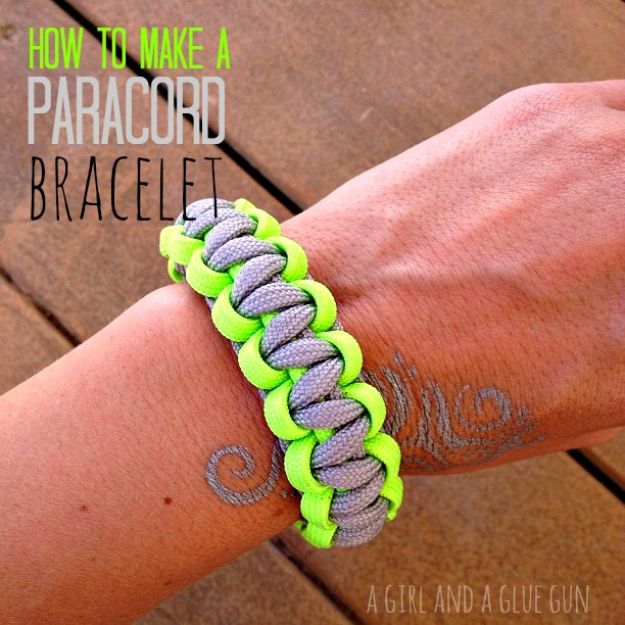
A craft blogger walking into survival gear territory gives this list the energy it needs, and the honest framing helps: she learned it in an afternoon at her mom’s house when her sister turned up with the supplies, and they cranked out a pile. Her age range is roughly seven to a hundred, her nine year old is fast at it, and she says plainly that there is fire involved to melt the ends, so an adult stays nearby. Green and lavender is not a tactical color scheme and that is the point.
Get the full tutorial at A Girl and a Glue Gun.
16. Blaze Bar Paracord Bracelet
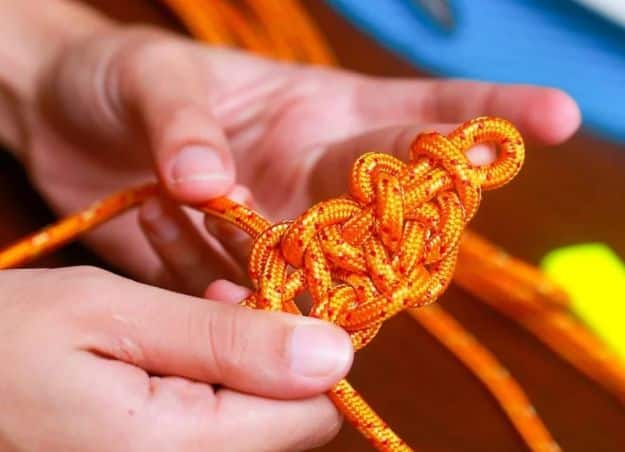
The blaze bar shares the emergency unravel logic of the quick release earlier on this list but wears much flatter and cleaner, which makes it one of the few survival weaves that looks fine with a shirt cuff over it. The numbers are specific: an 8.5 inch bracelet takes about thirteen feet of 550 cord, plus scissors, a match or a lighter and an unbuckled plastic release buckle. Fold the cord in half, pull the loop through one side of the buckle, and start.
Get the full tutorial at wikiHow.
17. Tri-Color Cobra Survival Paracord Bracelet
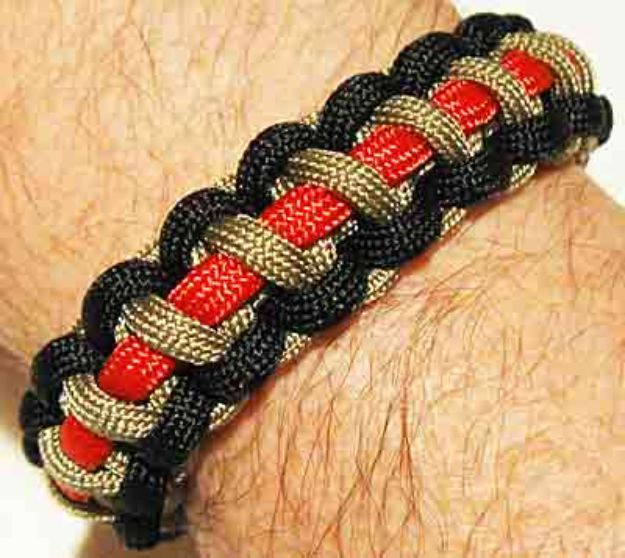
Three colors in one cobra weave takes exactly one clever move: a third cord rides the core while the outer two trade knots, so it surfaces in a rotating sequence down the band. The black, tan and red combination in the photo is the reason to bother. Color choice starts to matter at three, so pick a dominant, a partner and an accent rather than three shades you like equally, or the whole thing turns into noise.
Get the full tutorial at Paracord 550 MilSpec.
18. Single-color Cobra Braid Paracord Survival Bracelet
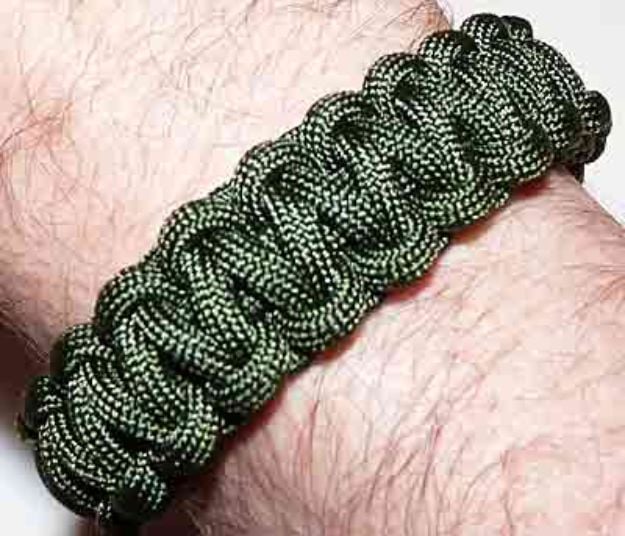
After the multicolor fireworks, one cord and one weave is a palate cleanser, and it is also the honest test of your tension. A single color hides nothing: every uneven knot shows, and getting a perfectly uniform bar is quietly difficult and weirdly satisfying. The olive green in the photo is the color hunters and hikers actually pick, black is the one you can wear anywhere, and safety orange is the one you can find in a bag.
Get the full tutorial at Paracord 550 MilSpec.
19. Boa Paracord Bracelet
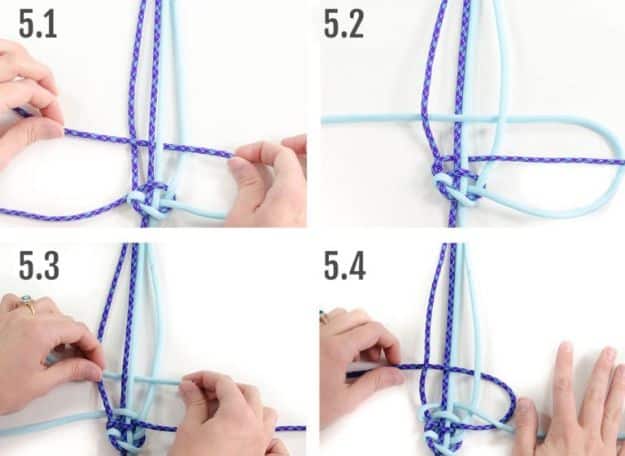
This one is worth reading for the cord itself as much as the weave. The hardware buyer at the shop pulled out paracord that glows in the dark after a few seconds under an LED flashlight, and a neon orange cord with a jute strand for fire starting and an eight pound test fishing line running inside it. Glow cord on an evening walk is a genuinely good idea. The step photos show the hands at each stage, which is the part beginners keep asking for.
Get the full tutorial at Smith and Edwards.
20. 1 Minute Paracord Survival Bracelet
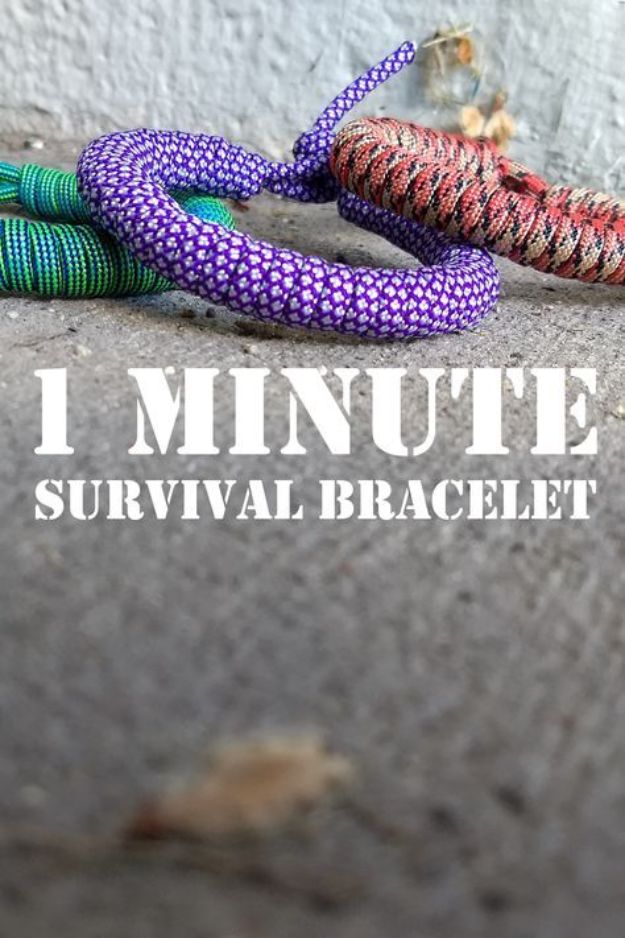
The cobra looks great and stores cord beautifully, and it is a nuisance to deploy in a hurry. This chain sinnet answers that: seven and a half feet of 550 cord in one seamless piece, a built in closure so you need no buckle at all, fast to tie and fast to re-tie, and it does not kink the cord the way a tight weave does. The site says it is the method troops prefer. Follow the instructions exactly if you plan to donate them through Operation Gratitude.
Get the full tutorial at Paracord Planet.
21. True Lovers Knot Paracord Bracelet
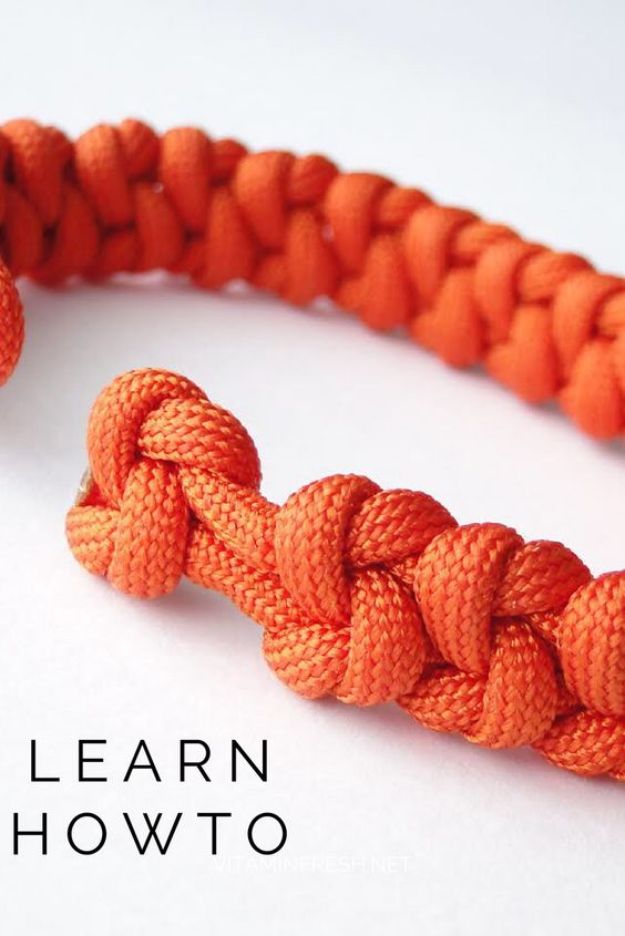
The true lovers knot is two ropes tied so their knots interlock without merging, which is a sailor’s metaphor that happens to work as a bracelet. The video shows a knot and loop closure, no buckle involved, and the paired loops really do read as two cords in conversation. A knot like this is much easier to follow in motion than in photographs, so watch it rather than skimming. Orange is a surprisingly good color for it.
Get the full tutorial at CbyS Paracord and More on YouTube.
22. Simple Cobra Knot Paracord Bracelet
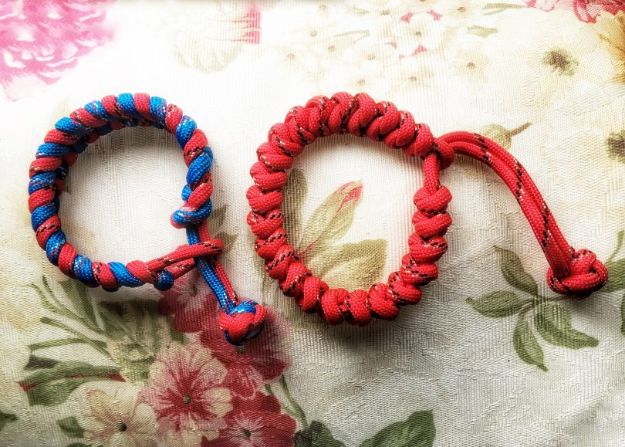
This one is written from a backpacker’s angle, and the history it opens with is genuinely good: paracord got its name from the suspension lines of nylon parachutes in the Second World War, the US military still uses it, and NASA used it to repair the Hubble Space Telescope on the STS-82 mission. Knowing that, a simple cobra knot stops feeling like a craft and starts feeling like carrying a tool. The red and blue pair in the photo close on knots rather than buckles.
Get the full tutorial at Backpacking Mastery.
23. Special Paracord Bracelets
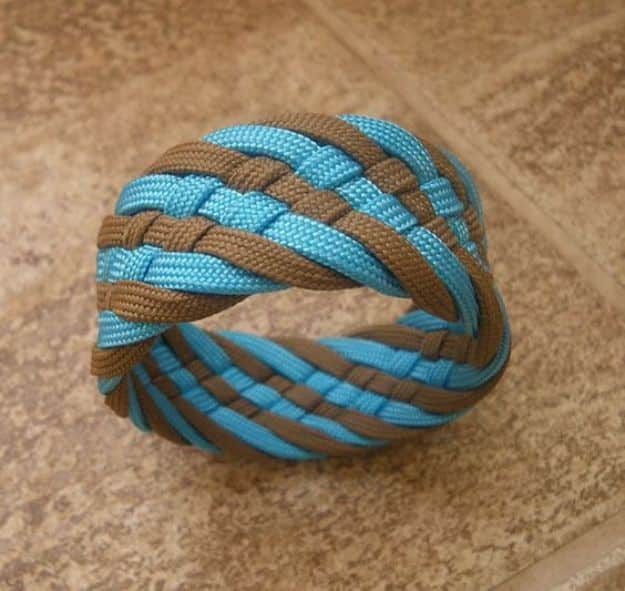
This is the outlier on the list and worth a look for that reason. A tan and turquoise band twists in a spiral rather than stacking flat knots, closer to traditional decorative rope work than to the tactical weaves everywhere else here. It comes from a personal knots and cordage archive rather than a craft blog, which is both its charm and its problem, because what waits at the other end is a gallery of other people’s work rather than a step by step.
Get the full tutorial at Charles Hamel, Knots and Cordages.
24. Widest Paracord Bracelets
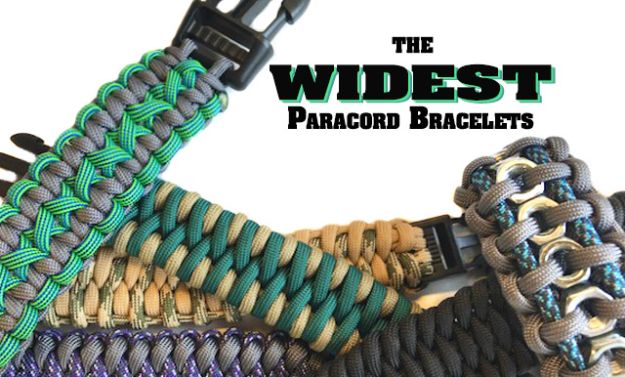
This is a shortlist rather than a single pattern, and it is a useful one if you want a cuff instead of a band. Eight wide weaves are ranked with honest notes on each: the double wide cobra, which is two cobras woven at once and holds an enormous amount of cord; the Zaw bar, wider without being silly; the blaze bar; the dragon’s claw, sharp profiled and genuinely flexible to wear; a three color trilobite; Bane’s cuff; the belly fishtail; and the hex nut.
Get the full tutorial at Paracord Planet.
25. Paracord Bracelet Cobra Stitch

If you learn better from diagrams than from photographs of somebody else’s hands, this is your entry point. The whole cobra stitch is laid out as eight numbered drawings: fold the cord in half and loop it through the buckle, cross the left cord under the middle and over the right so it looks like a number four, thread it through, then repeat the mirror image so the right cord looks like a letter P. Repeat to the end, snip and singe.
Get the full tutorial at West Coast Paracord.
26. Snake Trail Paracord Bracelet
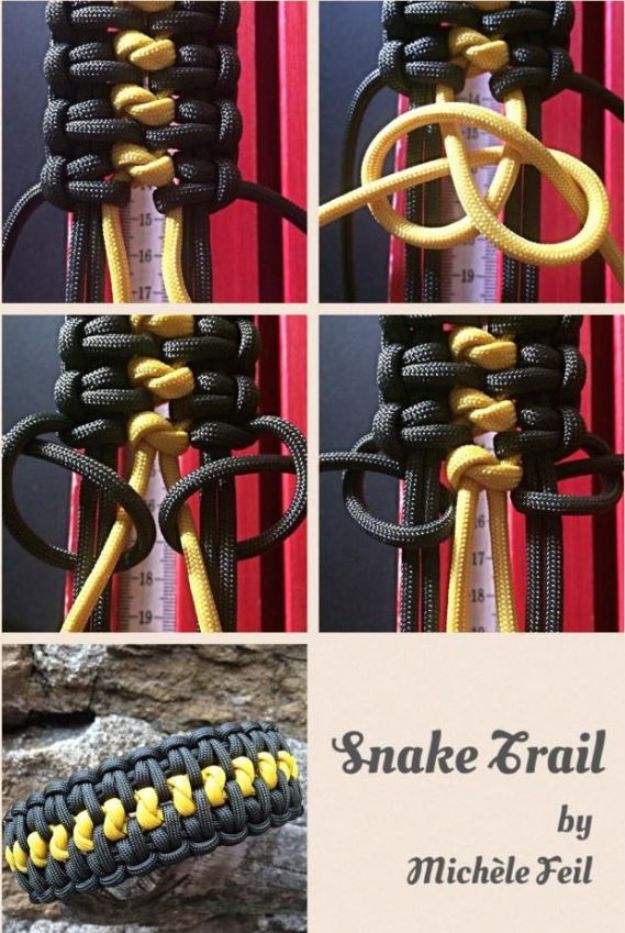
The snake trail winds a second color along a dark base in a path that looks like something moved through it, and the step panels break the sequence down clearly. The tutorial is one large picture diagram rather than written steps, which suits a knot better than prose does, and it comes from a knotter whose other patterns sit alongside it on the same site: crooked falls, night crawler, dotted line, clove and dagger, endless falls and double serpent are all worth a look once you have made this one.
Get the full tutorial at Swiss Paracord, tutorials by Michele Feil.
27. Daisy Paracord Bracelet
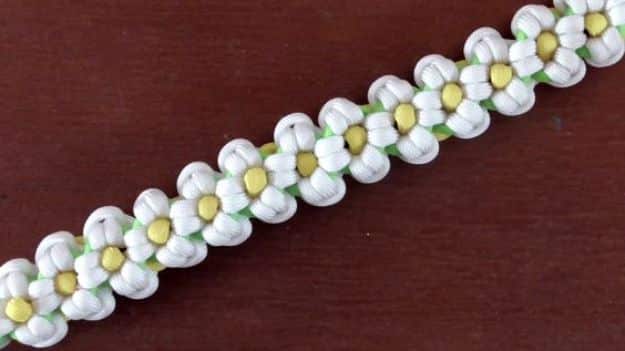
White loops with yellow centers, running the whole length of a green band, and it does actually look like a daisy chain rather than a bracelet wishing it were one. It is a three color 550 cord design tied with a simple loop and knot closure, so no buckle is needed, and the maker describes it as a modification of the Aztec sun bar from earlier on this list. Make that one first and this becomes an evening’s work.
Get the full tutorial at WhyKnot, via MyCrafts.
28. Single Color Paracord Bracelet
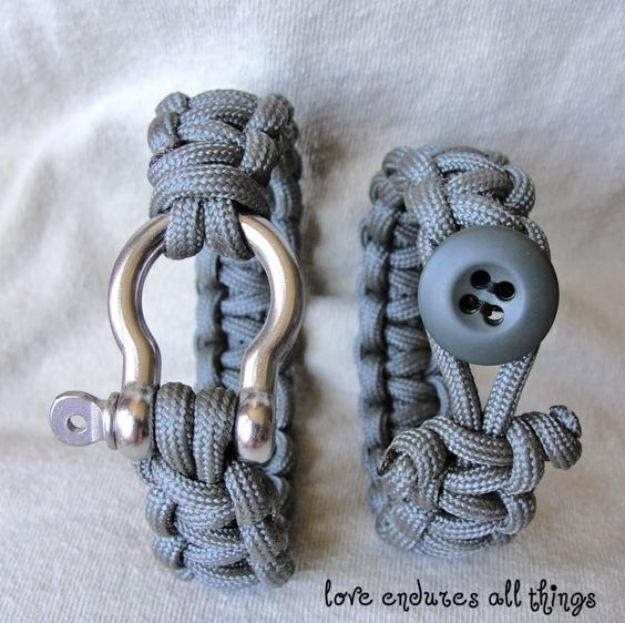
Two gray bracelets, two different closures, one useful lesson: you do not need to buy anything special to finish a band. One closes on a metal shackle from the hardware store, the other on a spare button, and both look better than a plastic buckle. About ten feet of cord makes one, though eight or nine is usually what actually gets used, and sharp scissors plus a lighter finish the job.
Get the full tutorial at Love Endures All Things.
29. Star Triaxial Paracord Bracelet
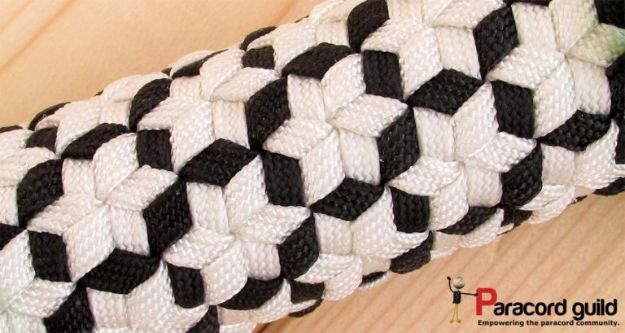
This is the hardest thing on the list and the tutorial says so honestly. The star triaxial is a variation of the triaxial weave, built with three long gutted cords wrapped around a mandrel in one dark and two light, then woven through with shorter cords, a lacing needle and a couple of rubber bands to hold everything. The one trick that makes it possible: wrap loosely at the start, then reverse the wrap to work slack in. It also covers handles beautifully.
Get the full tutorial at Paracord Guild, from a tutorial by Raquel Perez Zbornik.
30. Hex Nut Paracord Bracelet
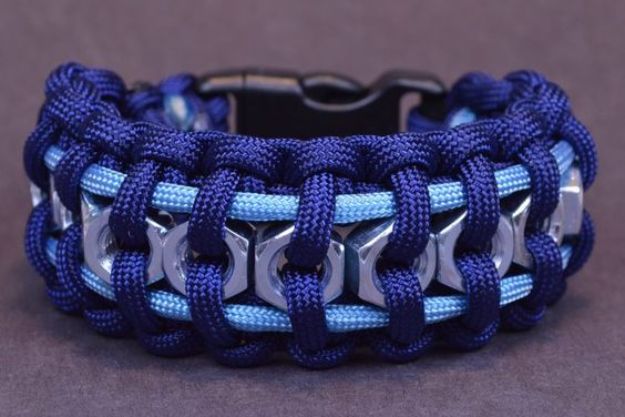
Steel nuts threaded onto the weave, which sounds like it should look ridiculous and instead looks industrial in a good way. The navy and pale blue in the photo keeps it from reading like a hardware store accident, and the nuts catch the light in a way no cord alone manages. One honest warning from the maker: it is a nuisance to take apart again, so treat this one as jewelry rather than as cord you are storing for an emergency. Build it for the look, not for the rope.
Get the full tutorial at The Funny Beaver.
31. Fun and Easy Paracord Bracelets
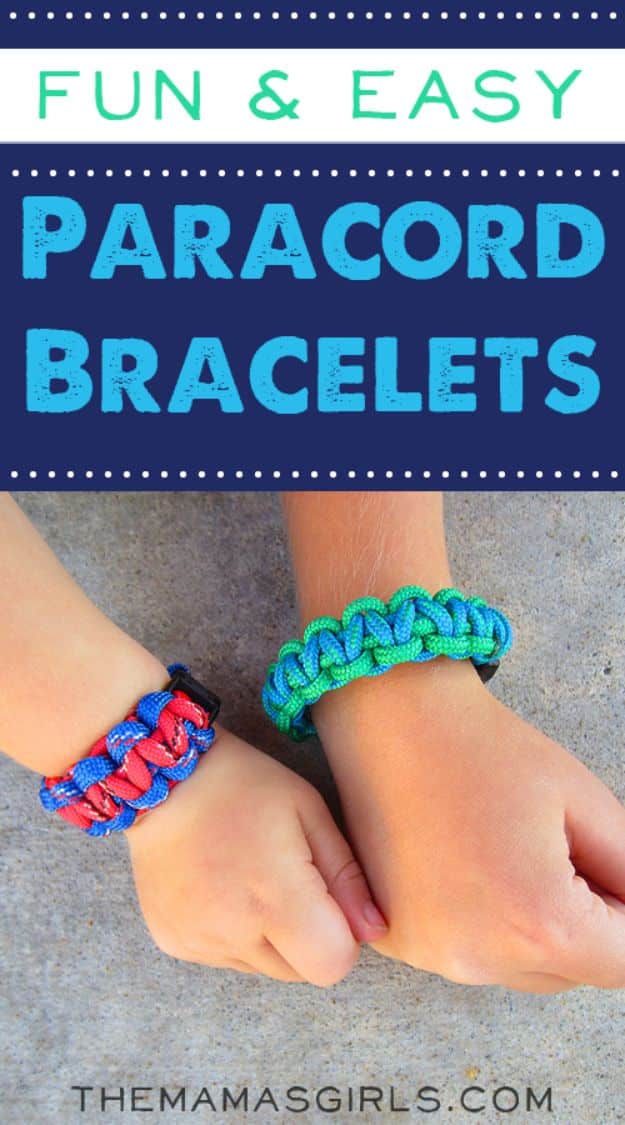
This one came out of what her mother calls a Crafternoon, and it has the best honest warning on the list: the supply list is paracord, a three eighths inch buckle, scissors, a lighter and strong muscles, and the muscles line stops being a joke about four knots in. Age eight and up manages it alone, younger than that means you are making it and they are wearing it. Which is fine, because they will feel equally cool.
Get the full tutorial at TheMamasGirls.
32. Make A Survival Bracelet
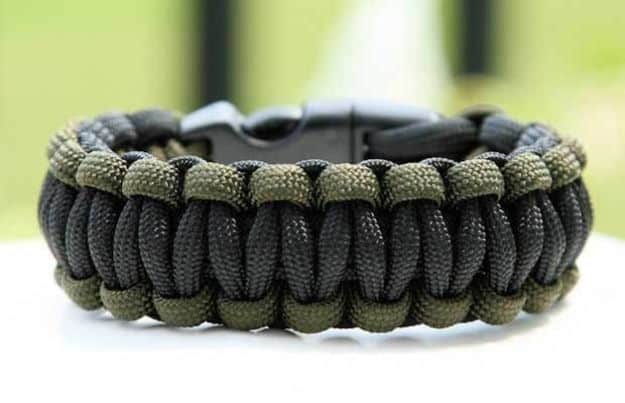
Black through the middle with olive running along both edges, closed on a plain black buckle, and it is about as close to the platonic survival bracelet as this list gets. The two tone edge is the detail worth copying: it takes no extra skill, just a second cord run along the outside, and it makes a plain cobra weave look deliberately designed rather than merely finished.
Get the full tutorial at The Prepper Dome.
33. Paracord One Color Cobra Weave Bracelet
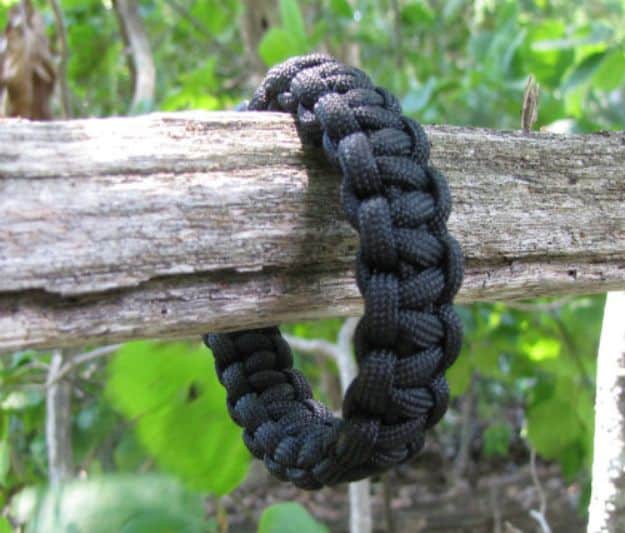
The last item on the list is the first paracord bracelet most people make, and there is a reason it keeps coming back: one color, one weave, a side release buckle, and nothing to get wrong except your tension. A plain black band hanging on a branch is what every other pattern here is a variation of. If you have read this far and made none of them, this is where to start, and then go back to the top.
Get the full tutorial at Paracord.eu.