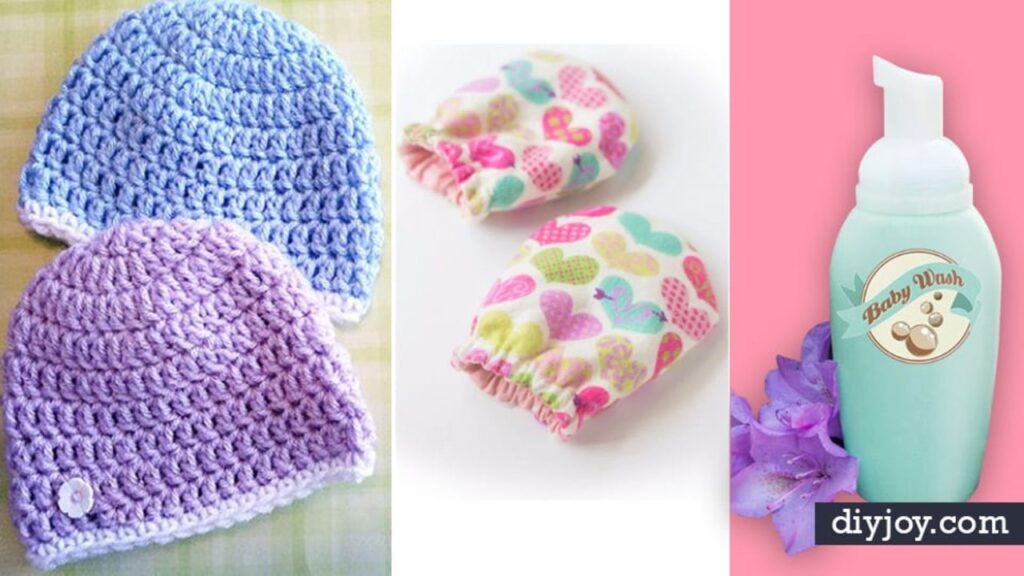
Nesting season is the perfect excuse to sew, knit and craft, and these 14 DIY ideas for the newborn in your house cover the things a new baby actually uses. Most of them are simple sewing projects, like a muslin swaddle blanket, flannel mittens that stop newborn scratches, burp cloths, a travel changing mat and a fleece sleep sack, and many need less than a yard of fabric. There’s a garter stitch knitting pattern for tiny shoes, a no sew baby wrap, a few gentle homemade basics for bath time and diaper changes, and canvas prints that turn those first newborn photos into nursery art. Each one doubles as a heartfelt baby shower gift. One tip for anything that touches baby skin: prewash the fabric in a gentle, fragrance free detergent before cutting, so it shrinks now instead of after all that sewing.
1. No Scratch Baby Mittens
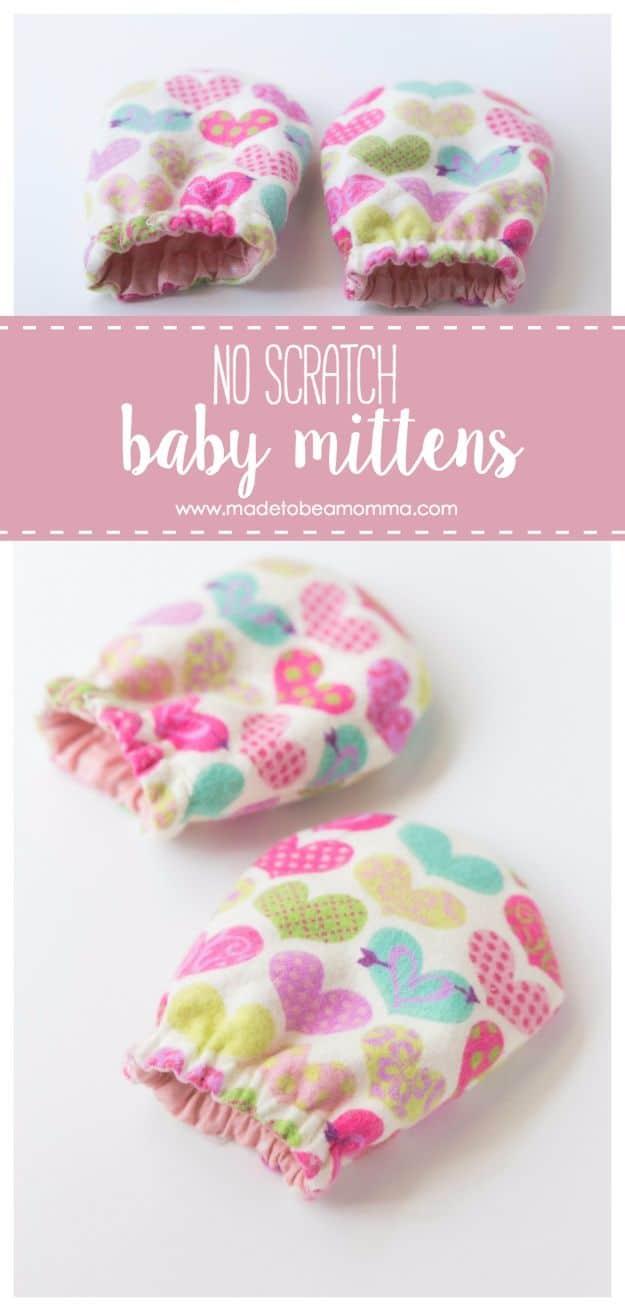
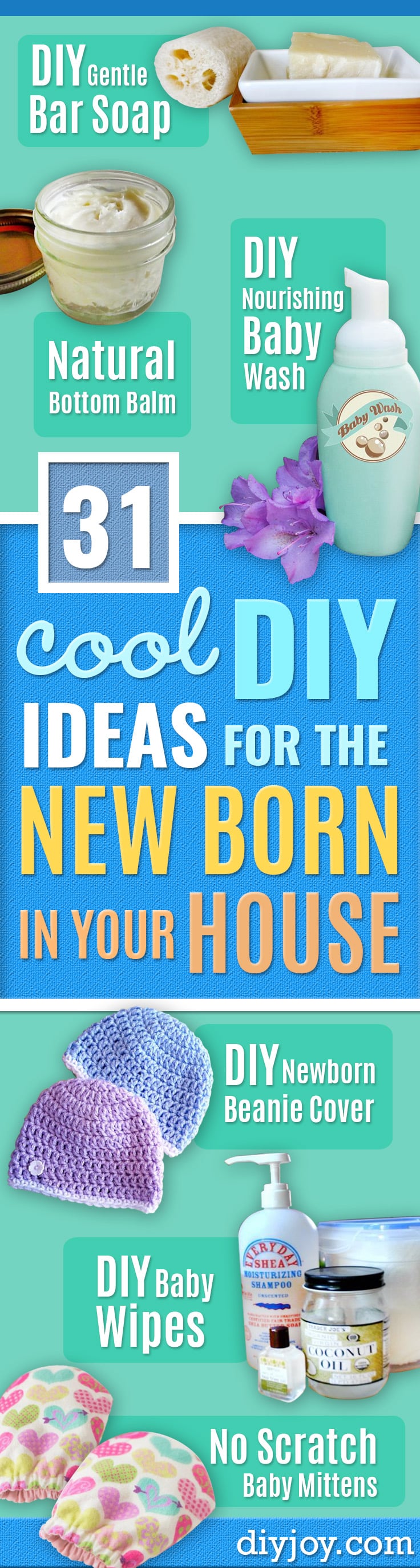
No scratch baby mittens keep tiny fingernails from scratching a newborn’s face, and a set takes two fat quarters and two 4 inch pieces of 1/4 inch elastic. Cut a mitten shape about 4 inches wide and 5 inches tall, rounding the top, for eight pieces per pair. Sew the main pieces with a 1/4 inch seam, clip the curves and turn, then sew the lining with a turning gap. Join them at the top, turn, topstitch and add elastic. This size fits closer to six months, so trim about an inch for newborns.
Get the full tutorial at Made To Be A Momma.
2. Newborn Swaddle Blanket
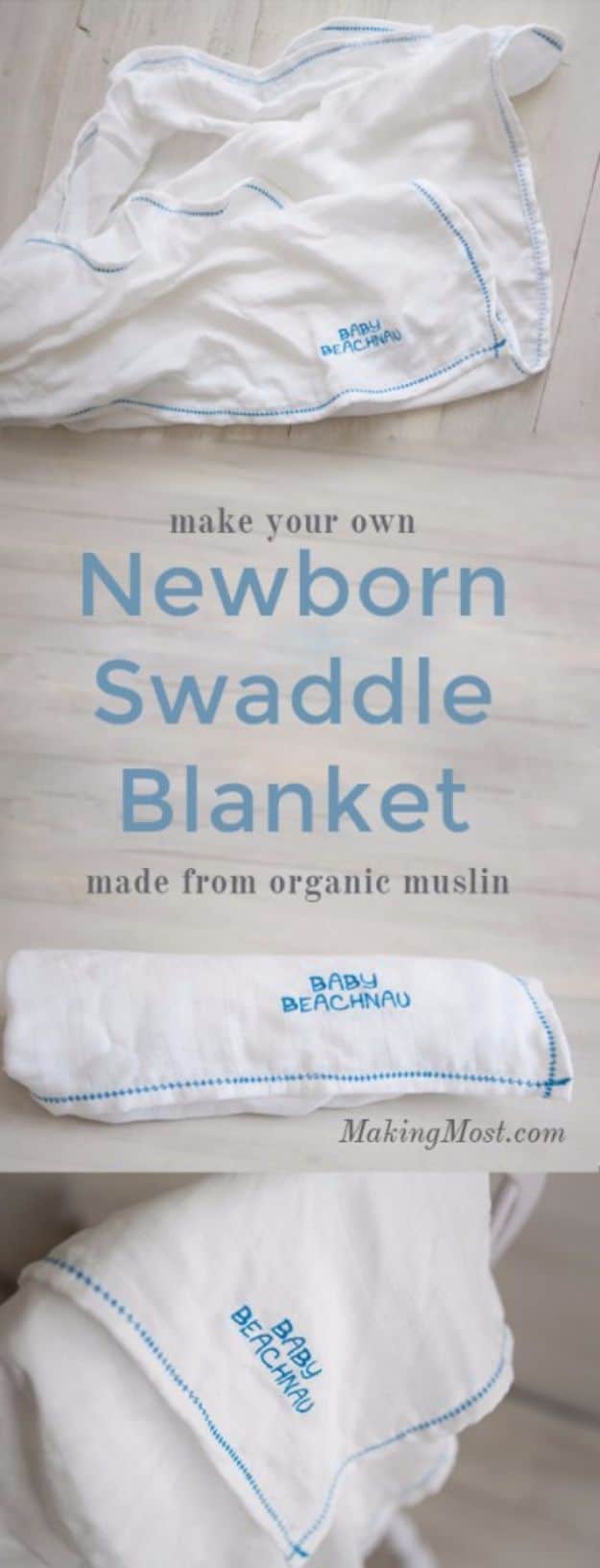
A newborn swaddle blanket made from organic muslin is soft, breathable and works year round. Start with a 45 by 45 inch square. To hem, fold each edge in 1 inch, fold it in half again so it is four layers thick, pin and stitch close to the inner fold with a decorative stitch or a wide zigzag. Trim each corner at a slight angle before folding, since corners stack eight layers. An embroidered name in one corner is optional, about 4 to 5 inches from each edge. Wash it before gifting.
Get the full tutorial at making most.
3. No Sew Baby Wrap
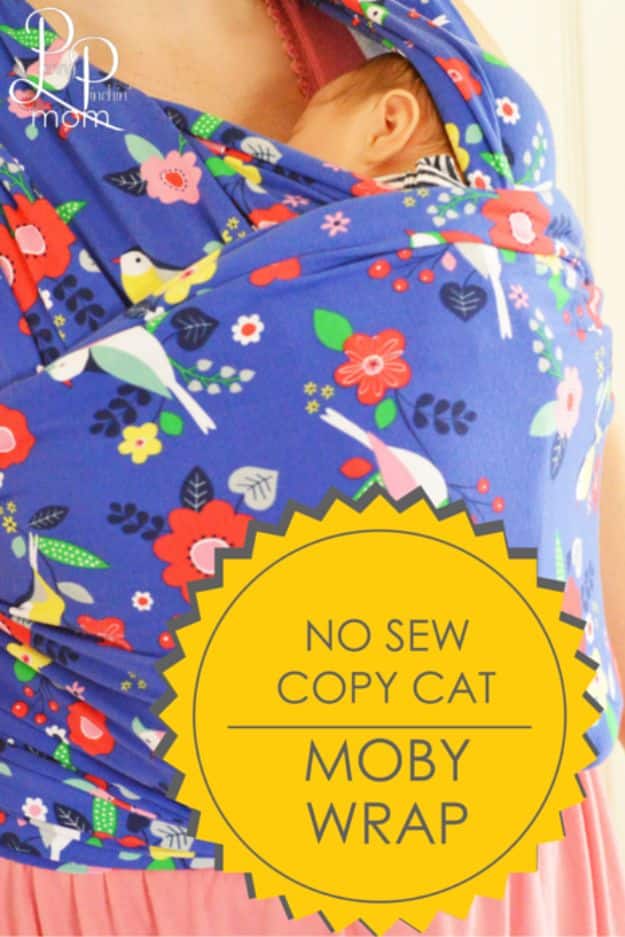
A no sew baby wrap copies a popular stretchy carrier for the cost of about 5 1/2 yards of knit fabric. Choose a jersey that stretches like a t-shirt but not too much, since too much stretch lets baby sag. Most fabric is about 45 inches wide, too wide for a wrap, so cut it down the middle lengthwise into two strips about 22 1/2 inches wide, which makes two wraps. Knit doesn’t fray, so the edges stay raw. Learn the tie with a doll first, and keep baby’s face visible and close enough to kiss.
Get the full tutorial at Penny Pinchin' Mom.
4. Natural Baby Bottom Balm
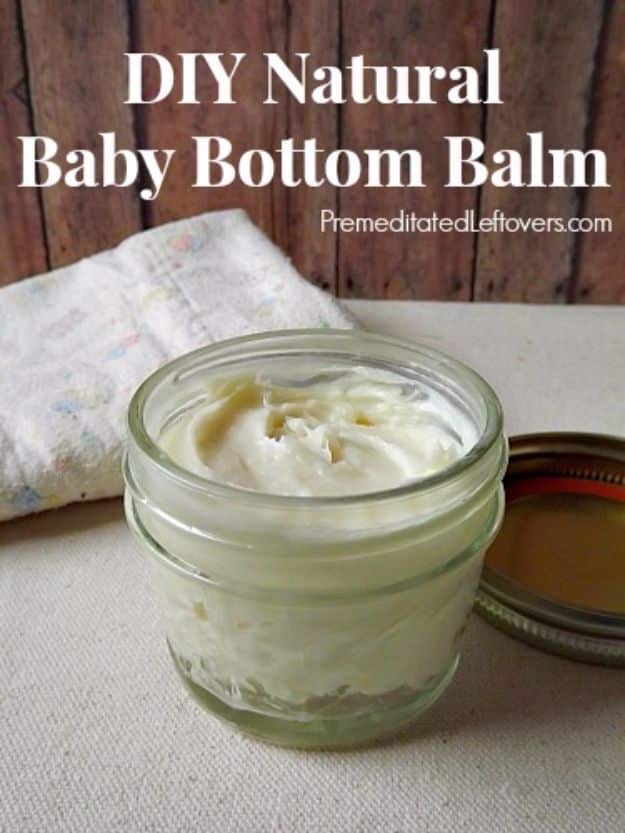
This natural baby bottom balm needs just three main ingredients and a 4 ounce glass jar. Melt 2 tablespoons of beeswax over low heat, pellets melt fastest, then stir in 3 tablespoons of shea butter and 3 tablespoons of coconut oil. Pour it into a jar sterilized in boiling water for 10 minutes and let it set with the lid on. It firms up like lip balm. For a lighter texture, chill it partway and whip it with a hand mixer. The essential oils in the source are optional and easy to leave out for a newborn.
Get the full tutorial at Premeditated Leftovers.
5. Best Burp Rags
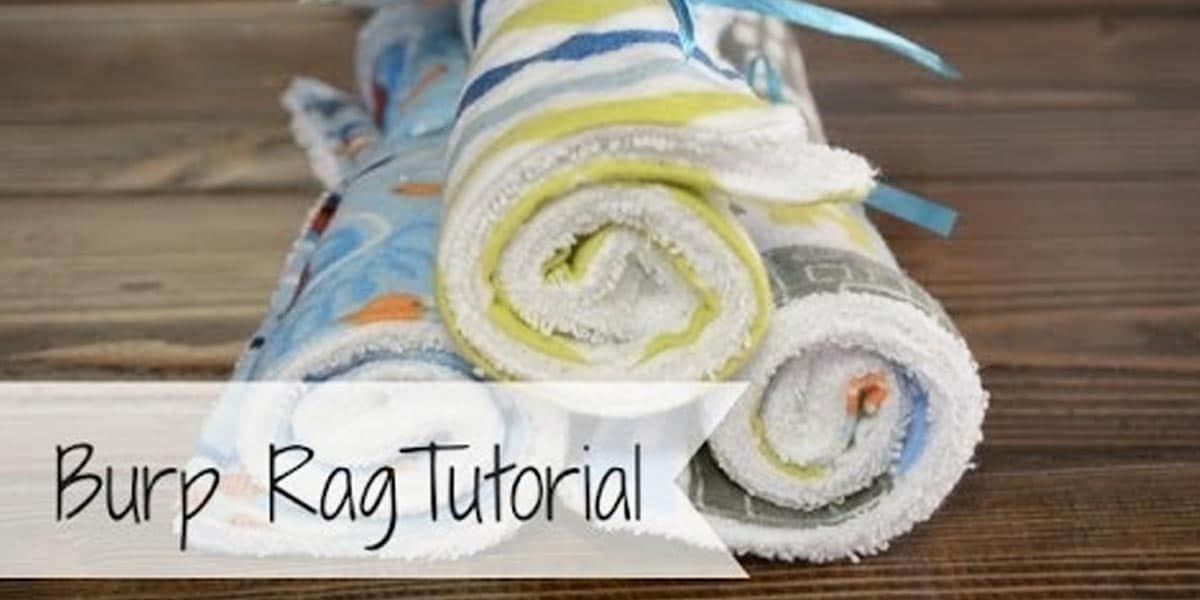
These burp rags are thick enough that spit up doesn’t soak straight through, which is the main complaint about store bought ones. Each one pairs a cotton print, about 1/4 yard per cloth, with a terry cloth backing, and 2 yards of terry is enough for a stack. Cut both layers 8 1/4 inches wide by 17 inches long, a size that covers a shoulder with room to spare. Make a batch in a few prints and they are ready for every baby shower on the calendar, or for a gender surprise.
Get the full tutorial at DIY JOY.
6. Homemade Baby Shampoo
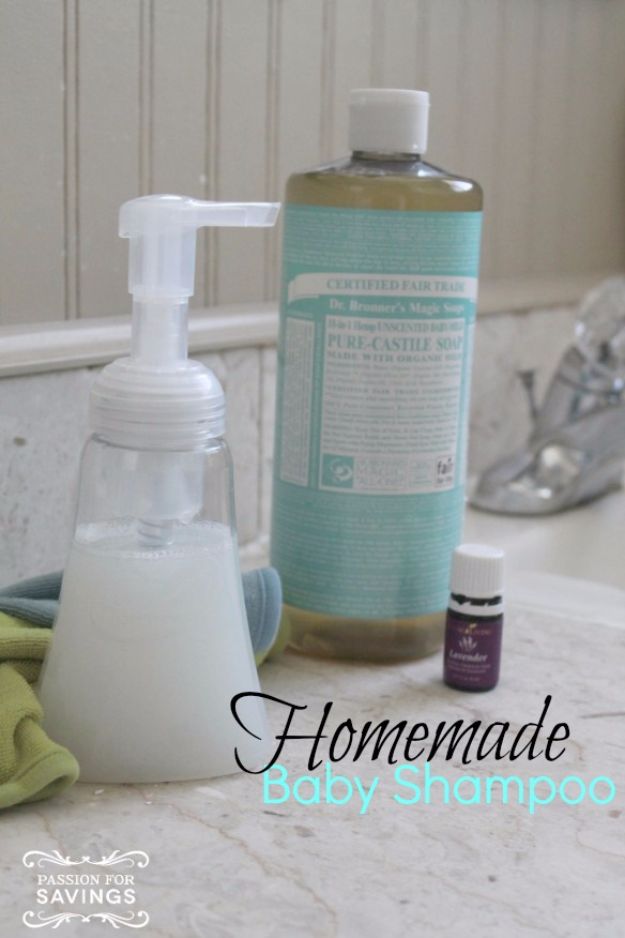
Homemade baby shampoo takes about a minute to mix. The basic recipe is 1 cup of liquid castile soap, mild or baby formula, to 1 cup of distilled or filtered water, stored in an old shampoo bottle. To stretch it even further, pour 1 ounce of castile soap and 4 ounces of water into a foaming soap dispenser, which turns a few drops into a pile of suds. Boiled water works too, once it has cooled completely. The lavender oil in the source is optional, and castile soap stings eyes, so rinse carefully.
Get the full tutorial at Passion For Savings.
7. Newborn Canvas Prints
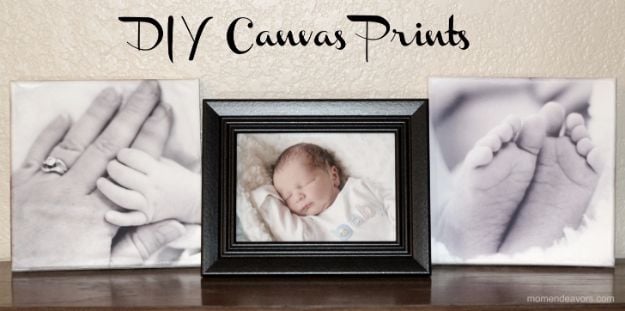
Newborn canvas prints made at home cost far less than ordering gallery wrapped canvases. The supplies are 8 by 8 inch canvases, printable transfer film sheets, a glue stick, scissors, an iron and an inkjet printer. Mirror the photo before printing, print on the glossy side and run a test on plain paper first so you don’t waste a sheet. Trim the film to the canvas, glue only the edges so the glue doesn’t show through, peel and press it ink side down, then iron over a thin towel without steam.
Get the full tutorial at Mom Endeavors.
8. Baby Wipes
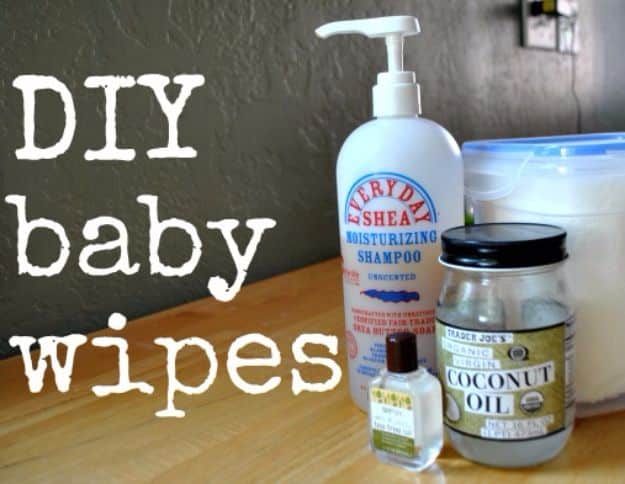
Homemade baby wipes start with one roll of absorbent paper towels cut in half into two short rolls. A sharp serrated knife helps, and the spare half waits in a bag for the next batch. Boil 2 cups of water for 2 minutes, then whisk in 2 tablespoons of gentle baby shampoo and 1 tablespoon of coconut oil. Pour it over the half roll in a tall lidded container, let it soak 30 minutes, then flip the container so both ends get evenly damp. Make small batches often, and keep them in the fridge in humid weather to prevent mold.
Get the full tutorial at The Iowa Farmer's Wife.
9. Homemade Burp Cloth
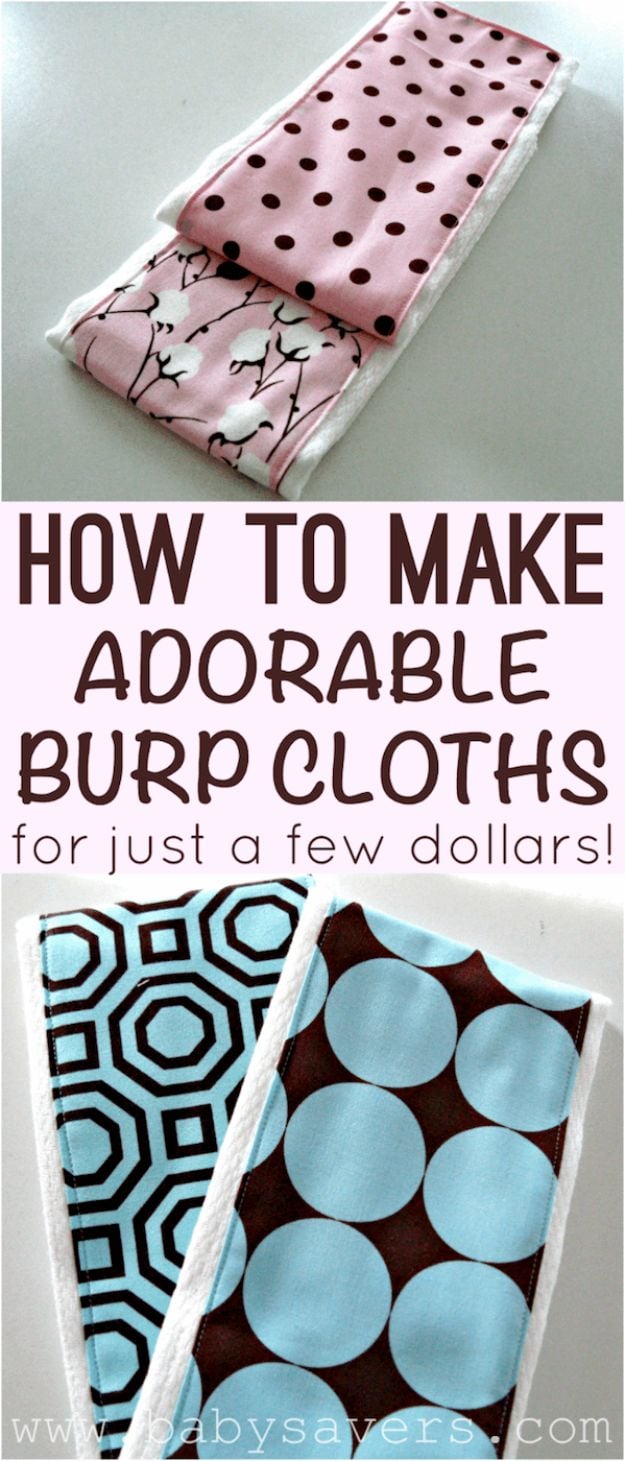
Homemade burp cloths are one of the easiest first sewing projects, and the thriftiest versions start with prefold cloth diapers at under $2 each. Stitch a strip of cotton print down the center of a prefold and it becomes a thick, absorbent burp cloth in minutes. This page gathers several methods, from fabric strips on prefolds to soft terry cloth or chenille versions, plus dressed up cloths trimmed with ric rac or ribbon. Tie a stack with a bow and it is a ready made baby shower gift.
Get the full tutorial at Baby Savers.
10. Newborn Baby Shoes
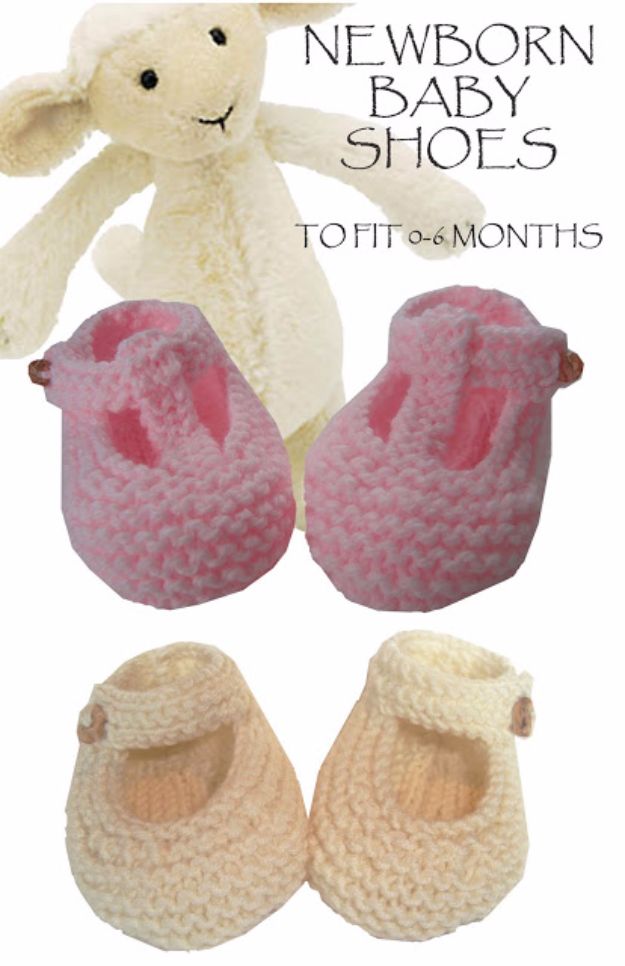
These garter stitch baby shoes are a free knitting pattern sized for 0 to 6 months, and the whole pair takes one 50 gram ball of baby DK yarn, 4 mm needles (US 6) and two small buttons. Because they are garter stitch, every row is a knit row, which makes them a friendly first shoe pattern. Gauge is 20 stitches and 40 rows to 4 inches. The pattern includes two styles, a strap shoe and a T bar shoe. Sew the buttons on firmly with doubled yarn, and check them often.
Get the full tutorial at Audrey Wilson.
11. Pacifier Clips
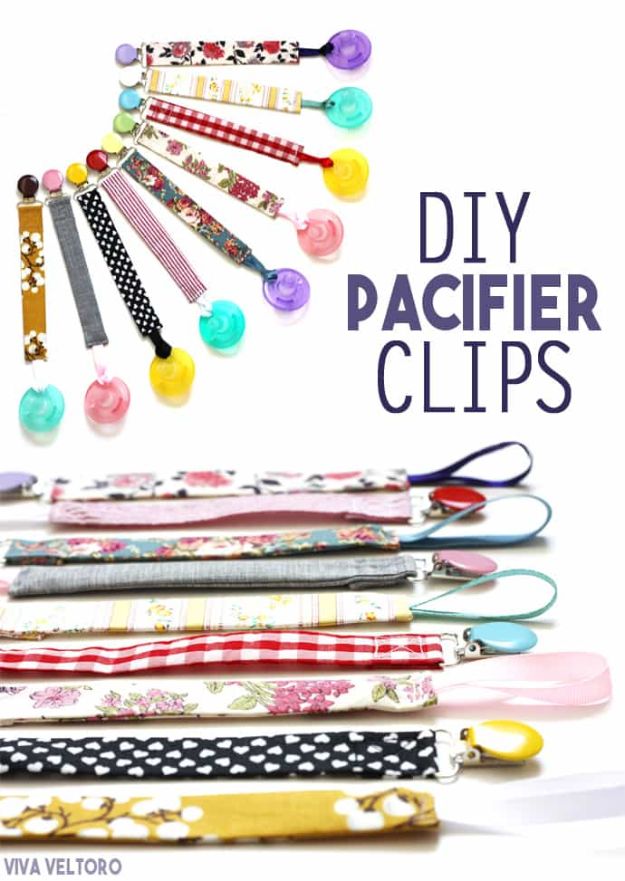
Pacifier clips are a quick scrap busting sew, and a batch of nine can come in around $7 when the fabric is already on hand. Cut fabric and interfacing strips 2 1/4 by 8 inches on the grain, fuse them, fold right sides together and sew a 1/4 inch seam. Turn the tube with a safety pin, press and fold in the raw ends. Slide a suspender clip onto one end and stitch an X in a box. Knot a ribbon loop about 2 1/2 inches long into the other end. Never use one in the crib.
Get the full tutorial at Viva Veltoro.
12. Baby Changing Mat
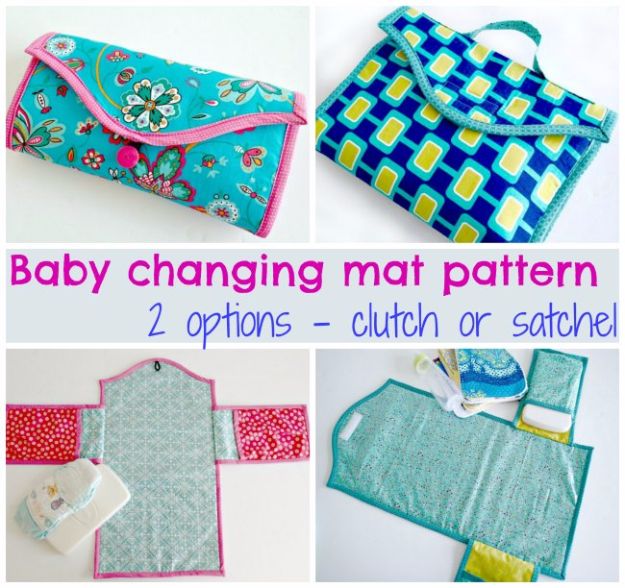
This baby changing mat pattern is small enough to carry yet big enough to use, with a wipe clean inner surface. It takes about 1 yard of fabric in one print or several, a 12 by 24 inch piece of low loft batting or fusible fleece, an optional 12 by 24 inch piece of vinyl, bias tape and a velcro or button and elastic closure. The free pattern has two versions: a satchel style with a handle and pockets at the bottom, and a clutch that folds up smaller. Pick fabrics that wash well.
Get the full tutorial at So Sew Easy.
13. Baby Head Bands
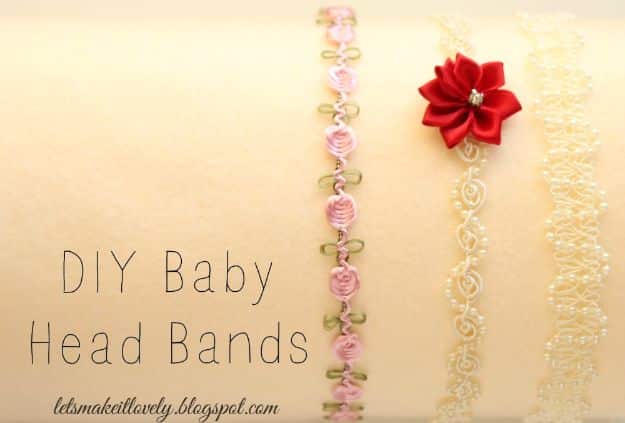
Boutique style baby headbands take lace, matching ribbon, thin elastic and a hot glue gun, and they cost a fraction of shop prices. For a newborn, cut the lace and 1/4 inch braided elastic so together they total about 11 to 12 inches. Join one end of the elastic to one end of the lace with a dab of hot glue, then wrap the joint with a 1 1/2 inch piece of ribbon. Repeat on the other side and trim. A satin flower or bow is optional. Use headbands for photos and outings, and remove them for sleep.
Get the full tutorial at Let's make it lovely.
14. Sleep Sack
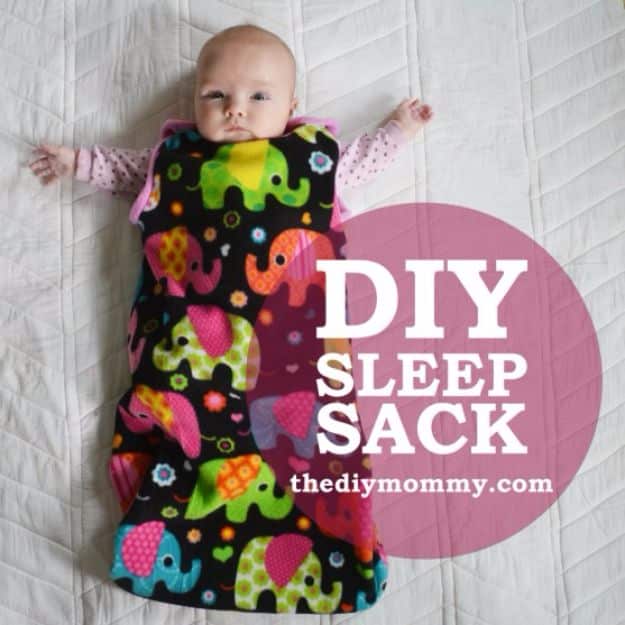
A sleep sack is a wearable blanket for babies who have outgrown the swaddle, and it replaces loose blankets in the crib. This free pattern is a single layer of soft fabric, such as fleece, with homemade edge binding and snaps or velcro at the shoulders for quick middle of the night changes. It has no sleeves on purpose, so baby’s arms move freely, which is how a sleep sack should be. Choose the fabric weight to match the season, lighter cotton for summer and fleece for winter.
Get the full tutorial at Cozy DIY Home.