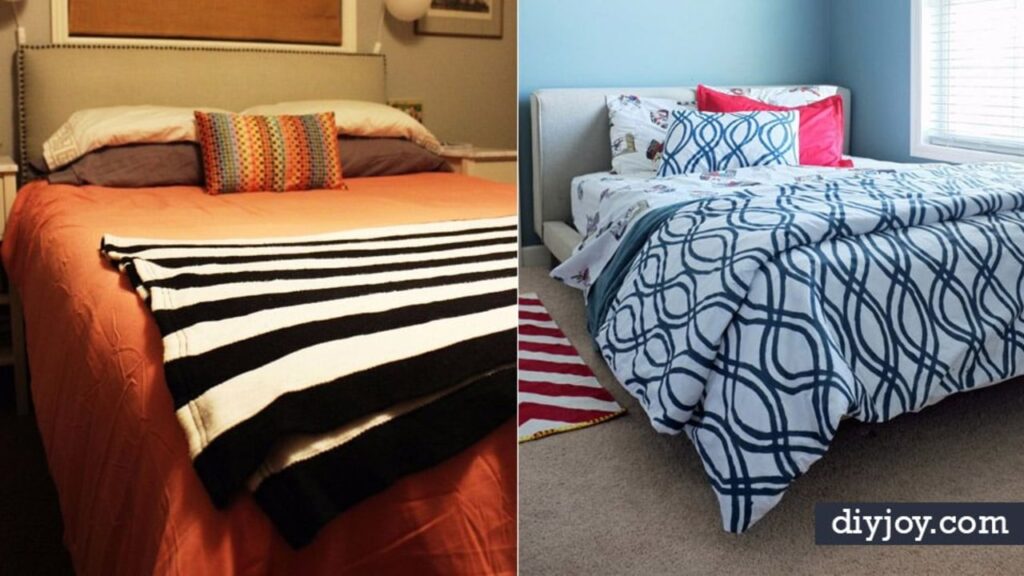
A duvet cover is basically a giant pillowcase for your comforter, and that’s exactly why sewing one is so doable. These 17 DIY duvet covers run from beginner friendly two sheet covers to showstoppers covered in ruffles, knots and pintucks. One barely needs a sewing machine at all: gold dots stamped onto a plain cover with a foam pouncer. Others turn something unexpected into bedding, like a ruffled fabric shower curtain, a vintage chenille bedspread or a pile of thrifted bed skirts. Most start with inexpensive flat sheets, which is how a designer look comes in at a fraction of the store price. Pre-wash every fabric, clear a big floor for cutting and choose the style that suits your bedroom best.
Table of Contents
- DIY Duvet Covers
- 1. Shabby Chic Ruffled Duvet Cover
- 2. Easy Painted Dot Duvet DIY
- 3. DIY Map Duvet Cover
- 4. Duvet Cover Out Of A Shower Curtain
- 5. Anthropologie Inspired Knot Bedding Duvet
- 6. Reversible Duvet Cover
- 7. DIY Cozy Duvet Cover
- 8. Gathered Quilt or Duvet Cover
- 9. Custom Duvet Cover
- 10. DIY Duvet From A Bedspread
- 11. DIY Ruffled Duvet Cover
- 12. Easy Duvet Cover
- 13. DIY Pintuck Duvet
- 14. Crib Size Duvet Cover
- 15. Super Easy Duvet Cover
- 16. Create Your Own Duvet Cover
- 17. Dwell Duvet Cover DIY
DIY Duvet Covers
1. Shabby Chic Ruffled Duvet Cover
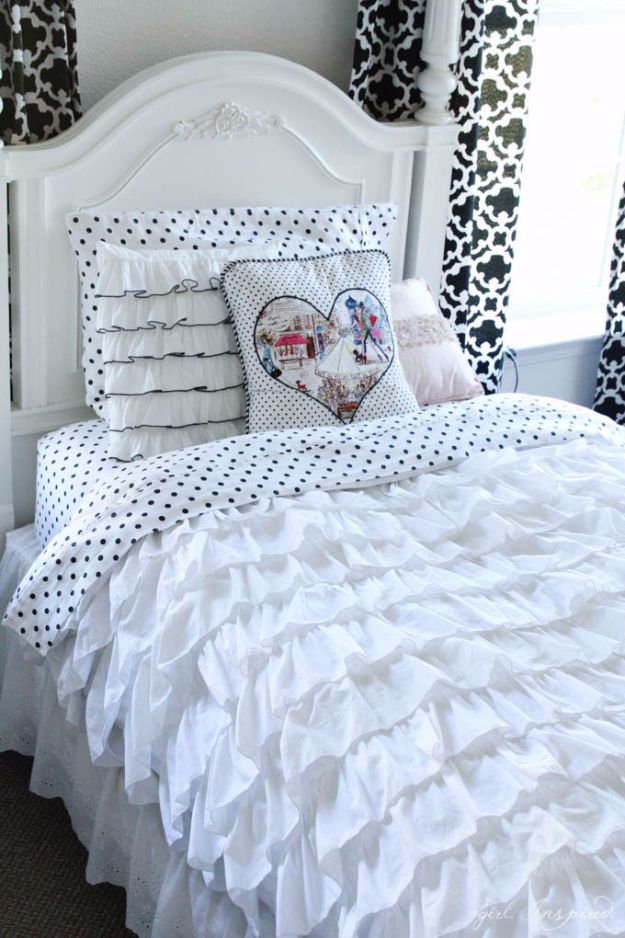
A ruffled duvet cover like this starts with a plain store bought cover, so the hard part is already done. Slice open the side and top seams, then sew rows of ruffles across the top layer. The ruffles are 6 inch strips of inexpensive cotton muslin, which comes extra wide, with the top edges overlocked and the bottom edges finished in a rolled hem on a serger. A twin cover took 18 rows, each overlapping the one below by about 1 1/2 inches. It takes time more than skill.
Get the full tutorial at girl. Inspired.
2. Easy Painted Dot Duvet DIY

A painted dot duvet is the rare bedding project with no measuring at all, and it takes under 30 minutes to paint. Fold a plain white duvet cover in half on a big surface with the opening at the bottom. Pour metallic gold fabric paint onto a plate, dab a round foam spouncer, blot it once and stamp dots starting at the fold, sparse near the top and thicker toward the bottom for a cascade effect. Touch up any white spots. Wait 72 hours, then wash it inside out.
Get the full tutorial at Andrea's Notebook.
3. DIY Map Duvet Cover

A world map duvet cover can be painted at home with a projector and plain acrylic craft paint. Mix the paint with fabric medium so it stays soft and holds up in the wash. Project a map onto a cheap white duvet cover, trace the outlines with a colored pencil that matches the paint, then fill in the shapes with artist’s brushes, a small one for edges and a larger one for open areas. Three shades each of blue and green give the continents depth. Any design works the same way.
Get the full tutorial at Lovely Etc.
4. Duvet Cover Out Of A Shower Curtain
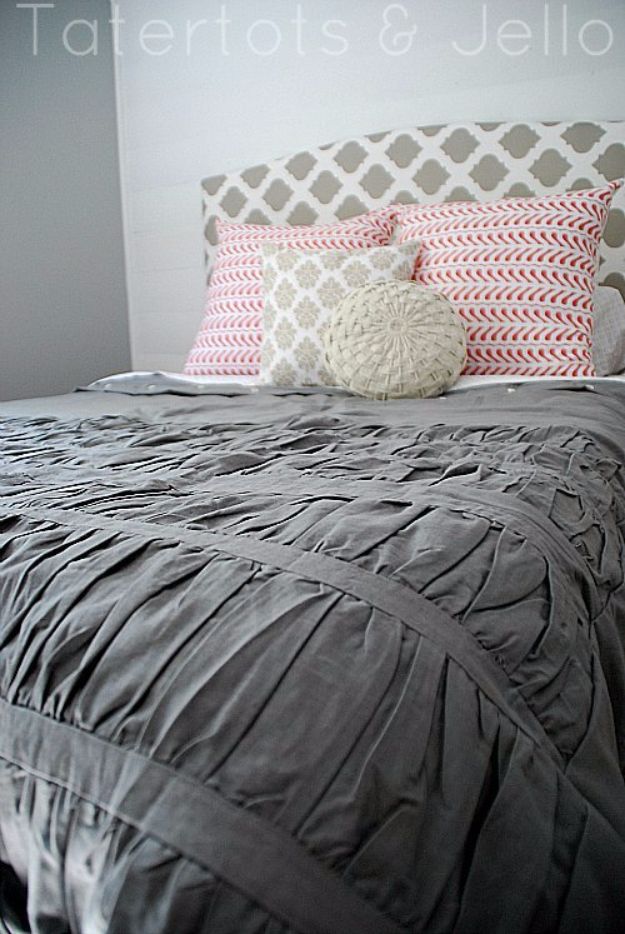
A ruffled fabric shower curtain makes a surprisingly perfect duvet cover top, since it already has buttonholes along one edge. Buy two curtains and a matching flat sheet. Cut the ruffles off the second curtain and sew them onto the first, then add two 10 inch panels from the leftover fabric to widen it for a queen. A 6 inch strip at the bottom brings it to 90 by 108. Cut the sheet to size for the back, sew right sides together and add vintage buttons.
Get the full tutorial at Tatertots and Jello.
5. Anthropologie Inspired Knot Bedding Duvet

Knot bedding has the look of a high end store version for a fraction of the price, about $45 for a king against $288. Cut 18 inch squares from jersey sheets, using a cardboard template to skip measuring; a king takes 64 squares and a queen 49. Trace a bowl in chalk at the center of each square, run long basting stitches around the circle with strong upholstery thread and pull them tight into a knot. This version becomes a removable slipcover, which makes washing easy.
Get the full tutorial at A Mommy's Life with a Touch of Yellow.
6. Reversible Duvet Cover

A reversible duvet cover gives a bed two looks, and an invisible zipper hides the opening completely. Pre-wash the fabric, then lay the comforter on it and cut around it with seam allowance rather than measuring separately. A queen took about 6 yards each for the top and back; this one used a linen and rayon blend, which feels like linen for less. Sew the longest invisible zipper available, about 22 inches, into the bottom seam, then stitch the two fabrics right sides together.
Get the full tutorial at The Keeper of the Home.
7. DIY Cozy Duvet Cover

A custom duvet cover is the answer when the perfect fabric isn’t wide enough for a bed. Piece the decorator fabric to size for the top, then use an inexpensive white flat sheet for the back to save money. Sew the layers right sides together, turn it out and add a closure along the bottom. Honestly, the hardest part is finding a floor big enough to lay out all that fabric. A bold chevron print keeps a kid’s room cheerful without fussy details.
Get the full tutorial at Hey There, Home.
8. Gathered Quilt or Duvet Cover

A gathered duvet cover adds rich texture with nothing harder than straight seams. Cut 63 fabric pieces at 21 by 10 1/2 inches for a twin, gather each long side down to 10 1/2 inches with a long stitch or a ruffler foot, and sew each one to a muslin square to stabilize it. Lay the squares out, alternating the direction of the gathers, then sew them into rows and the rows together. Finish the edges, add a sheet back and the top becomes a duvet cover.
Get the full tutorial at Andrea's Notebook.
9. Custom Duvet Cover

Two flat sheets make a custom duvet cover, which is a smart workaround when only the matching sheets come in the print you love. Use one patterned flat sheet for the top and a plain, inexpensive one for the back. Sew them right sides together around three sides, then finish the open end and add ribbon ties to close it. One twin cover plus the rest of the sheet set made a complete bedding set for about $60, far less than the matching duvet alone.
Get the full tutorial at Kaleidoscope Living.
10. DIY Duvet From A Bedspread
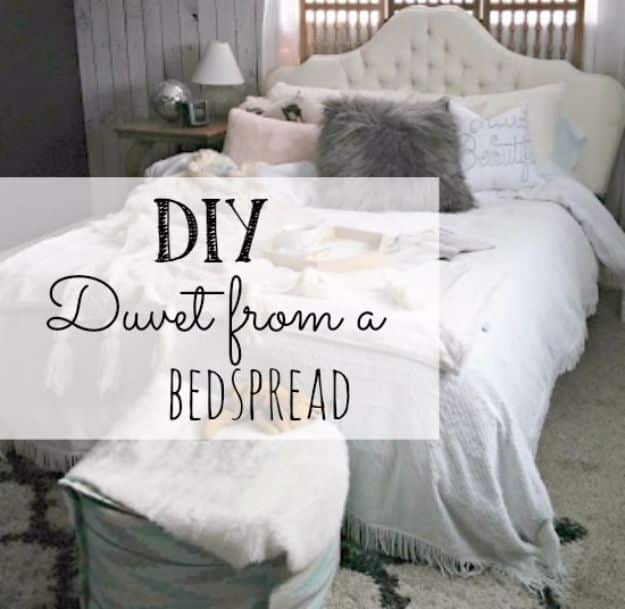
A vintage chenille bedspread can become a duvet cover that slips over a comforter, so it’s easy to switch back when the mood changes. Cut the fringe off first so it can be reattached at the end. Lay the bedspread flat over the comforter to check the fit, then piece flat sheets together for the back. Pin the two right sides together, sew around and add ties inside the corners to keep the comforter from sliding. The longer bottom edge hides the opening, so no closure is needed.
Get the full tutorial at Little Vintage Cottage.
11. DIY Ruffled Duvet Cover

A big ruffled duvet cover can be made from two king flat sheets plus thrifted bed skirts, sheets and a tablecloth for the ruffles. Wash everything first. Sew the flat sheets on two sides, test fit the comforter and mark where to trim with a washable marker. Then make lots of ruffles: sewn tubes from 9 inch strips, plus 5 and 4 inch strips gathered down the middle. Pin them in rows across the top before closing the cover, because ruffles are much harder to sew once it’s assembled.
Get the full tutorial at Kiki & Company.
12. Easy Duvet Cover

A minky duvet cover adds instant warmth to a light blanket for the colder months. For a 90 by 90 inch queen top, sew cuddle fabric blocks into 10 rows of 10 using a half inch seam allowance, keeping the nap running the same direction. Sew the rows together, then back it with 90 inch wide cuddle fabric so there’s no center seam. A walking foot and a stretch needle make the slippery fabric behave, and ribbon ties finish it off. Watch the weight as it grows, so it doesn’t drag the needle.
Get the full tutorial at Fleece Fun.
13. DIY Pintuck Duvet

A pintuck duvet like the pricey catalog version can be made from two flat sheets for about $23. Iron the sheet first, then lay it good side down and mark where each tuck goes with a pin, about 12 inches up from the bottom and evenly spaced across. A magazine makes a quick spacing guide. Move up another 12 inches for each new row, offsetting the pins. Pinch and stitch each tuck, then sew the sheets together and add buttons or snaps. King sheets give a queen more overhang.
Get the full tutorial at View Along the Way.
14. Crib Size Duvet Cover
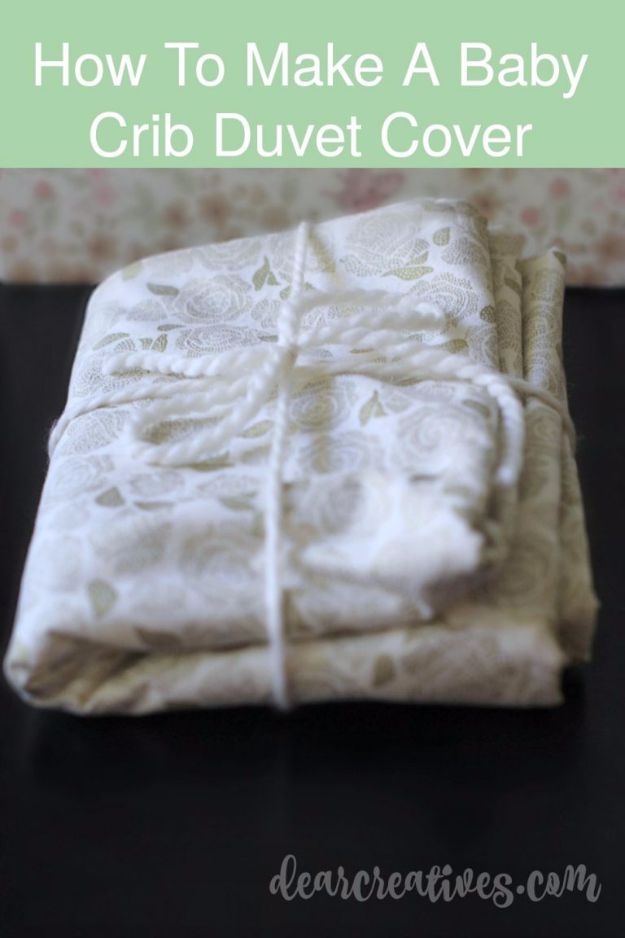
A crib size duvet cover is a quick, beginner friendly project and a sweet first birthday or baby shower gift. It’s also a smart way to reuse a crib blanket that no longer matches a nursery. Pre-wash and press the fabric, then cut two pieces of cotton or flannel slightly bigger than the comforter, with a half inch seam allowance on each side. Fold and stitch a finished top edge, add iron on Velcro across it, then sew the remaining sides. Plan on one to three hours.
Get the full tutorial at Dear Creatives.
15. Super Easy Duvet Cover

A duvet cover is easier to sew than it looks, especially with cheap fabric from a yardage sale. Start with the comforter’s size, here a queen at 86 by 86 inches, and add about 2 5/8 inches at the bottom and 1 1/4 inches at the top for seams and the closure flap. Piece the fabric horizontally into top and back panels, since most bolts aren’t wide enough. Hem one short edge of each panel, sew the rest of the way around and close the opening with sew on snaps.
Get the full tutorial at All Things Thrifty.
16. Create Your Own Duvet Cover
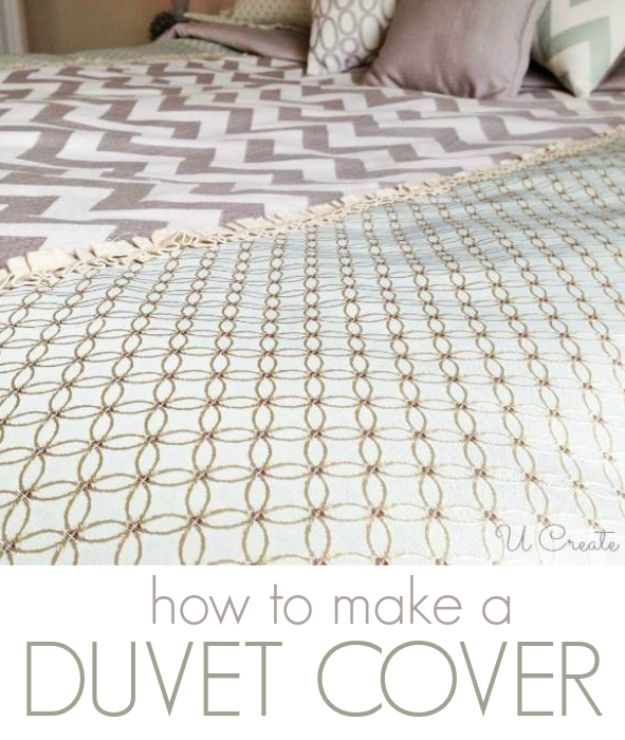
A queen duvet cover can be sewn in a single evening when the top is pieced from three fabrics. Sew the middle panel to each side panel right sides together with a 1/2 inch seam and press the seams open. Pin pre-ruffled trim over both seams and stitch straight down the center of it. Then sew the back to the front on all sides except the top, and add buttons, a zipper or snaps to close it. A pillow top mattress needs a few extra inches.
Get the full tutorial at U Create.
17. Dwell Duvet Cover DIY

Designer yardage can become a duvet cover even when the print doesn’t come in the right size. Upholstery fabric is often only 54 inches wide, while a standard twin duvet is 60 by 90, so extra width has to be pieced in. One extra yard cut into 7 inch strips, joined and sewn down both edges, adds the width without a long extra length. Line up the pattern carefully at each seam. A matching clearance sheet makes the back, and serging three sides closes it like a giant pillowcase.
Get the full tutorial at Live Free Creative Co.