Fence quotes are the reason most yards stay the way they are. These DIY fences and gates are the way around that, and they run the whole range, from a weekend gate you can build for about twenty dollars in 2x4s to a wattle fence woven out of saplings that costs nothing but a pair of pruning shears. There are pallet fences, salvaged shutters standing on end, corrugated tin, marbles drilled into cedar so the light comes through, deer fencing that does not block a view and mesh runs built specifically to keep a dog in. Some are real builds. Several are an afternoon. Every outside tutorial links back to the person who built it.
1. Marble Fence
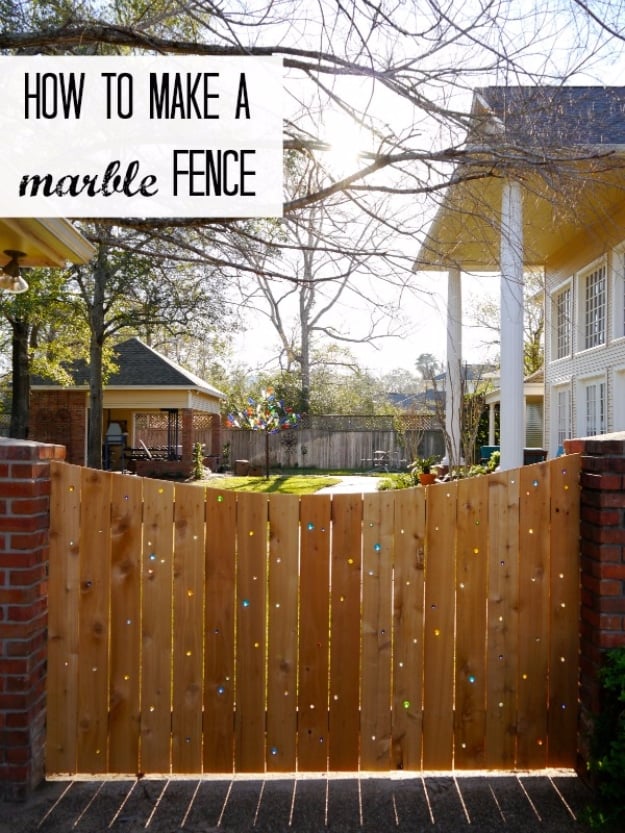
Holes drilled through cedar fence boards with a glass marble tapped into each one, so the fence throws little spots of colored light across the yard in the afternoon. Two things make it work. Use marbles the light actually passes through, because an opaque one is just a dot. And find your drill bit on a practice board first, since the marble has to go in snug enough that a rubber mallet is what seats it, not loose enough that it falls out the other side.
Get the full tutorial at C.R.A.F.T.
2. Easy DIY Fence Gate
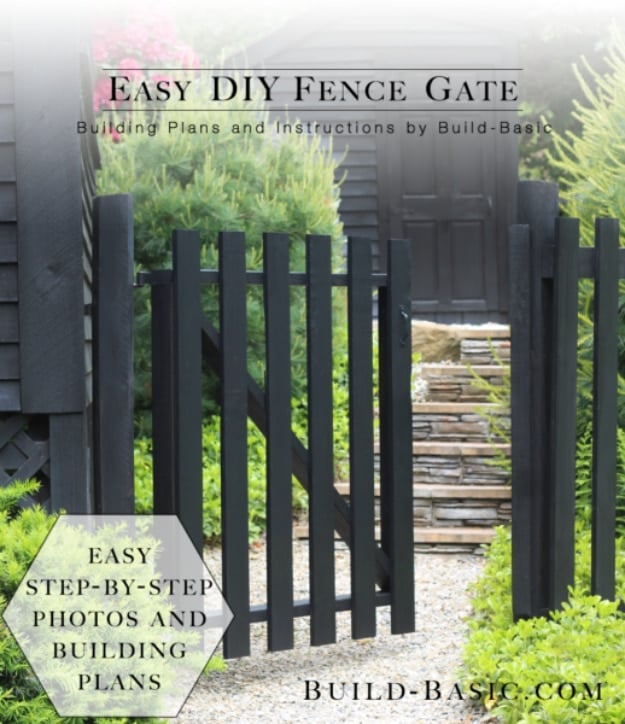
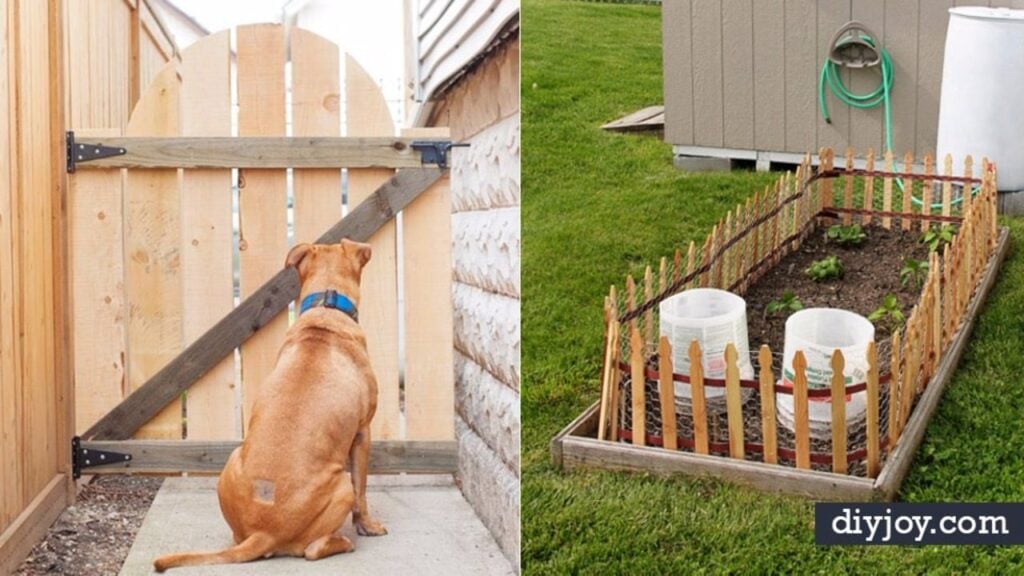
A 2×4 frame with a diagonal crosspiece and 1×4 pickets screwed on the front, built for about twenty dollars depending on the size. The frame goes together with pocket holes rather than joinery, which is what makes this a genuine beginner build: every cut is square, and the only tricky piece is the diagonal, which you mark in place by sliding it under the assembled frame and tracing the angle rather than calculating it. Then set the saw to that angle and cut both ends.
Get the full tutorial at Build Basic.
3. Amazing DIY Pallet Fence
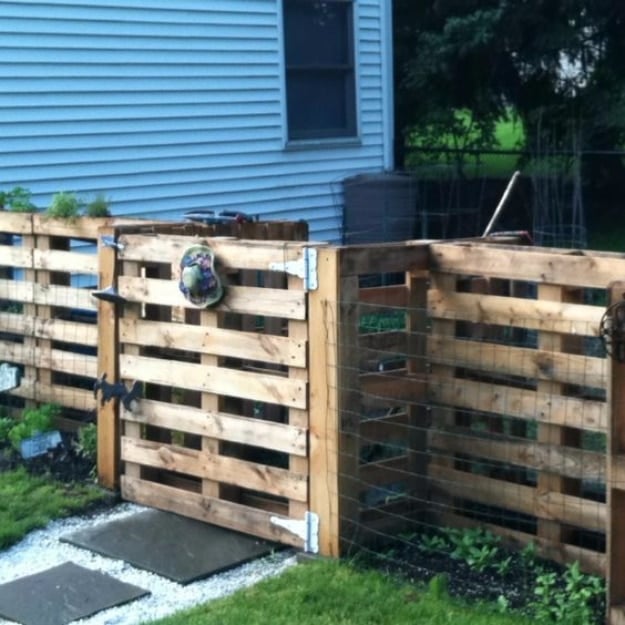
Whole pallets slid down over 4×4 posts, no dismantling at all. Sledge the posts into the ground spaced so a pallet drops neatly over two of them, and each section ends up with two posts running inside it doing the supporting. It is about as fast as fencing gets. Stack pallets two high for privacy or leave them one high for a boundary, and a single pallet on a pair of hinges is your gate. Paint them if you want the look to survive scrutiny.
Get the full tutorial at Bless My Weeds.
4. Simple Garden Fence
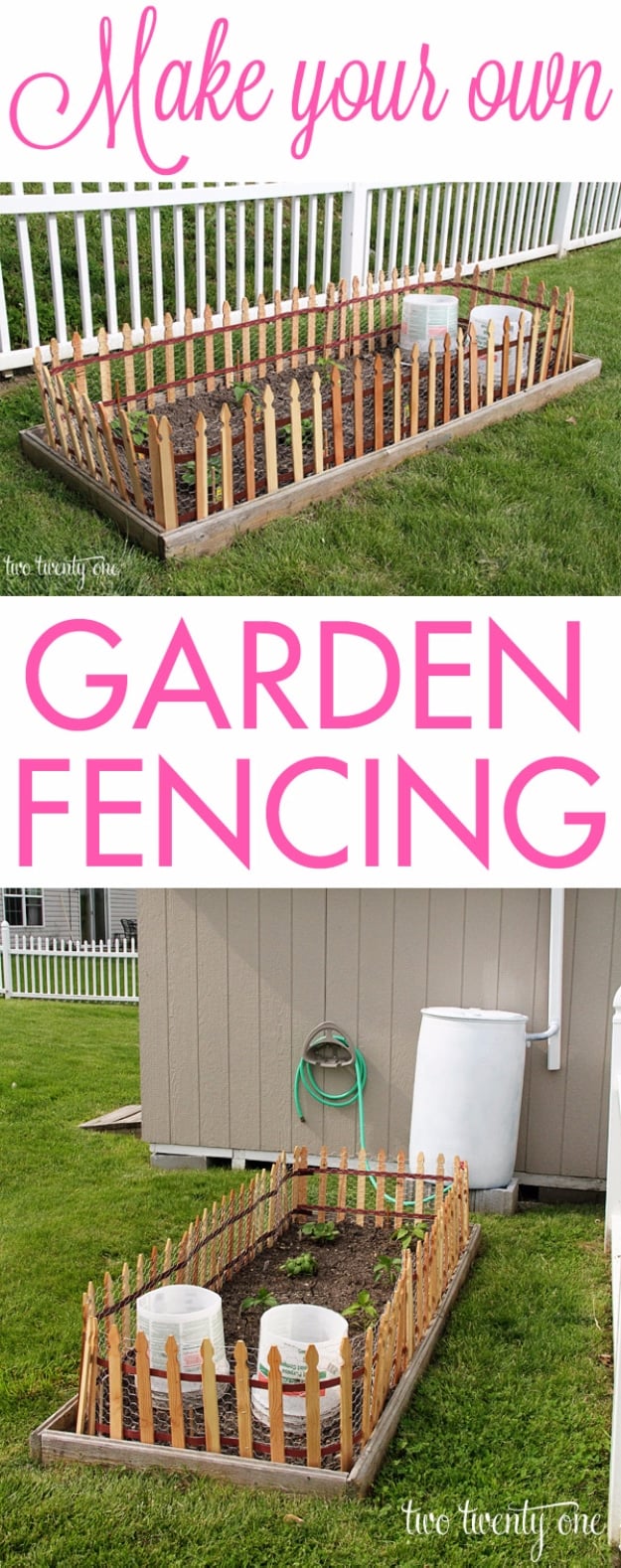
Rolls of short wooden fencing with wire fencing stapled over the top, run around a vegetable bed to keep rabbits out. The maker shares her own mistake here, which is the most useful part: she stapled the wire on with the cut ends at the top, where your arms brush them reaching for tomatoes, and realised halfway through that the smooth edge belonged up there. She also swapped the stakes that came in the packaging for craft dowel rods pushed through the wire into the ground.
Get the full tutorial at Two Twenty One.
5. Classic Backyard Fence
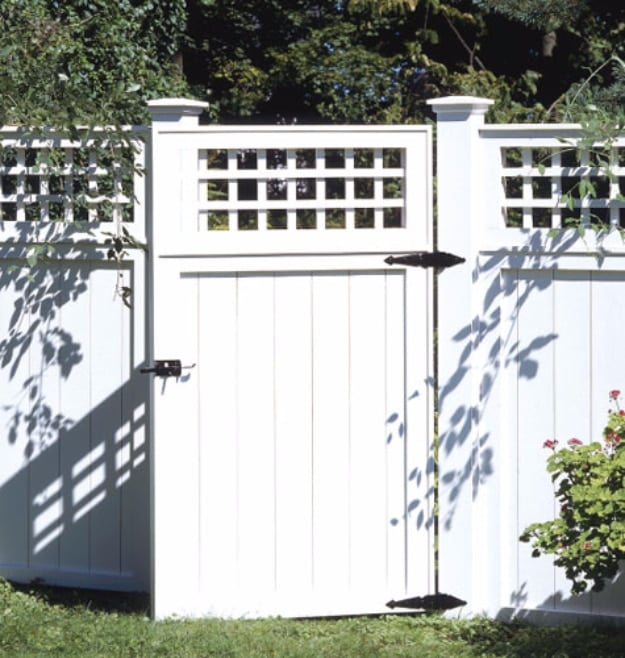
A painted lattice top fence in panels with a matching gate, designed to be built indoors and assembled outside, which is the detail that makes it achievable. The plans use three quarter inch No. 2 common pine for most of it and thicker select grade for the cap, lattice and splines, so the knots stay out of the parts people look at. Knotty pine bleeds through paint, so the boards get sealed with a shellac based sealer first. Box posts hide the pressure treated cores.
Get the full tutorial at Popular Mechanics.
6. Re-purposed Shutter Fence
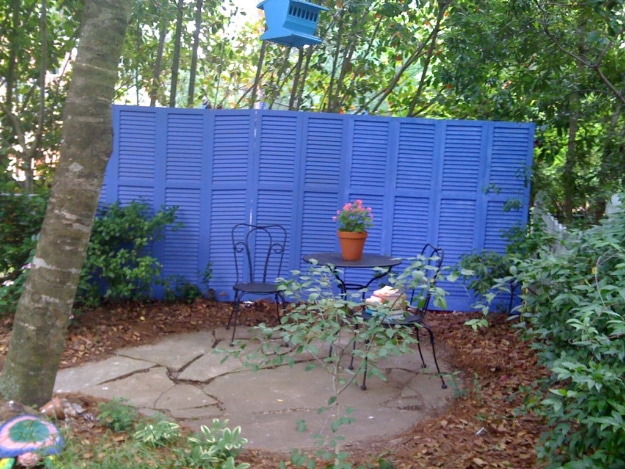
Old louvred shutters hinged together in pairs, painted a strong French blue and stood end to end to close off a corner of the yard into a small garden room. Shutters are one of the few salvage materials that arrive fence ready, already weatherproof and already built to stand upright. The build is ten shutters about six feet high, two sets of hinges joining each pair, and 4×4 posts set in cement roughly every three or four shutters, standing two feet taller than the shutters themselves. Paint is what unifies a mismatched set.
Get the full tutorial at Cottage in the Oaks.
7. DIY Bottle Wall

Glass bottles in every color threaded onto horizontal rails so the sun comes through them and the whole wall turns into a light panel. Sort by color before you build, because the wall reads as a pattern from a distance and as individual bottles only up close, and a random spread looks like a recycling bin while a graded one looks deliberate. Blues and greens carry the most light; clear bottles disappear. Ours, and it is one of the better uses for a party’s worth of empties.
Get the full tutorial at DIY Joy.
8. Beautiful Rustic Dog Fence
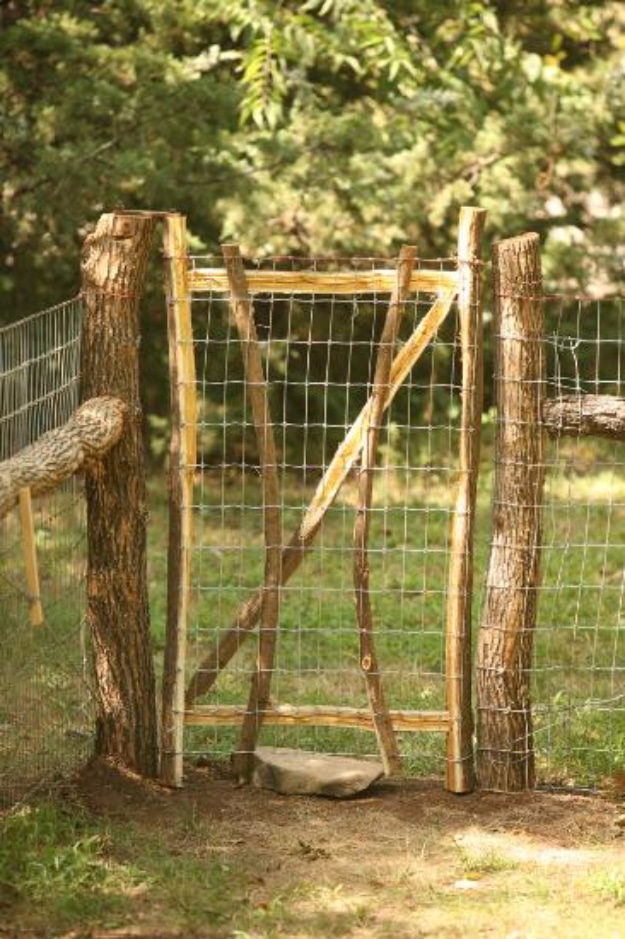
Whole small trees used as posts, with wire mesh stretched between them and a gate built from the same rough timber, enclosing a yard for two terriers. The builders cut their own posts from a woodlot, choosing Osage orange between three and six inches in diameter, which is about as rot resistant as fence timber gets without going to a lumberyard. The bark left on is what makes it look like part of the treeline rather than something delivered on a truck.
Get the full tutorial at Mother Earth News.
9. Coop Gate DIY
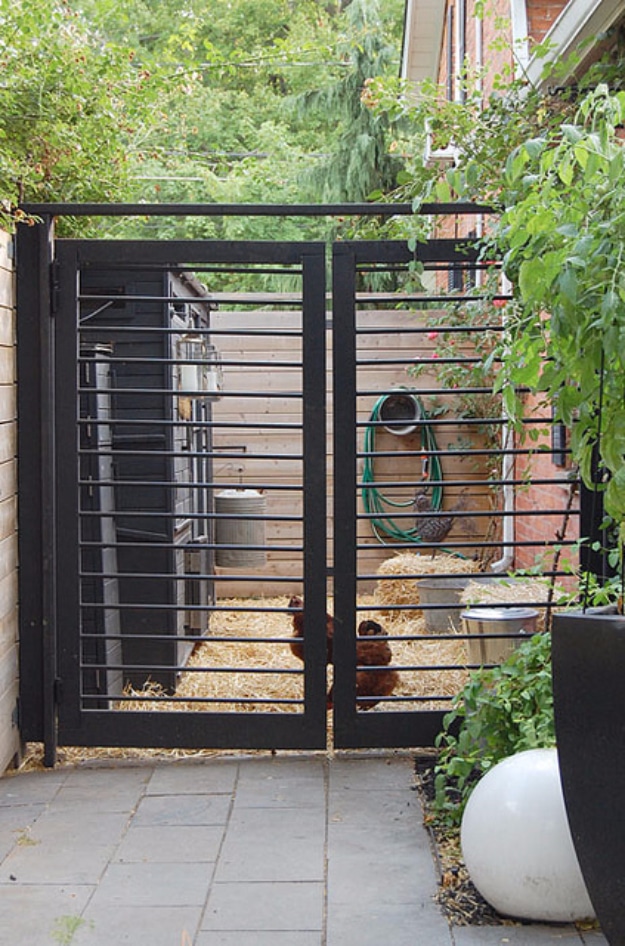
A black steel framed gate with horizontal bars, set into a matching fence beside a chicken run, so the birds are enclosed without the yard turning into a wire cage. A gate like this earns its keep by being see through, since an opaque gate on a small side yard makes the space feel like a corridor. Build the frame square and brace it properly, because a metal gate has no forgiveness in it at all: once it sags it does not come back with a shim.
Get the full tutorial at The Art of Doing Stuff.
10. DIY Up-Cycled Garden Gates
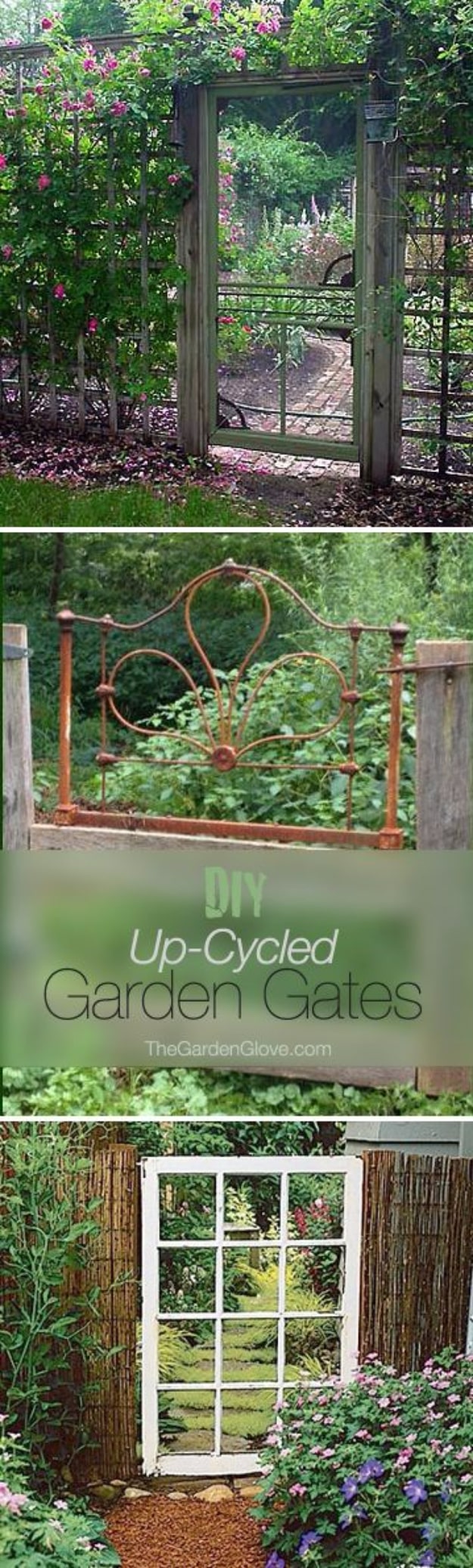
A gallery of gates made from things that were never gates: two old doors under an arch, an antique window, a screen door, a metal bed headboard, even one built out of old hand tools. The recurring point across all of them is how little structure a gate needs, which is two posts set the width of your object apart, a pair of hinges and a latch. A headboard is the easiest place to start, because it already has a frame and it already has a pattern in the middle.
Get the full tutorial at The Garden Glove.
11. Tin Accent Wall Fence
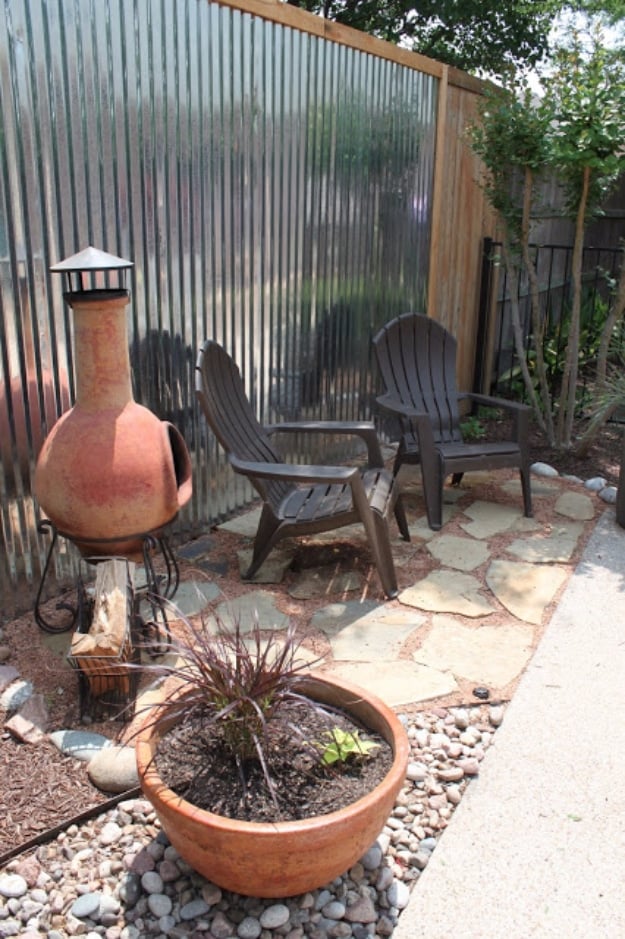
Corrugated roofing tin nailed straight onto an existing wooden fence and framed out with timber, turning one section of a backyard into an industrial accent wall. Two things worth carrying away. The edges of roofing tin are genuinely sharp, so gloves are not optional and the wood frame is there to cover them, not only to look tidy. And the builders deliberately left it unsealed so the silver weathers to rust, which means the finish keeps changing for a couple of years.
Get the full tutorial at Crafty Texas Girls.
12. Rustic Garden Fence
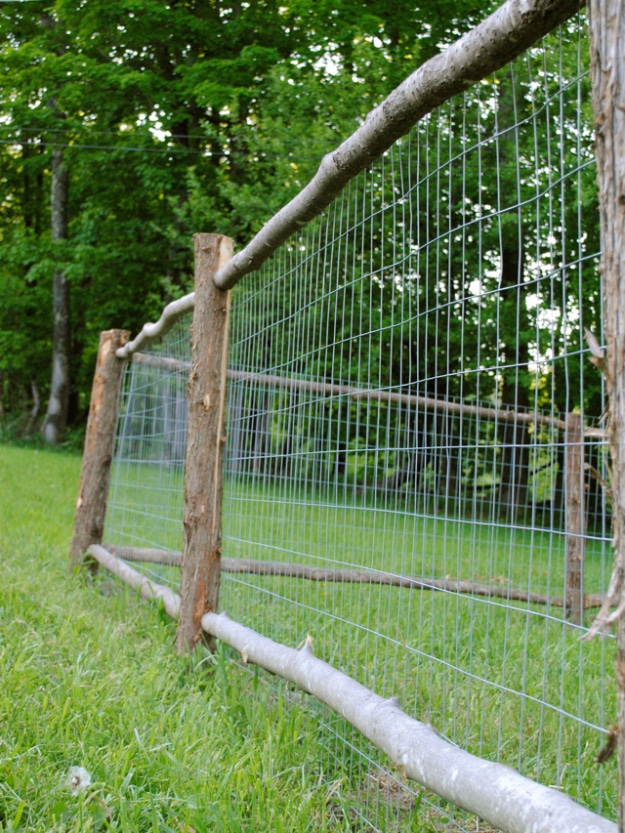
Rough sapling posts and rails with rabbit wire stretched behind them, enclosing a vegetable garden, plus a simple gate made from weathered boards salvaged from the dump. The burial detail is the useful one: they dug a shallow trench around the base, dropped the bottom of the wire into it and packed it back with dirt and sod, which is what stops a rabbit going under instead of over. The rest is heavy duty staples and an electric staple gun into the back of the rails.
Get the full tutorial at The Little Dog Blog.
13. Wattle Fencing
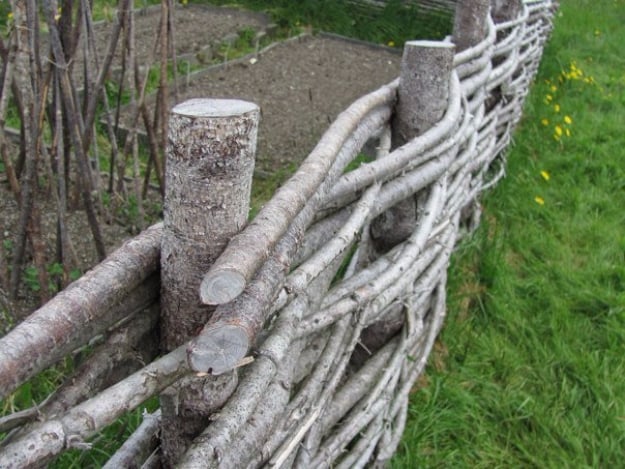
Flexible saplings woven horizontally between upright stakes, the same way kitchen gardens were fenced centuries before anyone could afford nails. Any flexible sapling works and straighter and longer is better; this one is mostly maple. The one thing that will ruin it is time: cut branches stiffen as they dry, so they have to be woven soon after cutting while they still bend. Strip the side branches and leaves off with pruning shears first, and do not aim for a tight weave.
Get the full tutorial at Ali Does It Herself.
14. Modern Fence DIY
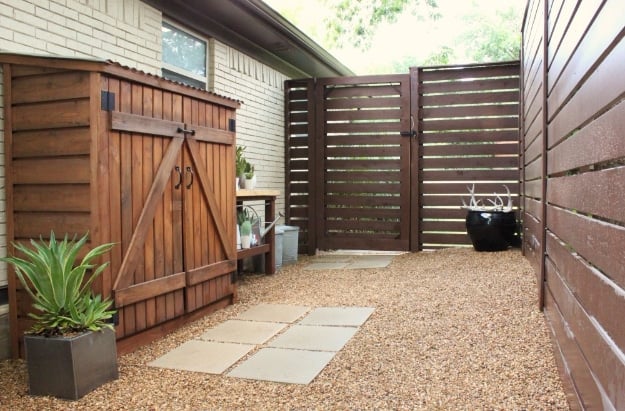
Horizontal cedar slats stained a deep russet, with a matching gate, turning the dead strip between two houses into something worth walking through. The builders’ note on the gate is the one to steal: they reused fence boards for it and found they were half an inch wider than the fence slats, so the boards had to be ripped down to five and a half inches to match. Horizontal fences live or die on the slats lining up across the gate, and that is how you get it.
Get the full tutorial at The Cavender Diary.
15. DIY Garden Fence
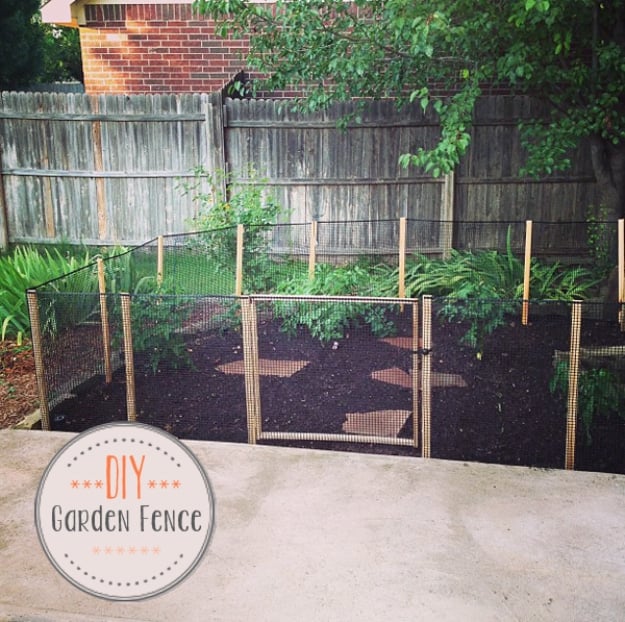
Black plastic netting stapled to wooden stakes, following whatever awkward curve your garden actually has, with a simple framed door set into the run. It came out of one rabbit and a tray of half eaten pepper seedlings, and it works precisely because netting bends around a shape no pre-made fence panel will fit. Stakes go six to eight inches into the ground, one every foot and a half. The builder’s own advice is to spend the extra on proper hinges, since a flapping door defeats the whole thing.
Get the full tutorial at Oh Everything Handmade.
16. Basic Mesh Fence
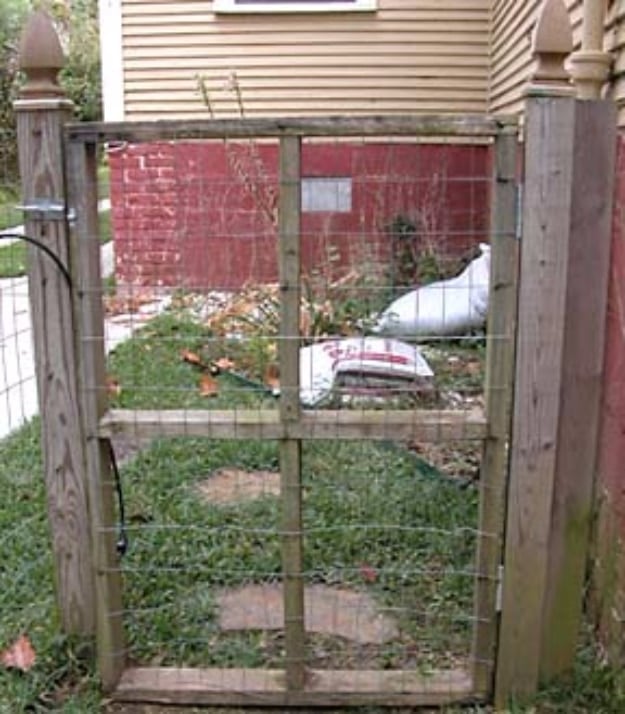
Metal T-posts or wooden posts set six to eight feet apart with welded mesh pulled tight between them, built specifically to get a dog off a chain and into a real yard. The tensioning is the whole job and it takes two people: one hauling the mesh tight against the post while the other ties it off with baling wire at the top and the bottom. If the dog digs, bury the bottom few inches of mesh. Wooden corner posts set in concrete, T-posts in between.
Get the full tutorial at Unchain Your Dog.
17. Deer Fence
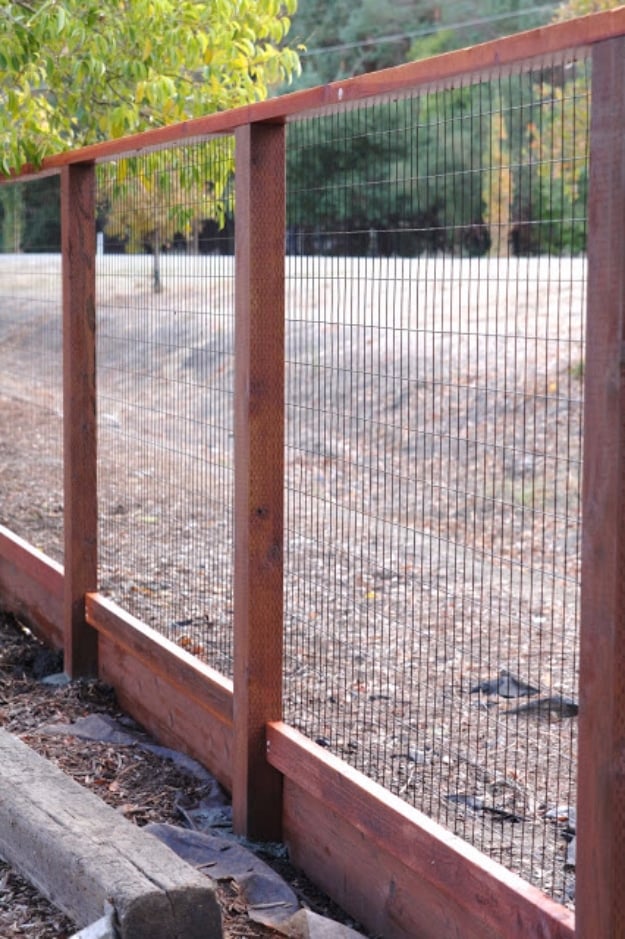
Fine black deer fencing on dark stained posts, run along a front boundary where the whole point was keeping the view. Iron would have done the job and cost a fortune over that length, and a solid fence would have blocked the walking trail the house looks onto. Black mesh is the compromise that actually disappears at distance, which is the thing to know before you dismiss it as agricultural: from the house you see the trail, and from the trail you see a boundary.
Get the full tutorial at Simply Organized.
18. Pallets Patio Fence
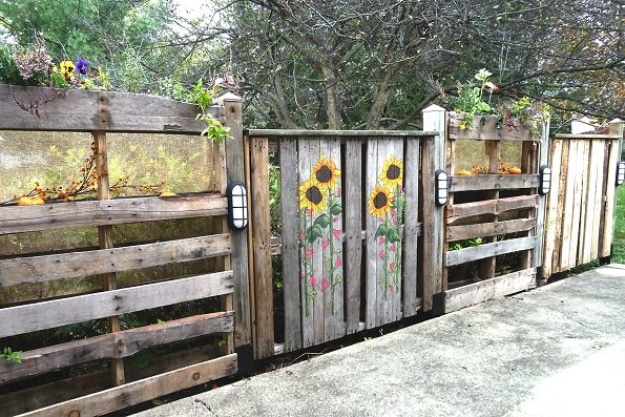
Five pallets stood on end behind a patio, two of them planted with flowers and herbs, one painted as a panel and the rest fitted with armrests across the top. The uprights and armrests came from a dismantled play fort, and the only purchases were the stakes, some lights and post caps. Rather than digging holes and pouring concrete they used metal spike stakes that hold a 4×4 and pound thirty inches into the ground, which is the shortcut worth copying.
Get the full tutorial at Recyclart.
19. Cool Recycled Metal DIY Fence
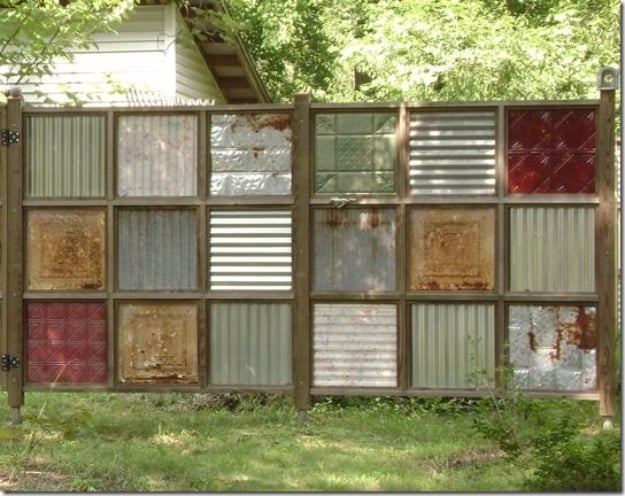
Salvaged metal panels in a patchwork grid inside a timber frame, mixing corrugated sheet, pressed tin ceiling tiles and painted panels so every square is different. It reads as one piece because the frame is regular even though nothing inside it is, which is the rule for any patchwork build: impose the grid first, then fill it with chaos. Rust is welcome. Cut edges are not, so every panel wants its edges captured inside the framing rather than left proud.
Get the full tutorial at Fine Craft Guild.
20. Pine Wattle Fencing
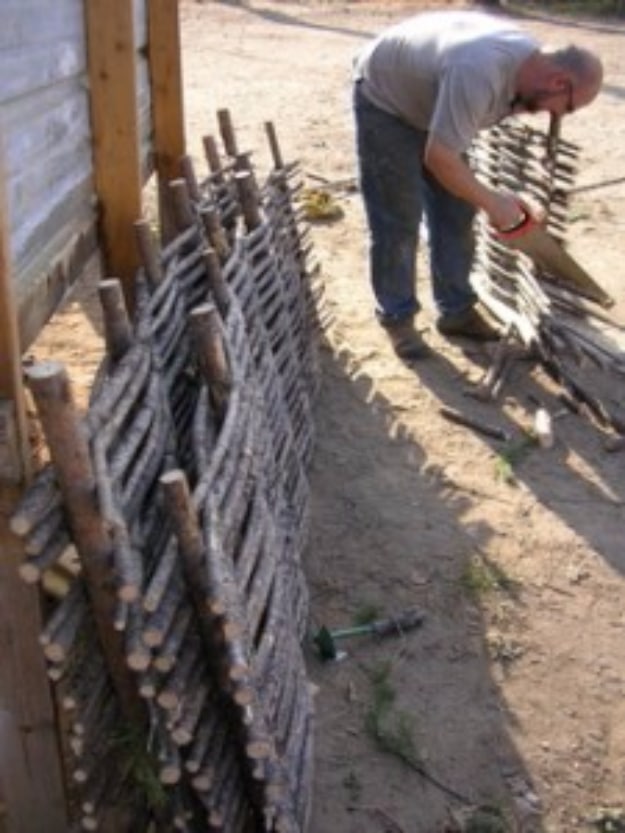
Pine branches woven between upright stakes into a dense rustic fence, built from material cut on the same land it stands on. It is the depression era version of a fence, made when buying anything was not an option and the woodlot was. Pine is stiffer than the maple used in the classic wattle above, so the weave comes out tighter and more upright rather than softly curved, and it wants to be woven green for the same reason every wattle does.
Get the full tutorial at The Homestead Survival.
21. DIY No-Dig Garden Fence
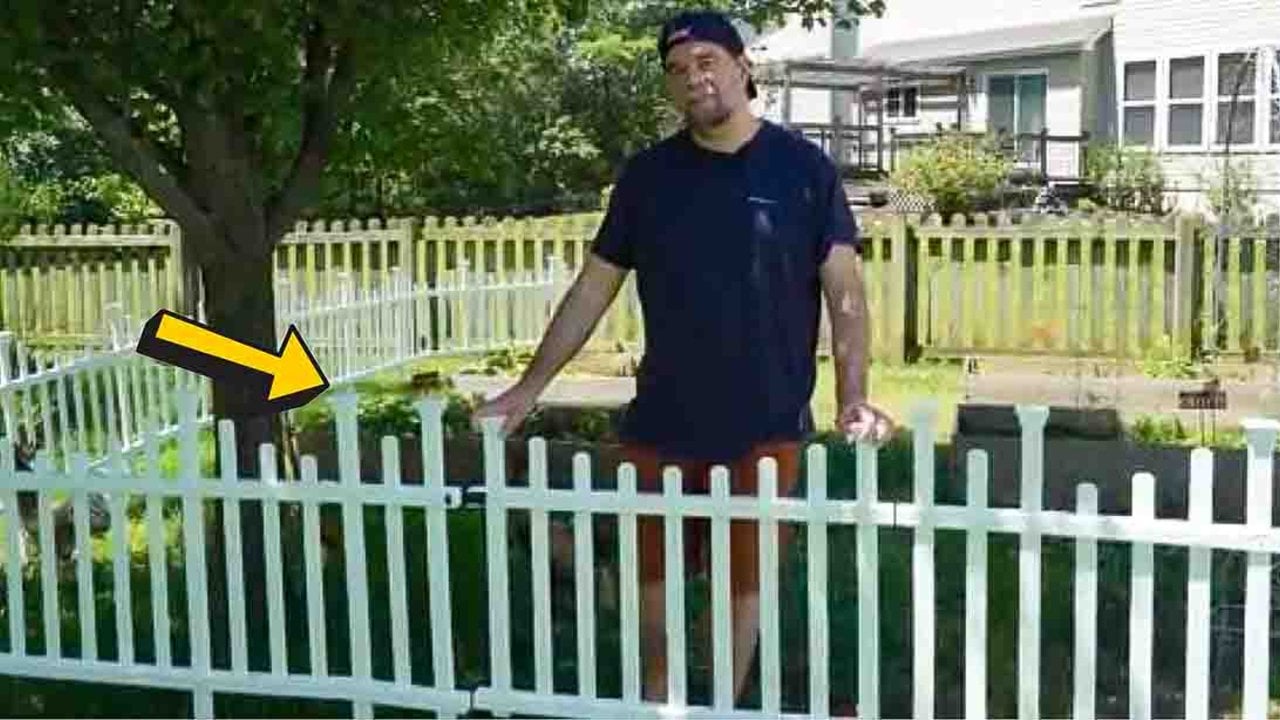
Panels installed without digging a single post hole, which is the whole appeal: a few hours, no disturbed soil and no waiting on concrete to cure. Not digging also means the root systems and soil structure you already have stay intact, so a fence goes in around established planting without wrecking it. It suits a rented yard, a bed that is already planted, or anyone who has priced out a contractor and decided to look at the alternatives first. Ours, with the full build on video.
Get the full tutorial at DIY Joy.