A plain backyard gets a lot more interesting once it has tenants with wings. DIY bird houses are small wood, clay or upcycled shelters you build, paint and hang so wrens, bluebirds and sparrows have a safe spot to nest, and plenty of them start with scraps you already have. This collection runs from simple cedar builds and kid-friendly projects to cowboy boots, clay pots and old soda bottles turned into homemade bird houses, plus a seed-covered version the birds can actually eat. Size the entrance hole to the bird you want, leave the inside unpainted and plan on a yearly cleanout, and your new neighbors will settle right in.
32 DIY Bird Houses
1. Living-Roof Birdhouse

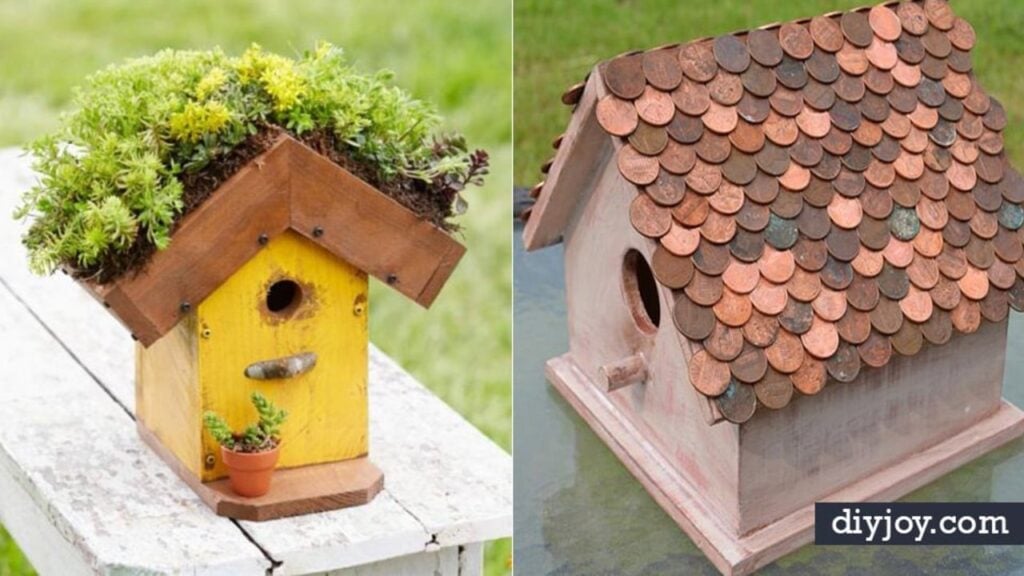
A birdhouse with its own little garden on top? Yes, please. Cut a moisture barrier like roofing paper to fit the roof, spread on moistened potting soil, then pack on sphagnum moss that has soaked for 30 minutes and been wrung out. Staple poultry wire over the top, trim it to the edges and poke in more moss until no soil shows. Hardy sedums tuck right into the moss. A knob on the side lets the house open for cleaning, and the perch is optional, since birds don't actually need one.
2. DIY Birdhouse With A Pretty Penny Roof

Your spare change finally gets a real job. A store bought wooden birdhouse is painted coral, layered with white chalk paint, sanded rough and stained so it looks like it has weathered a few summers. Then the pennies go on, starting at the bottom edge of the roof with a slight overhang so the first row scallops. Each new row sits between the coins below it, like fish scales. A fast setting all purpose adhesive holds each penny in about 4 to 10 seconds, so one side of the roof takes roughly 15 minutes. Wear gloves, because that glue means business.
3. Flower Stenciled Wood Birdhouse
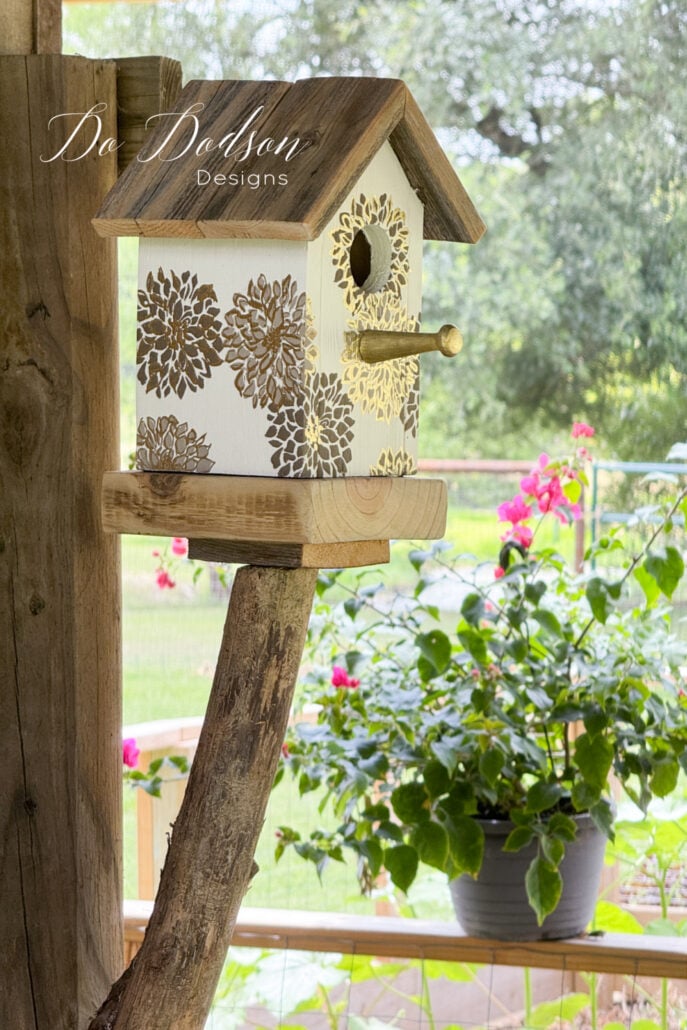
Got a stack of leftover cedar fence pickets? That pile is a birdhouse waiting to happen. Two 8 inch front and back pieces get a 45 degree roof pitch, the sides are cut to 6.5 inches and four 5 inch roof pieces meet at the peak. Glue and nail it together, then cut a 1-3/8 inch entry hole in the top third of the front. The fun part is the paint: two coats of a soft cream base, flowers stenciled in a warm brown, then layered again in a lighter shade for depth. A gold marker adds the shimmer, and a Shaker peg painted gold becomes the perch.
4. Mod Podge Birdhouses

Old, tired birdhouses get a whole new wardrobe here, and the secret is outdoor Mod Podge. Trace the front of the birdhouse onto craft paper, use that silhouette as a pattern to cut fabric, and snip out the openings. Brush on Mod Podge, smooth the fabric down gently so it doesn't stretch, then seal it with a topcoat. Mitered roofing trim glued and nailed to the bottom adds a scalloped edge, and a drawer pull is a cute optional extra. Mount them on 4×4 posts and fill the little drawers with birdseed. Bold ikat or chevron looks fantastic out in the garden.
5. Palm Springs Birdhouse
via Club Crafted
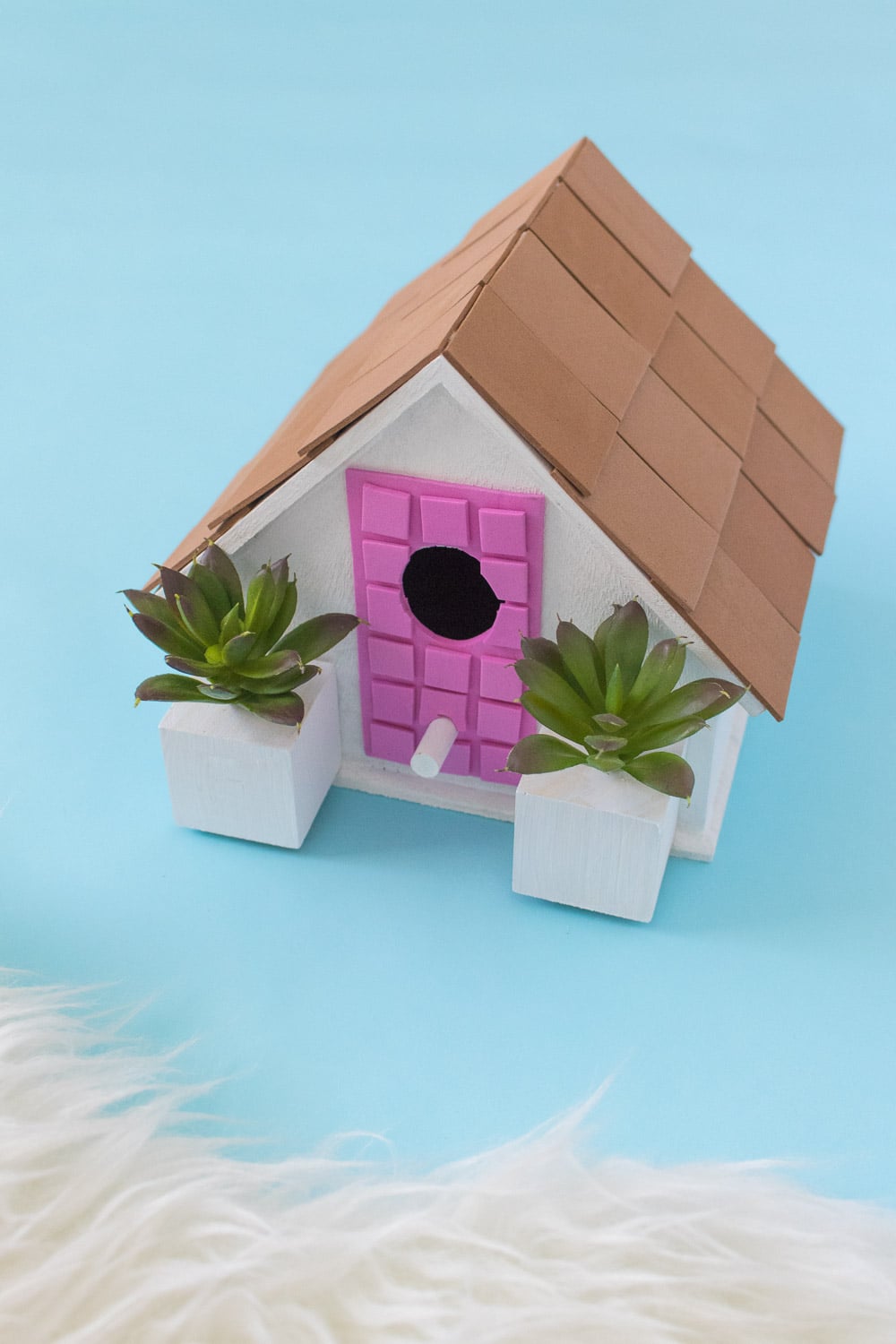
Who knew craft foam could give a birdhouse midcentury style? Paint a plain wooden birdhouse white, then cut a pink foam door to fit the front, about 2 by 4 inches, with circles cut out for the hole and the perch. About 20 tiny half inch pink squares glued on with small gaps give it that famous Palm Springs door pattern. Brown foam rectangles overlap across the roof like shingles, and two small wood blocks painted white hold faux succulents. Hot glue handles the heavy blocks. It takes about 25 minutes, and since foam isn't weatherproof, this one is happiest on a covered porch or shelf.
6. Woodburned Ukulele Birdhouse

An unfinished toy ukulele already comes with the hole, so it practically asked to be a birdhouse. Cut off the strings, sketch a design in pencil and trace it with a woodburning tool. The tool smokes, so a paper mask helps, and if the tip gets gunked up, wipe it on sandpaper. Erase the leftover pencil lines, then add color with fabric markers for a soft, stained look. A coat of decoupage sealer finishes it. The heart around the sound hole and the bright folk art pattern make this one a total showstopper hanging in a tree.
7. License Plate Birdhouse

That old license plate in the garage has been waiting for this. One 1×8 cedar board makes the whole birdhouse: two 4 by 6-1/4 inch sides beveled at 45 degrees, a 7 by 9 inch front with a 45 degree peak, a slightly taller back, and a 6-1/4 by 7 inch bottom. Drill a 1-1/8 inch entrance hole about 4 inches up and a 1/4 inch perch hole an inch below it. Nail or screw the pieces together with deck screws. Then bend the plate down the middle, tap the crease over a wood edge if it needs help, and screw it on as the roof.
8. Polka Dot Gourd Birdhouse
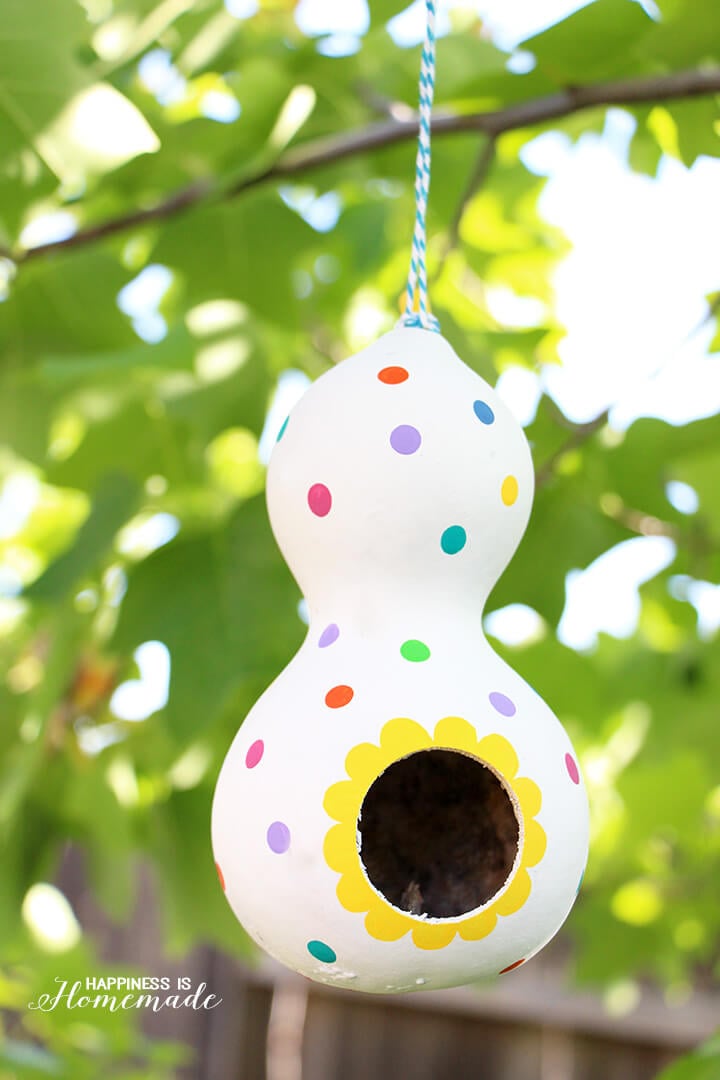
Garden gourds make the cutest birdhouses, and the bird is none the wiser. Let the gourds dry outside for several months until the shell hardens, scrub them with steel wool (skip breathing the dust if they're moldy), then dip them in bleach water. A 1.5 inch hole saw cuts the opening, and the seeds that come out can go right back in the garden. Spray paint them flat white as a blank canvas, or bright red for an apple. Polka dots from a flat pencil eraser are so easy that kids can paint them, and baker's twine hangs them up.
9. DIY Nail-Less Screw-Less And Glue-Less Birdhouse

No nails, no screws and no glue, and it still holds up outside. Six pieces of scrap wood are cut with angled bevels and dry fit first, then the front gets a 1-1/4 inch entry hole. Stain the roof and base green and the rest red. Everything is stuck together with extreme mounting tape, pressing each joint for about 60 seconds. The clever bit is the roof, which goes on with removable fasteners so it lifts off for cleaning at the end of the season. Vintage hardware stuck on with tape adds charm, and the same fasteners mount it to a post.
10. Stone Birdhouse

These look like tiny castle towers, and they start as inexpensive wood birdhouses. Seal or prime every outside surface first so the wood doesn't swell and pop the stones off. Then attach small stones, about nickel size with one flat side, using clear outdoor silicone sealant, working from the bottom up so each row rests on the one below. Bagged dollar store stones work great, and smashing a few in a bag fills the gaps. A metal funnel makes a fun roof. Finish with two to three coats of exterior polyurethane. These are decorative, so cover the entry with mesh to keep birds from nesting.
11. Whimsical Crescent Moon Birdhouse
via Her Tool Belt
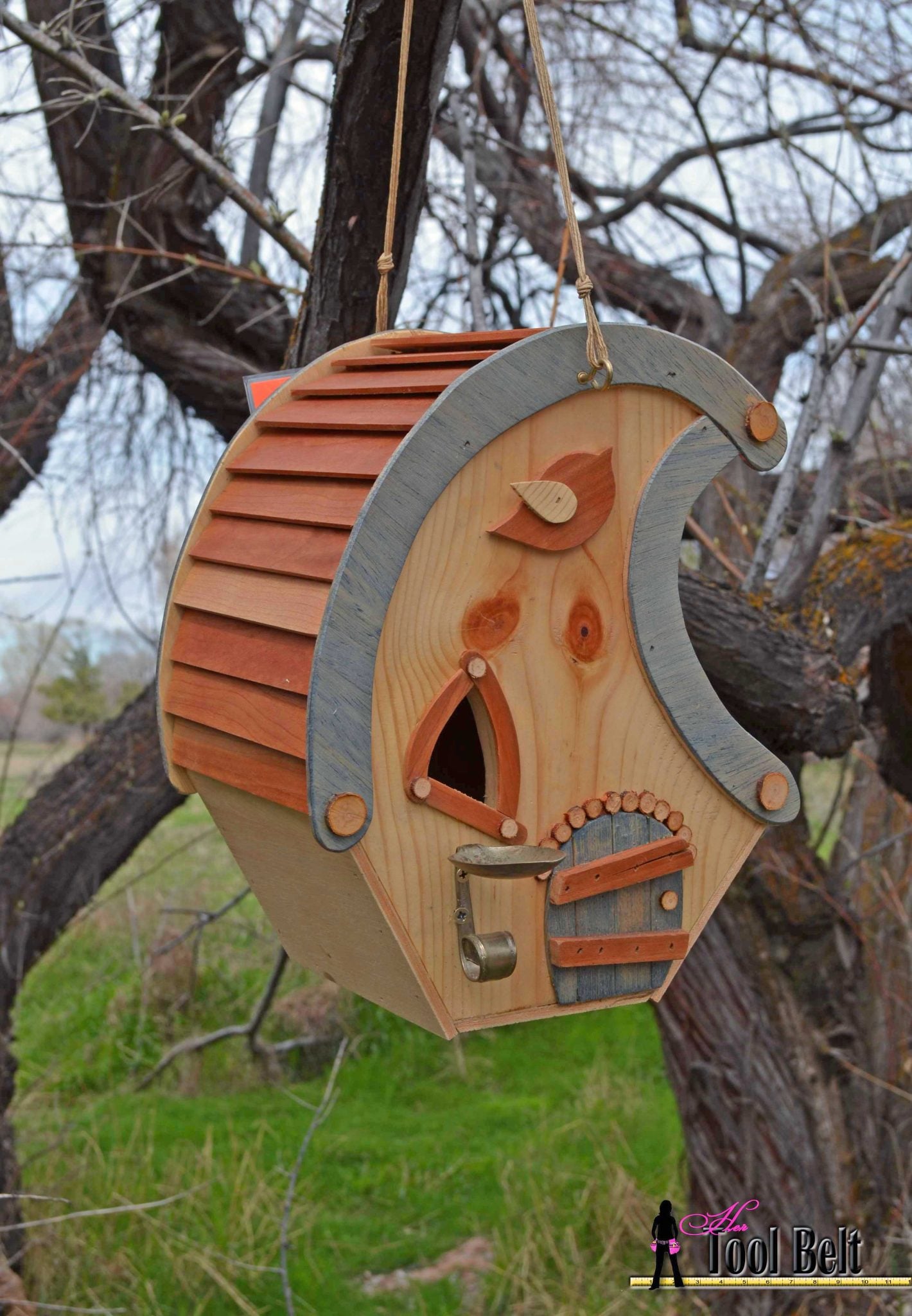
This one looks like it flew straight out of a storybook. The front and back are cut from 3/4 inch pine using a free pattern, with the window and door cut from the front, and the curved sides and bottom are thin plywood about 6 inches deep. Thin roof strips, even paint stir sticks, overlap by about half from the bottom up to the peak. Glue planked strips onto the door, add twigs and wood slices, and bend an old spoon into a perch. Eye hooks and string hang it, and a blue stain plus polyurethane finish it off. Every detail is a little bit magic.
12. Tick Tock for your Feathered Flock – The DIY Birdhouse

A decorative desktop clock with a round face turns out to be the perfect birdhouse shell. Pull out the clock mechanism and back panel. Since the opening was too big to keep predators out, a basswood reducer cut with a jigsaw shrinks it down, then gets sanded, painted and glued inside. Seal the outside with water sealant and let it dry completely. Wine corks fill the bottom to raise the nesting area, a screw eye with a nut handles the hanging and a sealed wooden spool becomes the perch. Birds moved in quickly once it went up.
13. DIY Cedar Birdhouse

One 5 foot cedar 1×6 makes a house and a half, which is a pretty great return on about six dollars. Use untreated cedar and skip pressure treated wood. Pine works too, it just rots faster. The cuts follow free birdhouse plans, then the pieces go together with nails, a little wood glue and a dab of wood filler on the roof to stop drafts. A spade bit drills the entrance hole, and the plans call for 2 inches while this version uses 1-1/2. Leave it unpainted. With kids helping, each house took under 30 minutes, which makes this a great weekend project.
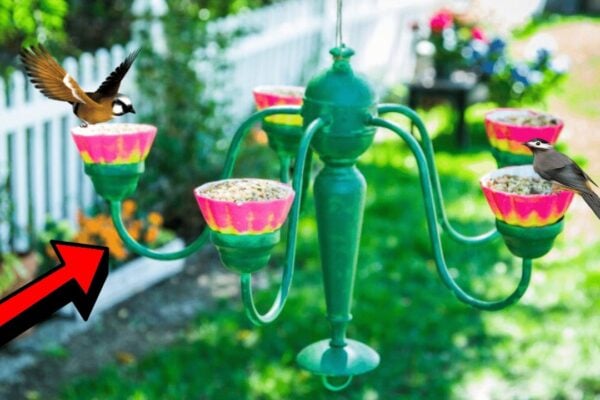
14. Chandelier Birdhouse and Planter

An old 5 light chandelier gets a second life as a garden showpiece. Strip out the bulbs, candle tubes, sockets and every bit of wiring, then fill the openings with epoxy putty. A small unfinished wood birdhouse is puttied onto the center, and four 4-1/2 inch terra cotta pots get pea sized balls of putty along their bottom edges to attach to the drip cups. Hang it from a dowel across two sawhorses to prime and spray paint at least two coats. Fill the pots with flowers, then hang it from a sturdy branch with an S hook.
15. Painted Retro Camper Birdhouses
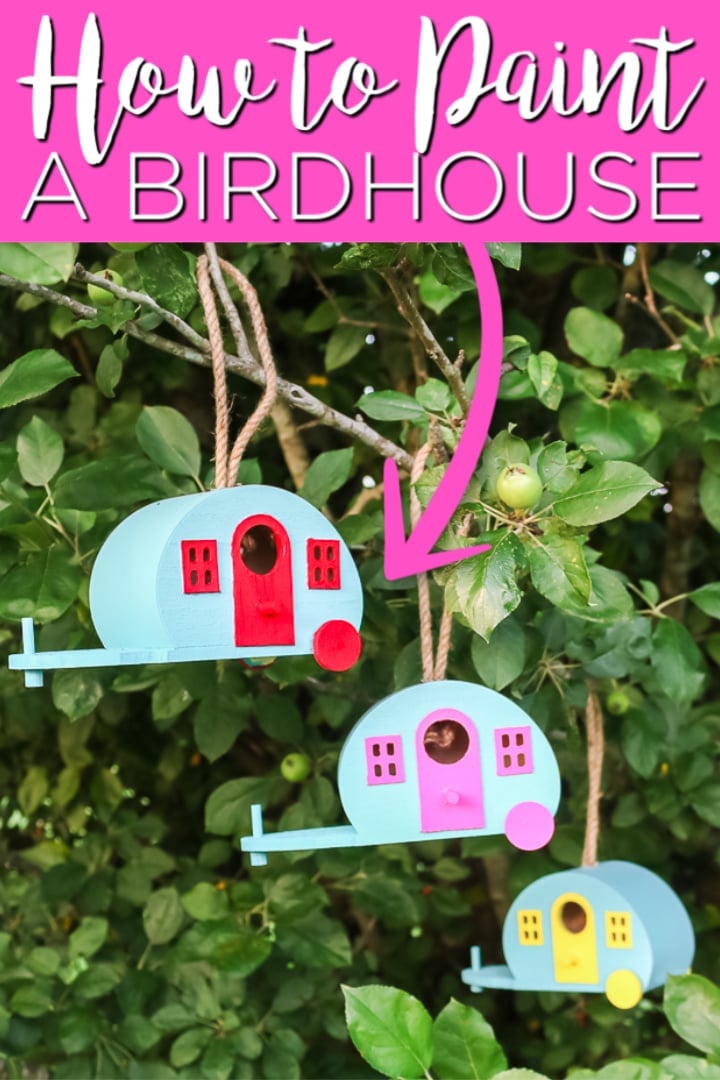
Little retro campers parked in a tree might be the cutest thing in the whole yard. Start with an unfinished wood camper birdhouse, about 8 inches, from the craft store. Sand any rough edges, tape off what you want to keep clean and paint the body with good outdoor paint, adding coats as needed. Then pick contrasting colors for the door, windows and wheels. Drill a hole in the top if there isn't one, thread rope through and hang it once the paint is fully dry. A clear sealer adds protection, and kids can easily help paint these too.
16. A-Frame Cedar Birdhouse
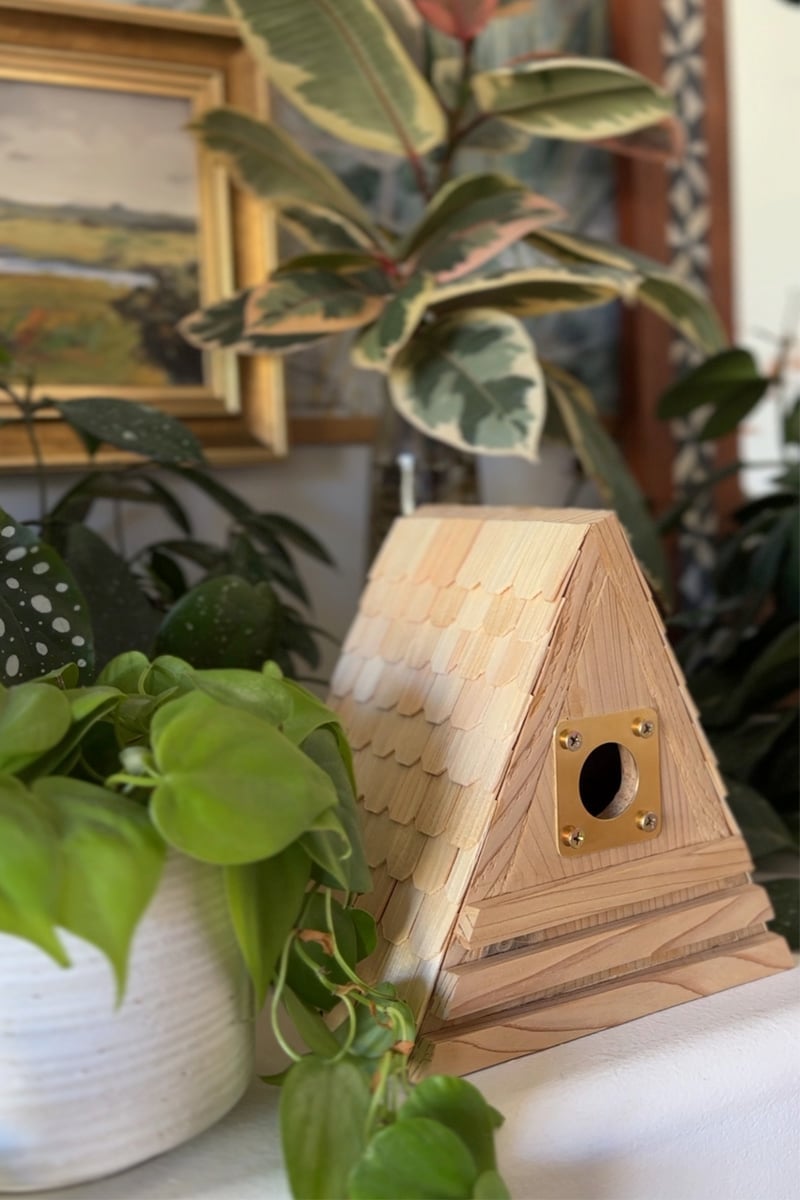
This A-frame cedar birdhouse looks like a tiny mountain cabin, and it starts as a plain fence plank. Sand the rough cedar smooth, cut two 8 by 6 inch walls and a 6 inch square base, then glue them into a triangle. Trace and cut the front and back, drill a 1 3/8 inch entry with a spade bit and screw on a metal entry plate. Cedar shingles glued on in offset rows give the roof that scalloped, storybook texture. No perch needed, since wrens don't care for one, and the wood stays raw.
17. Rubber Boots Birdhouse

Those old rubber rain boots finally get a second life, and it's an adorable one. Two pairs of boots become a row of bright birdhouses, with door holes cut out using a sharp knife. Scrap wood makes the peaked roofs, screws hold everything together and bolts turn into the perches. It's a fun family project, too, with the kids helping put the houses together. Line them up on a fence shelf and they look like a tiny, cheerful neighborhood for the birds.
18. Bird-Shaped DIY Birdhouse

A birdhouse shaped like an actual bird, which feels like exactly the right kind of joke. The bird is traced from a printable template onto lauan plywood, cut out with a jigsaw and hinged to a small 5 inch square box, with a screen door hook and eye to keep it closed. Bore a 1 1/4 to 1 1/2 inch entrance, prime and paint only the outside (the inside stays bare) and finish with several coats of shellac. Already own a nest box that size? Skip the box build and go straight to the fun part.
19. Upcycled Soda Bottle Birdhouse

Two soda bottles, some acrylic paint and a whole lot of personality. A 1.5 liter bottle becomes the base and a 2 liter bottle becomes the roof, and both get primed and painted before they're glued together. The flowers are cut from the smooth part of another bottle and curled with heat (an adults-only step), then sisal cord trims the doorway and makes the hanging loop. Work somewhere well ventilated, since the primer and glue are strong. It ends up looking like a tiny painted cottage, and nobody will guess it was headed for the recycling bin.
20. Birdseed Covered Birdhouse
via Kim Pepper Blog
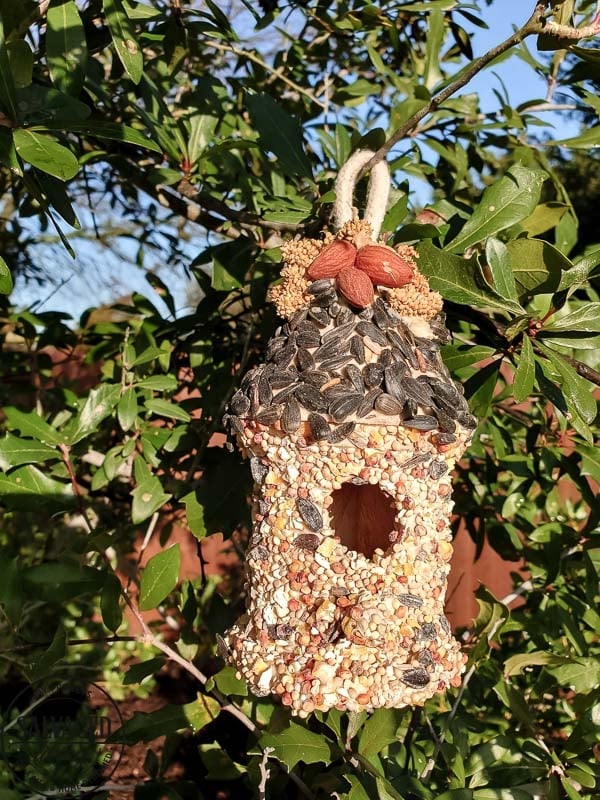
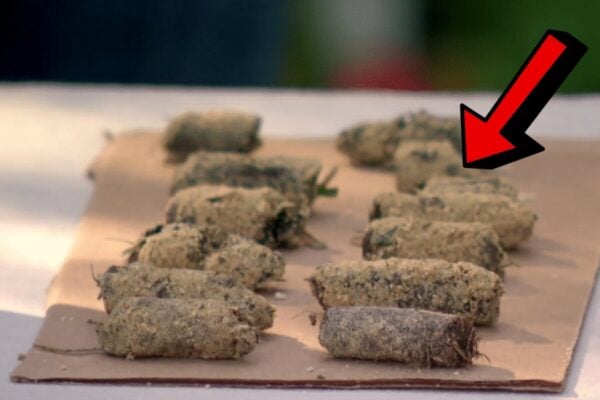
A birdhouse the birds can actually eat, which makes it the most popular address in the yard. The edible glue is just warm water, unflavored gelatin, flour and corn syrup, brushed generously over a small unfinished wooden birdhouse. Press birdseed into the wet glue a section at a time, then dab on extra glue to tuck millet, nuts or dried fruit across the roof. Let it dry overnight before hanging. Work over a big tray (the seed goes everywhere), and once the birds pick it clean, recoat it and start all over again.
21. Recycled Junk Birdhouse
via A Crafty Mix
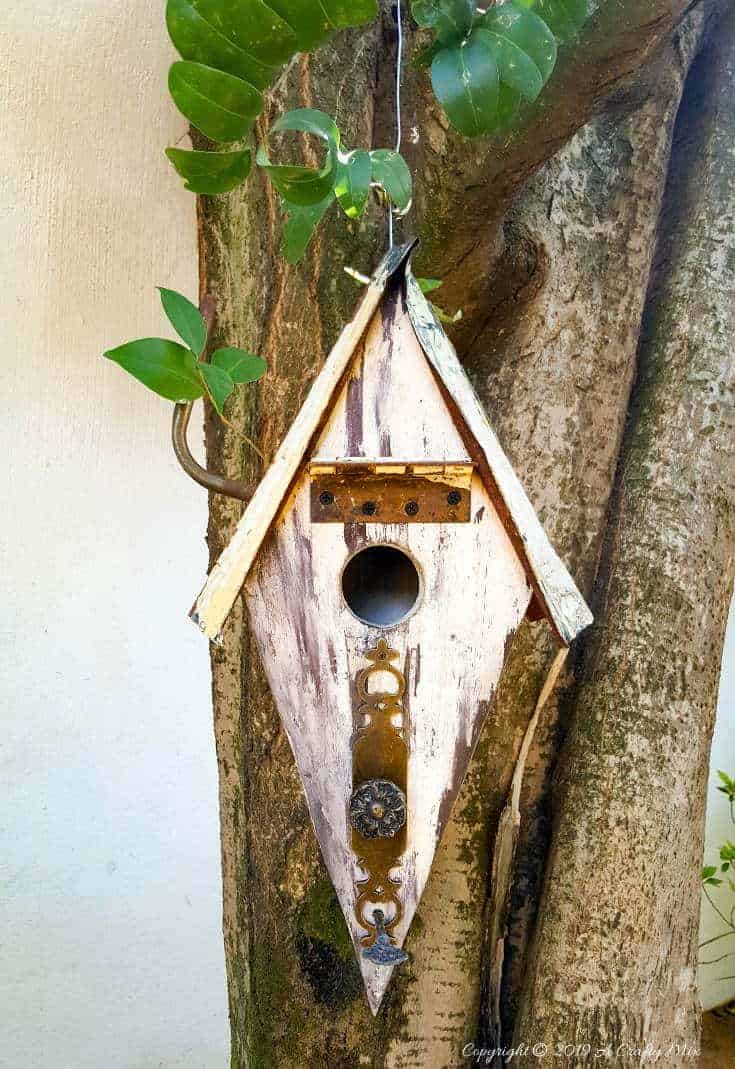
Leftover shelf wood, a rusty tin ceiling tile and a handful of old hardware come together in this one-of-a-kind birdhouse. The diamond-shaped body is cut with a jigsaw, painted on the outside only and screwed together, with small vent holes to discourage bees. The tin gets cleaned, bent over a block of wood and nailed on as the roof, then an old hinge becomes an awning, a key turns into the perch and a bent copper pipe plays chimney. Test any old painted tin for lead first. Nobody else on your street will have one like it.
22. $1 Modern Birdhouse

A modern birdhouse for about a dollar, and that's not a typo. Half of one cedar fence picket, which runs about $2, makes the whole house, so there's enough left over for a second one. Cut the pieces with a miter or circular saw, nail the front to the sides, then add the top and bottom. The back is cut larger for that mod look and gives you a spot to drill a hanging hole for a tree. Cedar needs no finish at all. Kids can predrill and use pound-in nails, which makes it a great beginner or classroom build.
23. Blue Bird Birdhouses

Old barn wood has already done the weathering for you, which is half the charm here. These bluebird houses are cut from reclaimed boards, dry fit first to check the pieces, then put together with screws instead of nails so you can open them up for cleaning later. Drill the entry hole in the front, add drainage holes to the bottom and put a small hole at the top of the roof for mounting on a fence post. The tutorial notes bluebirds prefer natural tones, so this is the rare birdhouse where skipping the paint is the smart move.
24. Easy DIY Birdhouses For Kids

Real wood, real tools and a paint job the kids get to choose. These birdhouses are cut from cedar fence boards with a jigsaw, glued and brad nailed together, then stained in two colors so the trim stands out. Little shingles get stapled on from the bottom up and painted a contrasting shade, a strip of aluminum flashing caps the roof peak and a dowel becomes the perch. Pick up paint stain samples instead of full cans (cheaper, and more colors to debate). Set them on little fence platforms and they look like a tiny neighborhood.
25. Window Birdhouse

Front row seats to nesting season, right from the kitchen table. This window birdhouse has a clear 5 x 7 inch plexiglass back, so it suction cups to the outside of your glass and you can watch everything happening inside. It's built from one cypress board (any wood works), glued and stapled together, with a 1.5 inch entry hole and a roof lip that hangs over the hole to keep the rain out. The whole build comes in under $20. Mount it on clean glass, give each suction cup a good tug and check them again every spring.
26. Plastic Milk Carton Birdhouse

A milk carton, a stick and some nontoxic paint are enough to give the kids a birdhouse of their own. This activity skips the step-by-step and hands you the design rules instead: an entrance hole about the size of a golf ball, a sturdy perch inside and out, and a hanging spot squirrels can't reach. Use a dowel, chopstick or stick for the perch, then top the roof with dollhouse shingles, a bamboo plate or trimmed craft sticks. Hang it with twine or a bent wire hanger and let them paint it any color they like.
27. Make a Classic Birdhouse

This one walks you through a classic birdhouse right down to the cut list. A single 1×8 cedar board becomes the floor, sides, peaked front and back and a two-piece roof, all glued and nailed together. Drill a 1 to 1 1/2 inch hole about 3 inches below the peak, and rough up the inside of the front panel so the chicks can climb out. The floor screws on without glue so it comes off for the yearly cleaning, and the perch is optional (many experts skip it, since predators can use it too).
28. Cowboy Boot Birdhouse

One lonely cowboy boot finally has a job again. The entrance is traced from a quarter, cut about midway up the shaft and laced around the edge with leather, and drainage holes go in the sole. A simple pine frame with a peaked rough cedar roof slides inside and attaches with brass screws, which won't rust and come out easily for cleaning. Hang it 6 to 10 feet up on sisal rope to invite house wrens. Thrift a pair and make two (one for you and one for a friend with a sense of humor).
29. Simple Birdhouse Plan

Why house one bird family when you can house the whole block? This tall plan stands 23 inches high and 11 1/2 inches wide, with rows of 1 1/2 inch entrance holes, a 4 to 5 inch perch at each one and roughly 5 x 5 x 5 inch nesting chambers behind them. It's designed for birds that like to nest in groups, such as chipping sparrows and song sparrows. The plan gives dimensions rather than step-by-step instructions, so it suits anyone comfortable building from measurements and mounting the result on a garage wall.
30. Clay Pot DIY Birdhouse

A flowerpot turned upside down makes a sweet little wren house, and the only tricky part is the door. Drill the 1 inch entrance slowly, stepping up from small glass or masonry bits (never a spade bit, which can crack the pot), then smooth it out with a rat-tail file. That filing can take up to 30 minutes, so settle in. A plywood circle traced from the rim becomes the base, and an 8 inch eyebolt through the drainage hole holds it all together, snug but not overtightened. Paint it to match your garden and hang it 5 to 10 feet up.
31. Make a Wren Nesting Box

Wrens love low shrubs and brush, and this nesting box is built just for them. One 48 inch length of plain, untreated wood makes the whole thing, with a 1 1/4 inch entrance hole 6 inches up and four small drainage holes in the floor. One side is hinged at the base and held shut with a cable clip, so cleaning out old nests after each season is easy. Keep the rough side of the wood facing in so the chicks can climb, skip the paint and stain, and mount it about 4 feet off the ground near the shrubs.
32. Easy One-Board Bird House

One pine board and one day is all this easy birdhouse asks of you. A single 1×6 six foot board is cut into every piece with a miter saw (or a hand saw and miter box), then sanded, glued and finished with exterior paint or stain. A half inch poplar dowel adds the perch. The tips are the good part: put nothing inside the house, skip the ventilation holes, and think about placement, shade in warm climates and sun in cold ones. Facing it east is common in the US. A great first woodworking project for beginners.