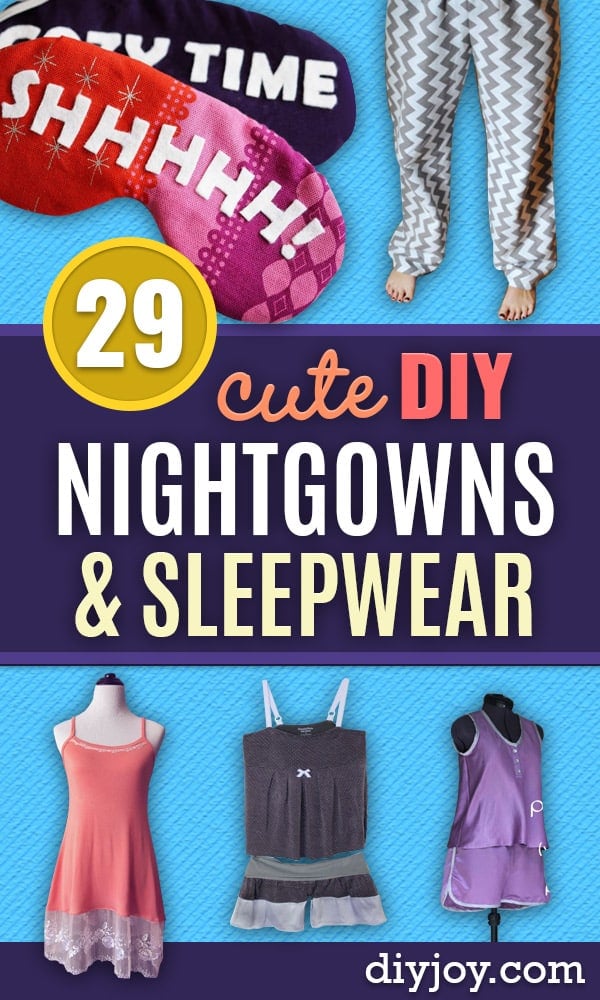
I am a beginner to intermediate sewist and I learned almost all of it from my mother, who still sews and still makes her own patterns, so I know exactly which projects on a list like this a person can actually finish. Sleepwear is the kindest place to learn garment sewing, because a wobbly seam on a nightgown does not matter the way a wobbly seam on a dress does, and nobody is inspecting you at two in the morning. So these DIY nightgowns and sleepwear projects run from a pillowcase nightie that takes half an hour to a silk cotton pajama set with a bias cut top, with free patterns on most of them. There is a linen eye mask, pajama pants that need no pattern at all, a robe cut from a bed sheet, and refashions that start with a t-shirt from a garage sale. Perfect for a gift for your mom, a nightgown for a little girl who has opinions about ruffles, or the fact that your own pajamas have been stretched out since 2019!
DIY Nightgowns and Sleepwear Ideas
1. Make a Cotton Jersey Robe from a Bedsheet
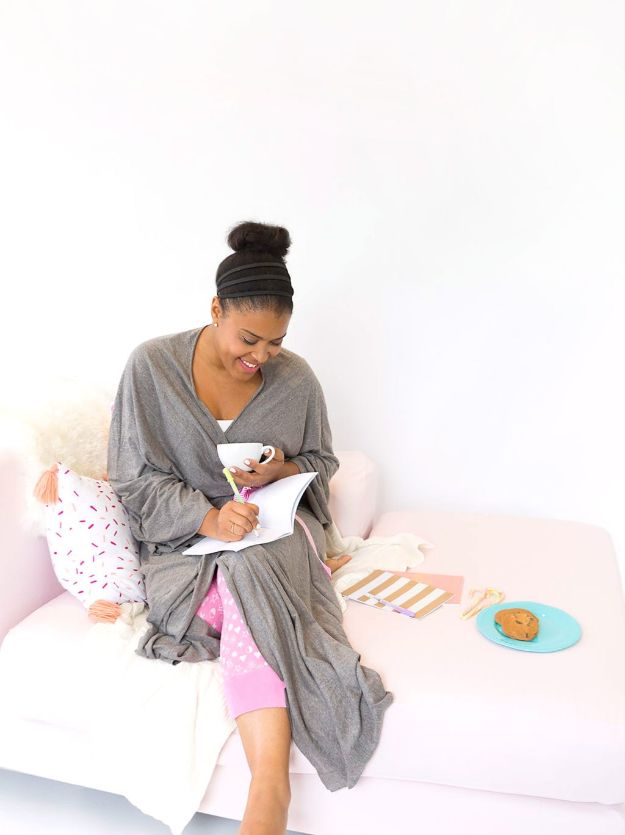
A queen sized cotton jersey bed sheet becomes a robe, and Damask Love’s cutting method needs no pattern at all. Fold the sheet in half twice, measure your waist, then lay the tape measure folded in half on the fold of the sheet with zero against the folded edge, and cut up the side using that half waist as the guide, stopping three quarters of the way up. Cut the sleeve from the open edge. Jersey does not fray, so a single straight stitch is plenty and the front edge stays raw.
Get the full tutorial at Damask Love.
2. Pillowcase Nightie
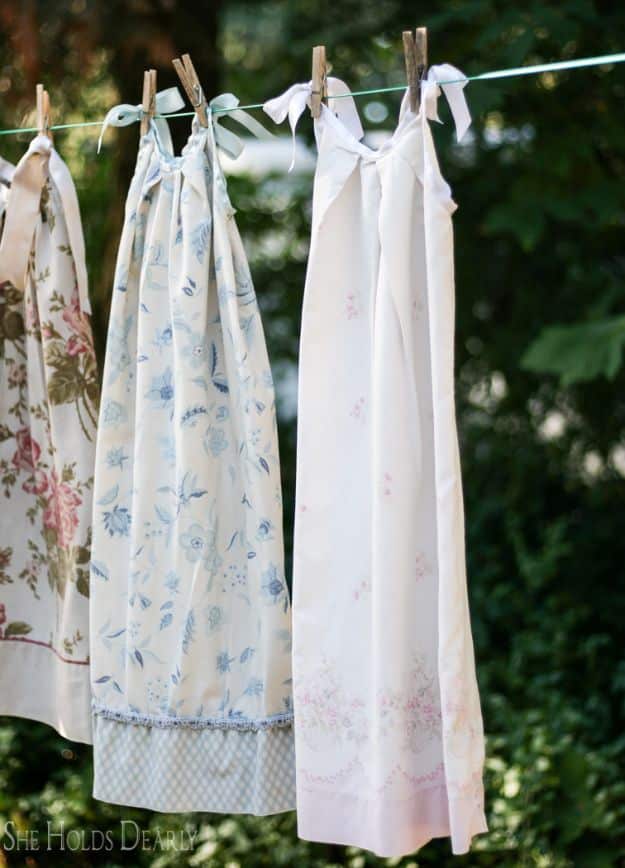
Thirty minutes and a few dollars, and the measurements are all here. She Holds Dearly folds a standard pillowcase lengthwise, cuts an arch starting two inches down from the top edge on the fold up to the corners, then measures five inches down from each corner for the armholes. No pattern needed. Three pleats gather the front to about an eight inch neckline, and satin ribbon ironed in half wraps the raw edges. Pick a pillowcase with a pretty edge and it becomes the hem.
Get the full tutorial at She Holds Dearly.
3. DIY '60s Night Gown
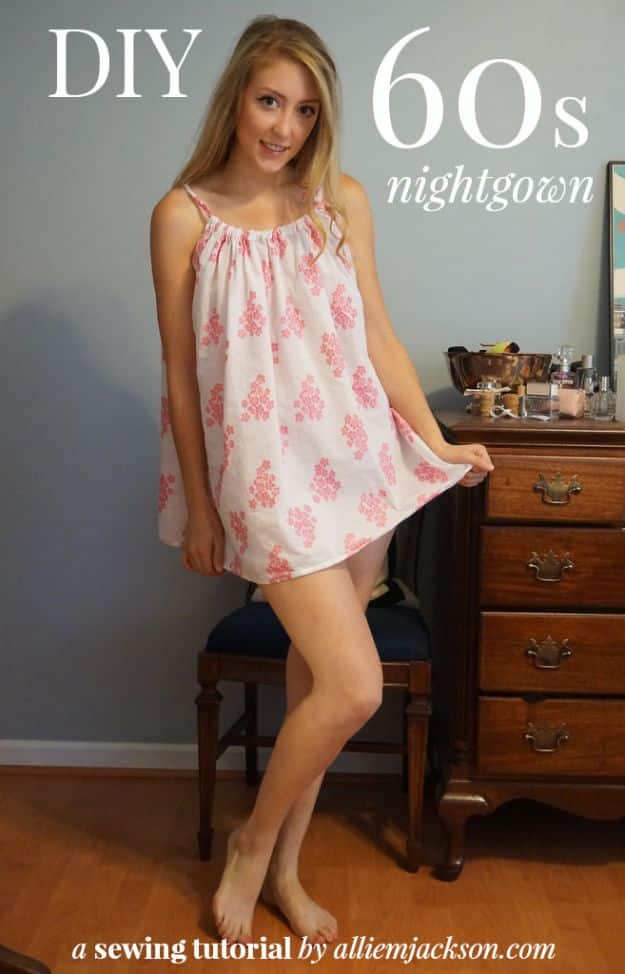
Beginner friendly in the most literal way: there is no pattern, and barely any cutting. Allie Jackson tears a 54 or 60 inch length of lightweight fabric, twice as long as you want the gown plus five inches, then tears a three inch strip off the top for the tie and tears the rest into a front and a back. The armholes are one diagonal cut, five inches across by seven down, through all four layers. The sides go together with french seams. Cotton voile or rayon challis is what she recommends.
Get the full tutorial at Allie Jackson.
4. Women's Pajama Shorts

Scalloped hems with lace peeking out, sewn from a vintage bed sheet. Melly Sews makes the point that a full size sheet gives you a lot of very soft, washed a thousand times fabric, and this pair used barely half of one. You need about a yard of fabric, a yard of one inch elastic and a yard and a half of lace if you want the trim. The free pattern is a women’s small, hips to 36 inches and waist 28, with a post on resizing it.
Get the full tutorial at Melly Sews.
5. Easy-Sew PJ Pants
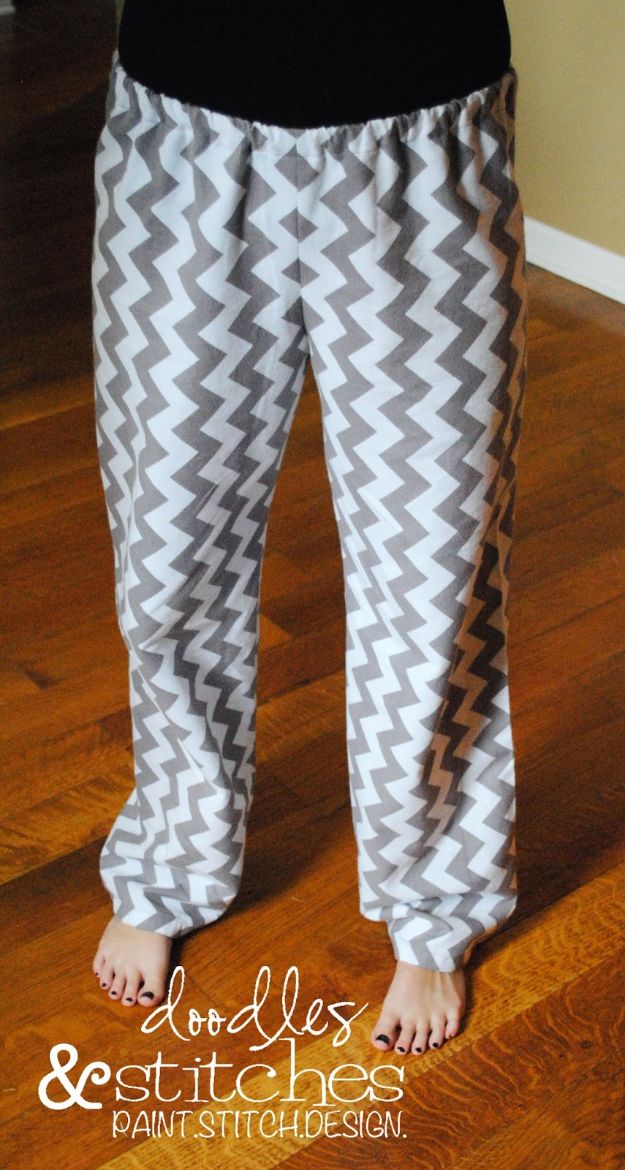
Doodles and Stitches made five pairs in one afternoon, which is the best argument for this one. There is a free eight page printable pattern, or you can skip it entirely and fold a pair of pajama pants you already own to use as your shape. Two to two and a half yards of flannel makes a small, the same size as a store small, and half inch elastic goes in the waist. Flannel is cheap, it comes in endless prints and it is the right weight for winter.
Get the full tutorial at Doodles and Stitches.
6. Girl's Nightgown Made From Men's T-Shirts
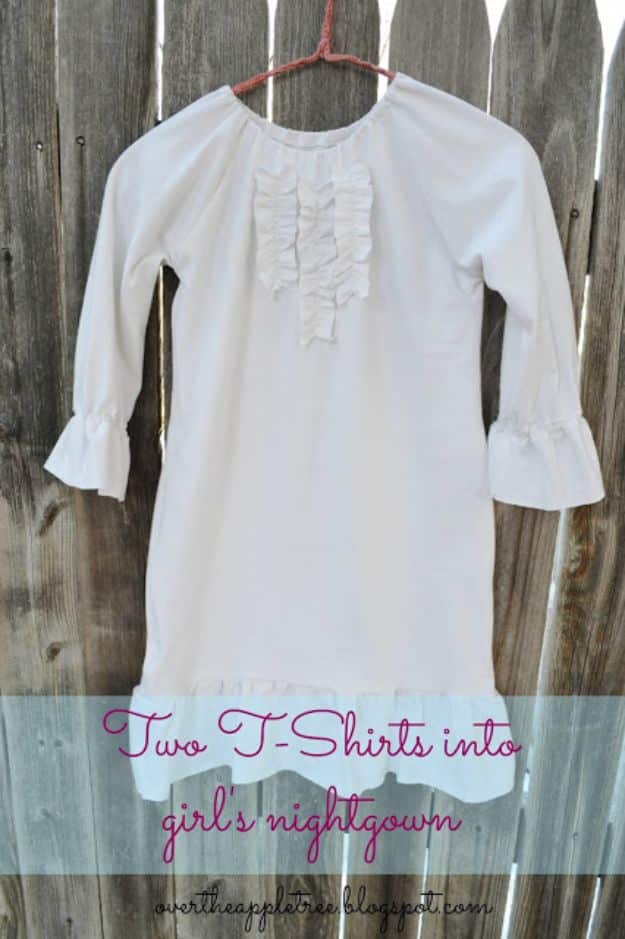
Two men’s v-neck t-shirts become one little girl’s nightgown, and the cutting logic is worth knowing. Over the Apple Tree cut the front and back from the BACKS of the shirts, because v-necks have more uncut surface area there, and laid the sleeves out so the shirt’s original hem became the cuff, which saves hemming them. Sew the shoulder seams, then the sleeves and sides, stopping an inch short of each cuff. The neckline gets folded and sewn with a gap for elastic cord.
Get the full tutorial at Over the Apple Tree.
7. How to Sew Simple Pajama Shorts for Beginners
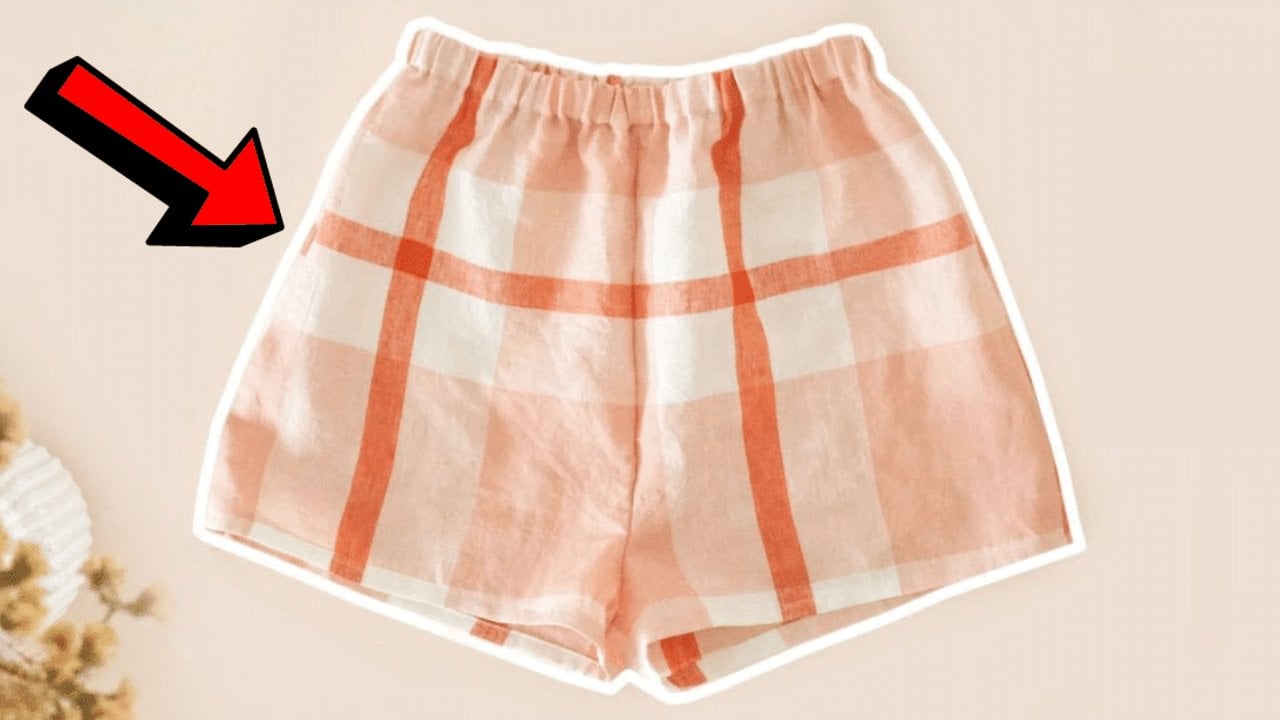
A genuinely beginner pair with a video to follow along with and a pattern you download and print. The supply list is short: fabric, a rotary cutter and mat, chalk or a marking pen, pins, elastic, an iron for pressing and a machine. There is no fitting to worry about because the waist is elastic, so the only measuring is how long you want the leg. A soft brushed cotton or a linen blend in a big check reads as expensive and costs very little.
Get the full tutorial at DIY Joy.
8. DIY Linen Eye Mask
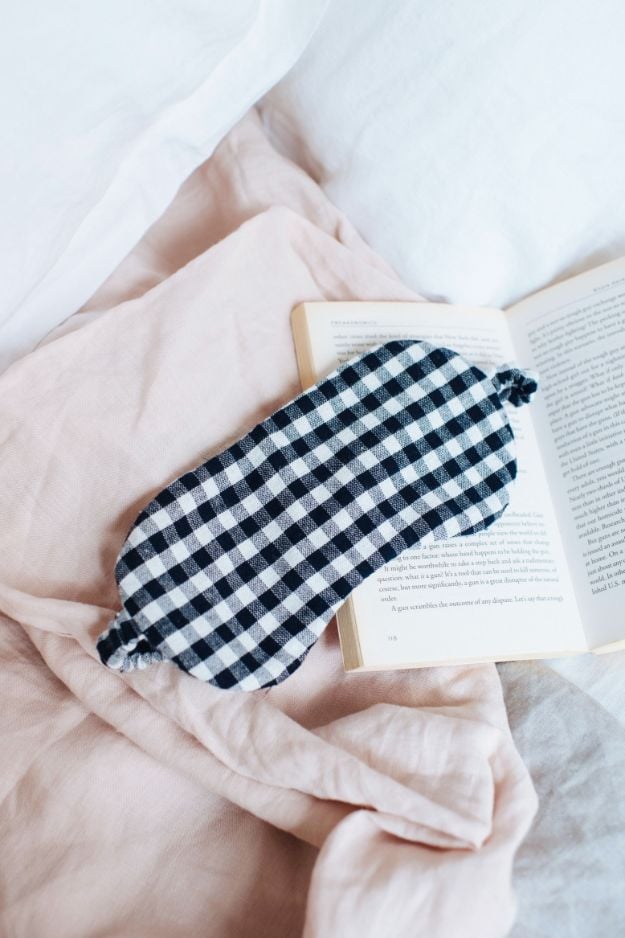
Gingham linen is why this one looks like something you would buy. Geneva Vanderzeil’s free printable pattern has to be printed at 100 percent scale or the mask comes out a size that fits nobody, which is the tip to tape to your printer. You cut two fabric pieces and one of batting, sew a tube for the elastic strap from a strip one and a half times the elastic’s length, then sandwich and sew around the edge leaving a gap to turn it. Drop lavender in before you close it.
Get the full tutorial at Geneva Vanderzeil.
9. DIY Pillow Case Night Dress
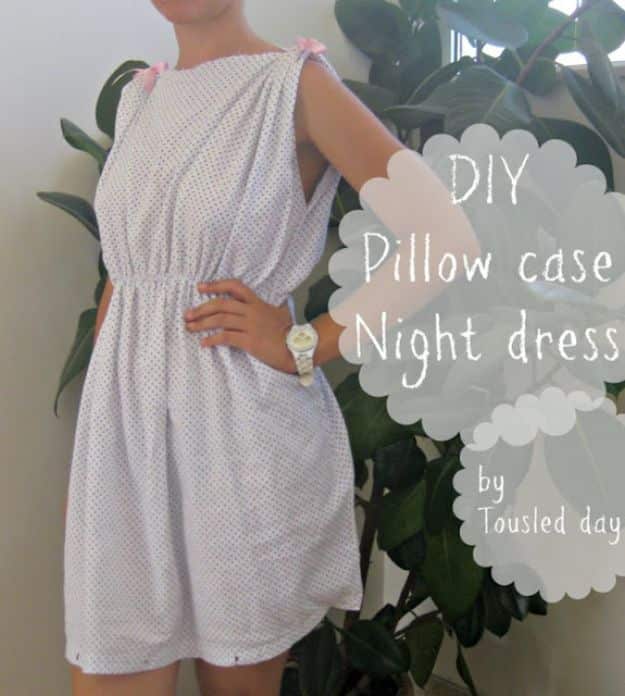
One thrifted pillowcase and half an evening. A pillowcase arrives with its hems and side seams already sewn, which is why Tousled Day cut nothing but the holes for the head and the arms and never hemmed a thing. The only fiddly part is the elastic at the waist, which she threaded following a Sweet Verbena tutorial, and pins make that far easier than it sounds. Satin ribbon tied into bows at the shoulders is her own finishing touch. Vintage cases with embroidered edges make the prettiest versions.
Get the full tutorial at Tousled Day.
10. Make a Breezy Beautiful Kimono Robe
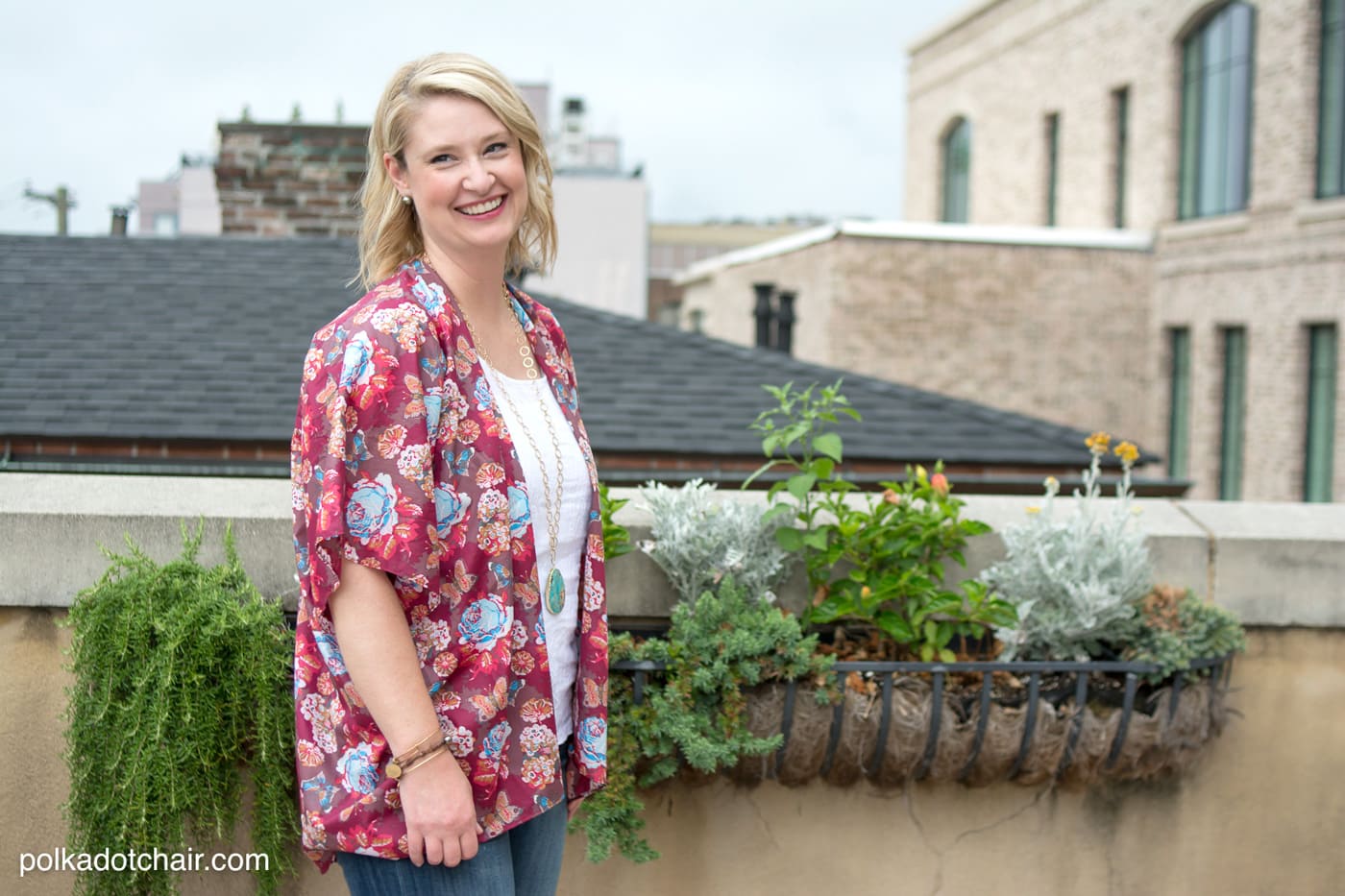
A loose kimono jacket that doubles as a light robe, and the pattern is free. The Polka Dot Chair builds the custom pattern piece from a giant rectangle with some cutouts, using an old boxy t-shirt that fits you as the guide, and it takes two yards of 45 inch lightweight fabric like voile or a light rayon. Total time runs about three hours. She is upfront that the hardest part is hemming lightweight fabric, and a rolled hem foot makes it much easier.
Get the full tutorial at The Polka Dot Chair.
11. Easy No-Pattern Nightie
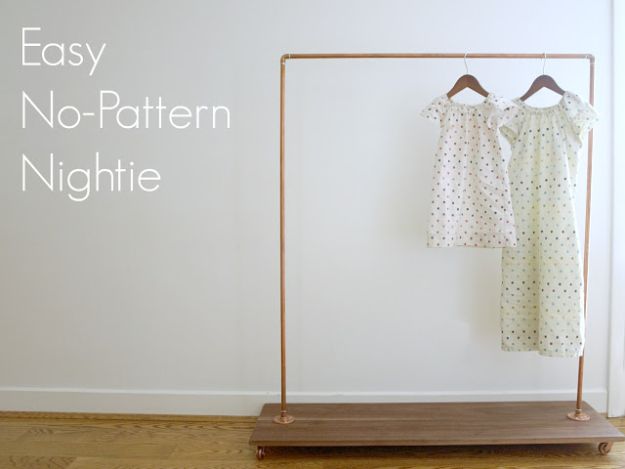
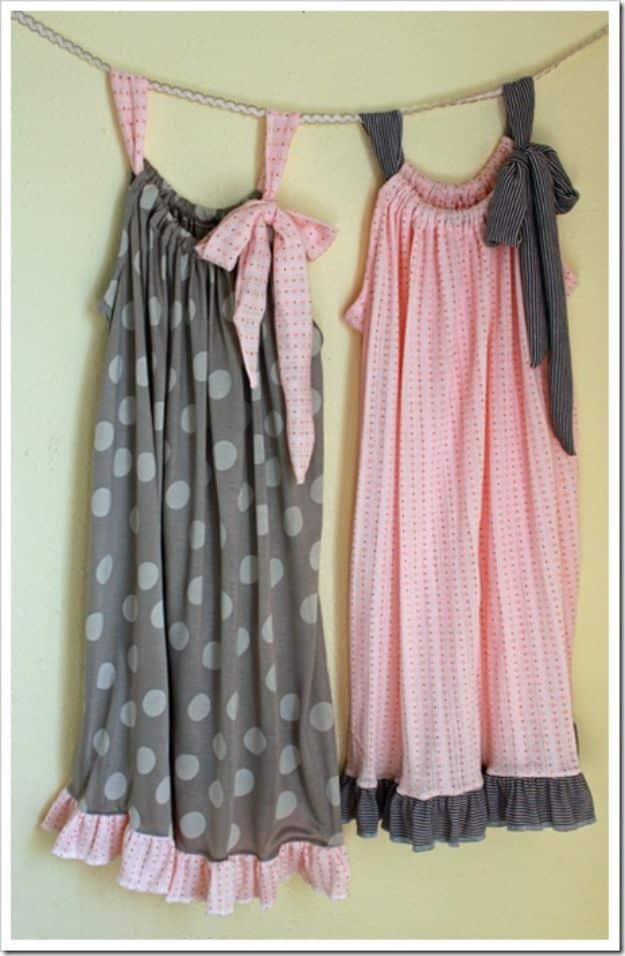
Two short polka dot nighties hanging on a copper rail, under lettering that reads Easy No-Pattern Nightie. The whole appeal is in the name: no tissue pattern to print, tape, trace and lose pieces of, which is the step that stops most people sewing clothes at all. A loose nightie is the right garment to try that approach on because the fit is forgiving everywhere, and mistakes genuinely do hide in sleepwear.
Get the full tutorial at This Little Miggy.
12. Make A Custom Nightgown
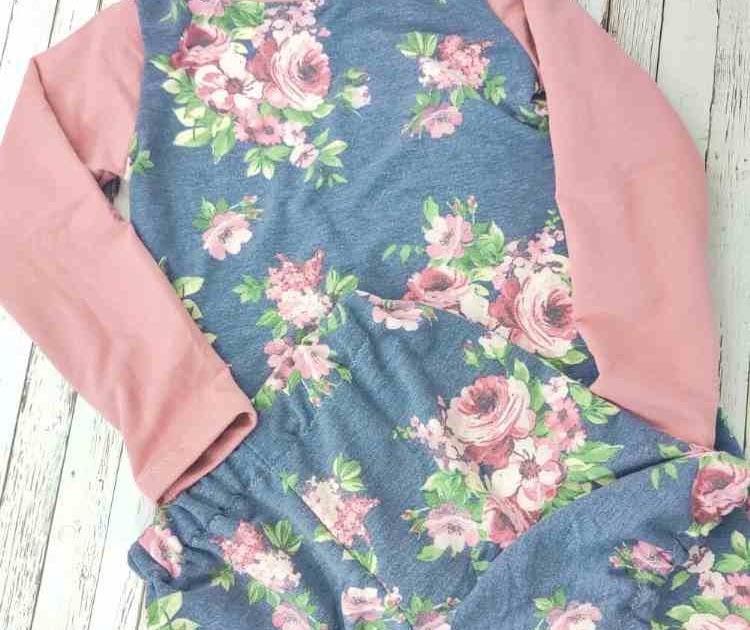
Sew Simple Home wrote the Eclipse nightgown pattern for her own daughter after a bought nightgown and bloomer set wore out too fast, and it is free. Her brief was specific: longer than tunic length, comfy and basic, without all the frills and lace, because that is what her girl actually wanted. There is a matching bloomers pattern in a separate post and a video sew along if you would rather follow along than read. Length and sleeve are both customizable.
Get the full tutorial at Sew Simple Home.
13. DIY Slip Night Gown
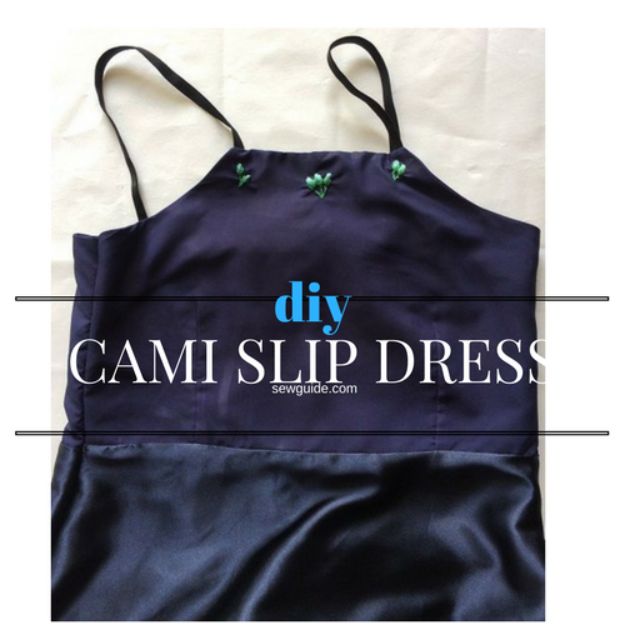
Sew Guide’s cami slip dress has a flared bias cut A line skirt and a back zipper, and the bias is the part worth understanding. Cutting at an angle to the grain is what makes the fabric skim rather than cling. She cuts the skirt on the bias and the bodice on the straight grain, which keeps the top stable, and her advice on fabric is to choose something that drapes: silk, rayon, chiffon, georgette or a simple cotton. Satin makes the most luxurious night dress of all.
Get the full tutorial at Sew Guide.
14. Silk Pajamas
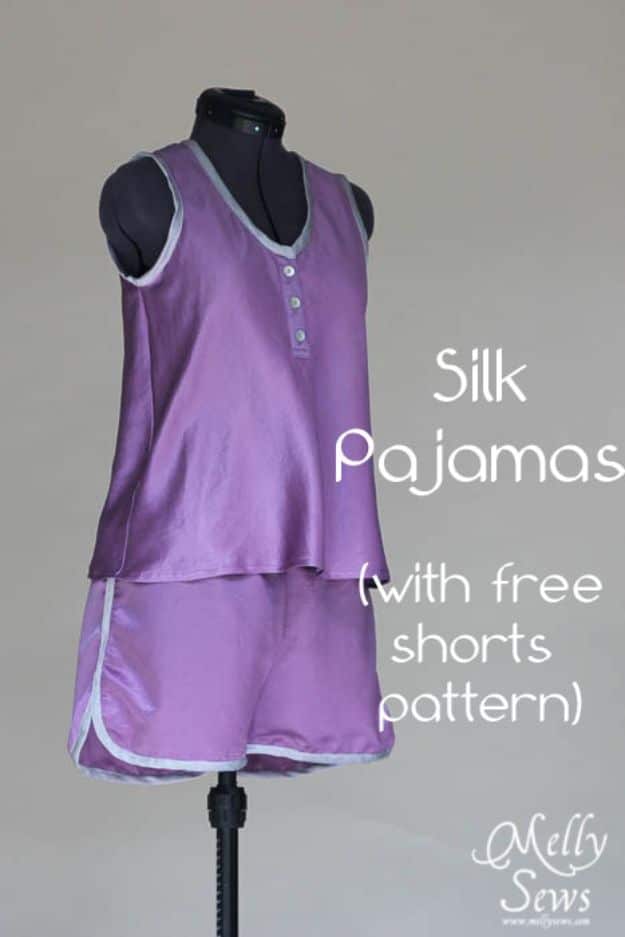
A real silk set, and Melly Sews is honest that hers is a silk cotton rather than pure silk, which is a far friendlier fabric to learn on. The top is a bias cut tank with a henley placket added, made from about half a yard, finished with half inch double fold bias tape and 27 inches of one inch elastic. The free shorts pattern is a women’s small. If silk makes your palms sweat, practise on a silky polyester first, because every technique transfers.
Get the full tutorial at Melly Sews.
15. Easy Men's Pajama Shorts with Pockets

These are men’s pajama shorts with pockets, designed by So Sew Easy because store bought pairs were never both comfortable and decent enough to answer the door in. The free pattern covers waist sizes from 28 to 44 inches, which makes it work for boys as well as men, and there is a full video tutorial. She specifies a super soft 100 percent cotton and says to stay with natural fibers, because synthetics are miserable in hot weather. Loose fitting all the way through.
Get the full tutorial at So Sew Easy.
16. Knit Pillowcase Style Night Gown
Despite the name this one is sewn in knit rather than from an actual pillowcase, and Everyday Chaos gives real measurements. For roughly a girls size 10 she cut two pieces about 55 inches wide by 30 inches tall, keeping the full width of the fabric because that fullness is what makes it look right in a knit. The front gets cut down an inch and a half on the fold to the corner; the armhole is 2.5 inches in and 5 inches down, rounded into a J. Use a ball point needle.
Get the full tutorial at Everyday Chaos.
17. Sew Your Own Pajama Pants Without a Pattern
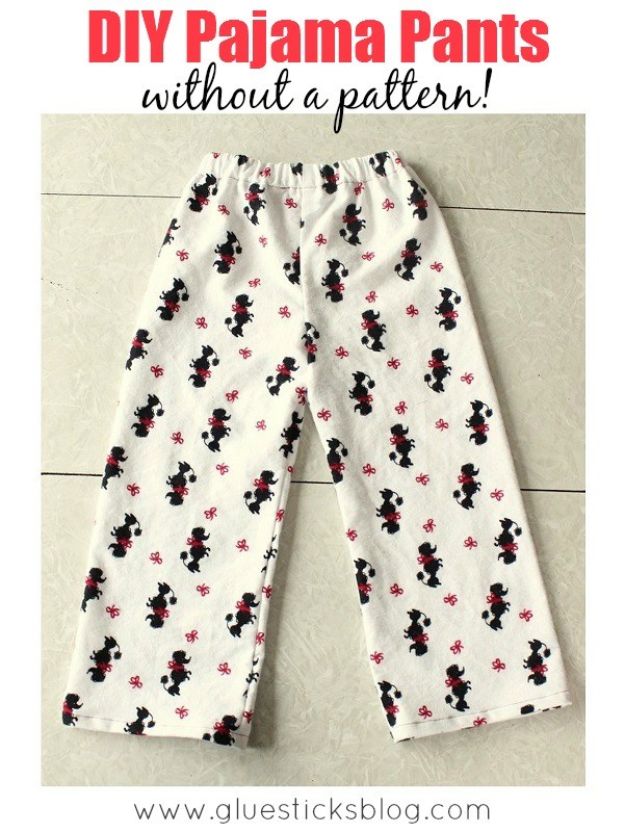
Gluesticks skips the pattern entirely by having you trace a pair of pajama pants you already own, which also means the fit is borrowed from something proven. A pair takes 30 to 60 minutes. Her note on children’s pants explains why it works so well: shop bought kids’ pajama pants are cut on the fold with no outer side seam at all, which is exactly what this method produces. An existing pair that is slightly too small is fine, since you add length and width.
Get the full tutorial at Gluesticks Blog.
18. Easy Italian Chemise
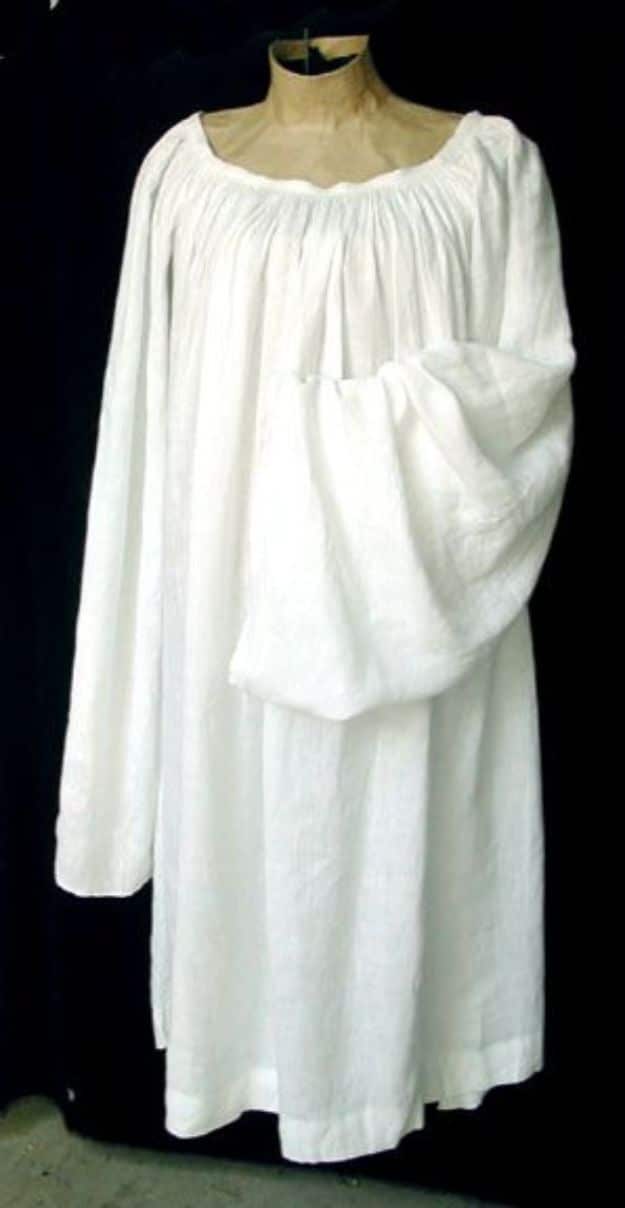
A historical pattern that turns out to be beginner friendly in disguise. Festive Attyre based this on a 17th century Italian chemise from the book Cut My Cote and simplified it, so it is built from rectangles and gussets rather than shaped pattern pieces. It needs three and a half to four yards of white or off white linen, silk or cotton, with linen highly recommended. It is essentially one size fits all apart from the gussets, and the sleeves on her version add 12 inches for Florentine puffs.
Get the full tutorial at Festive Attyre.
19. Sew A Sleep Shirt
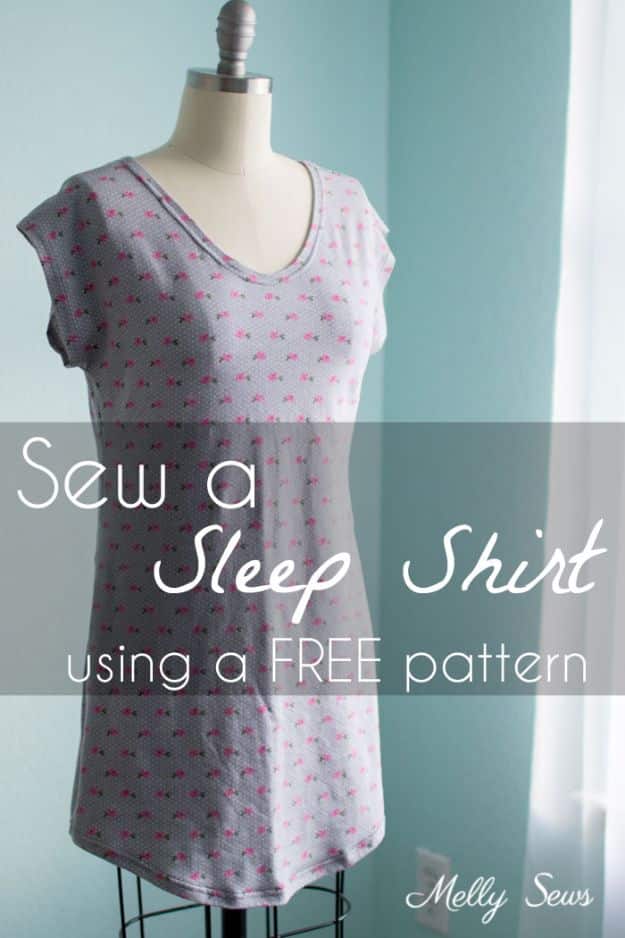
This is an adaptation of Melly Sews’ free Blanc t-shirt pattern rather than a shirtmaking project, and the modification is spelled out: add five and a half inches at center front and center back, curving up to four inches added at the sides, which lengthens it and gives the hem a gentle curve. You need one and a third to two yards. Her favorite trick for hemming a curve in knit is to baste a stitch line where the fold goes first, then press the hem to it.
Get the full tutorial at Melly Sews.
20. Upcycled T-Shirt Nightgown
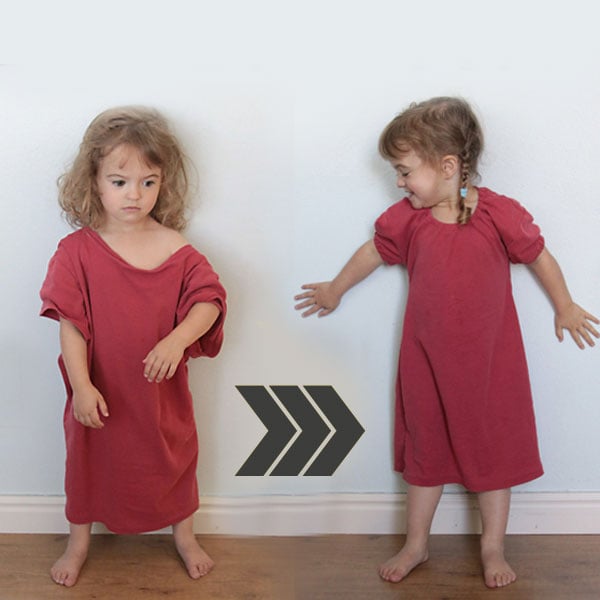
Two seams and less than a yard of elastic, from a garage sale tee that cost about fifty cents. It’s Always Autumn threads narrow elastic through the existing neckband and the sleeve hems and gathers them up to fit, which is what gives it the peasant dress look, using a seam ripper to slice a small hole inside the neck binding and threading back out of the same hole. She used 13 inches of elastic at the neck and a women’s small tee for a two year old. Worth knowing before you make one: the CPSC recommends against putting children to sleep in loose fitting cotton garments, because they catch fire easily.
Get the full tutorial at It's Always Autumn.
21. Refashion a Night Gown into PJ's
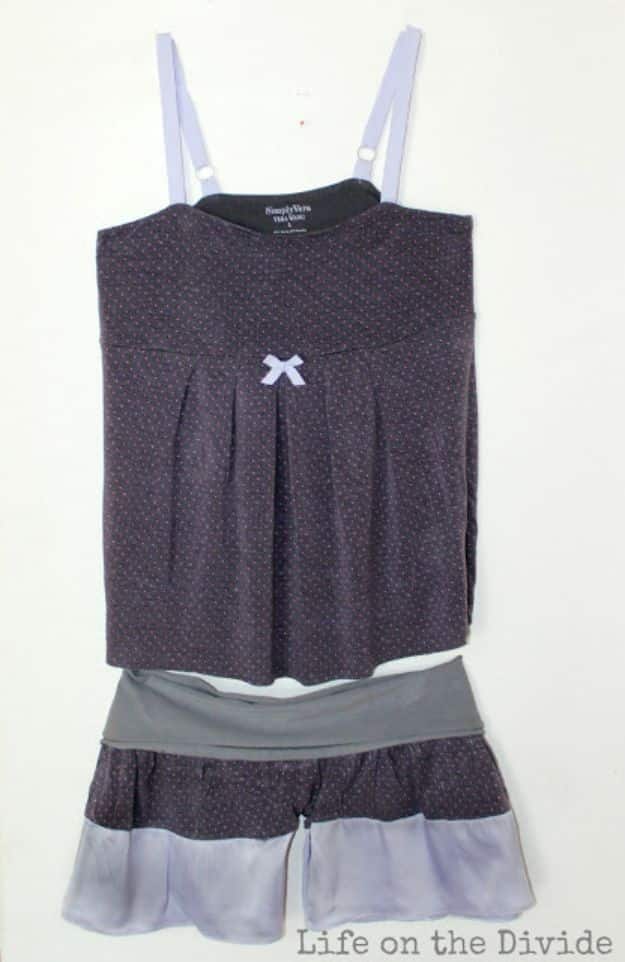
The last project on the list closes the loop: when a nightgown has had its day, it becomes a pajama set rather than a rag. My Life on the Divide cuts hers into a tank and shorts, using the waistband from a pair of old yoga pants for the shorts. Her measuring method is to lay a tank and a pair of shorts that already fit on top of the gown, pin and chalk between them, and cut on that line. She used a cotton with a little spandex, which does not fray.
Get the full tutorial at My Life on the Divide.